Culinary Advisor
A cooking platform built around craft, culture, and the stories behind what we eat.
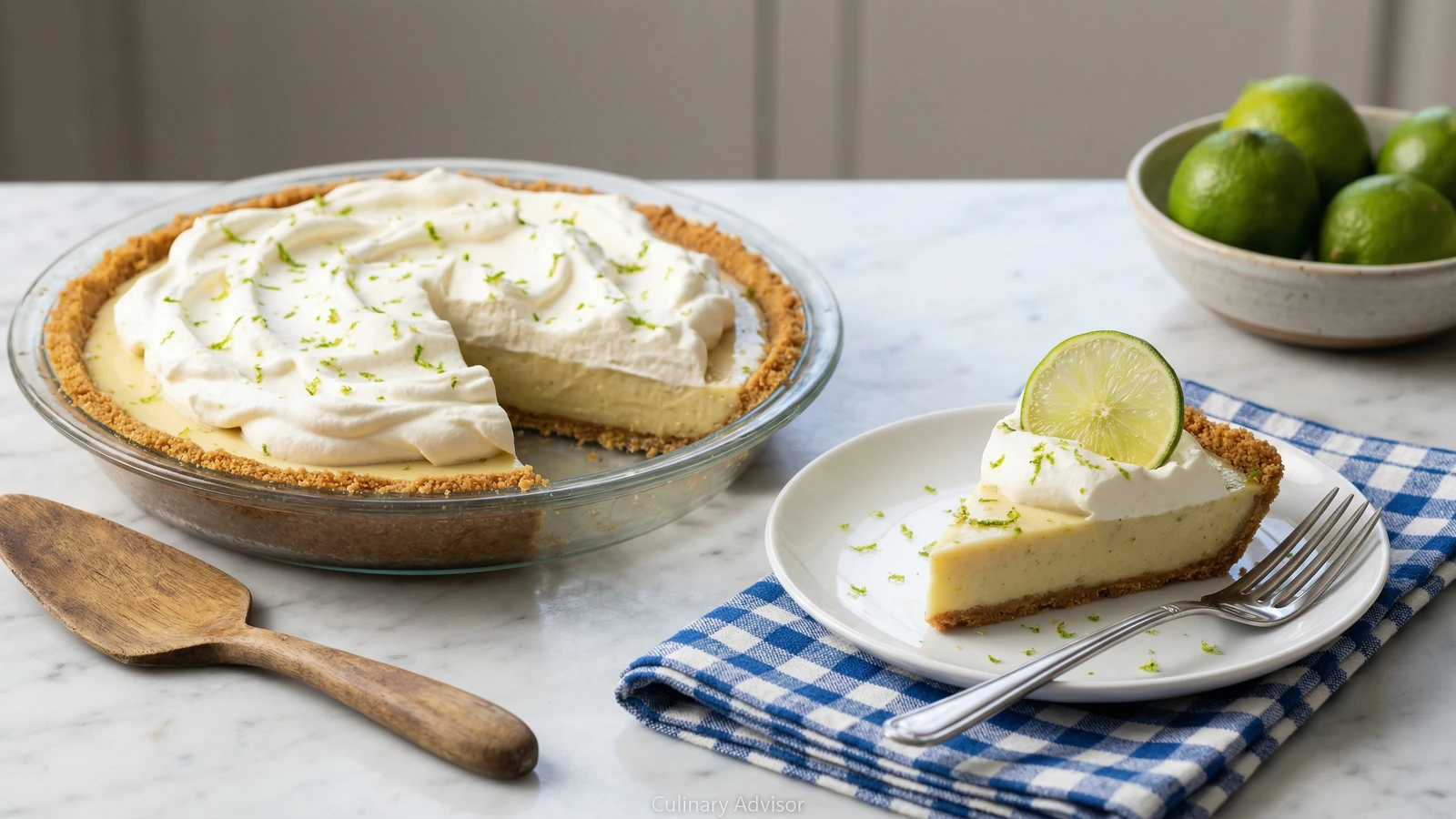
Florida Key Lime Pie
The genuine article from the Florida Keys: bracingly tart Key lime custard in a buttery graham cracker crust, topped with billows of fresh whipped cream. No meringue, no pretension, just the pucker-inducing perfection that made this pie famous.
This pie was born of necessity in the Florida Keys, where fresh milk was a fantasy and refrigeration a distant dream. Sometime in the late 1800s, Keys fishermen and sponge divers discovered that the acid in tiny Key limes would thicken sweetened condensed milk into a custard without any cooking at all. The chemistry was simple: citric acid denatures the milk proteins, creating a silky filling that sets firm in the icebox. No oven required until some later cook thought to add a crust.
The graham cracker base came later, probably in the 1930s when Nabisco's boxed crackers reached every corner store in America. Before that, Keys cooks used whatever they had. Some didn't bother with crust at all. But the graham version has become canon now, and I won't argue with it. The sweet, sandy crumbs provide the perfect counterpoint to that aggressive tartness.
Key limes are not Persian limes. This matters. They're smaller, seedier, more aromatic, with a floral quality that regular supermarket limes cannot replicate. If you can find them, buy twice what you think you need. They're temperamental little things, yielding maybe a tablespoon of juice each. If you cannot find them, bottled Key lime juice from Nellie and Joe's or Manhattan brand will serve you honestly. Many Keys natives use it themselves.
The technique, the tradition, and the story behind every dish.
Discover Culinary AdvisorIngredients
graham cracker crumbs
Quantity
1 1/2 cups
about 12 full sheets, finely crushed
granulated sugar
Quantity
1/3 cup
unsalted butter
Quantity
6 tablespoons
melted
fine sea salt
Quantity
1/4 teaspoon
large egg yolks
Quantity
4
sweetened condensed milk
Quantity
1 can (14 ounces)
fresh Key lime juice
Quantity
1/2 cup
from about 20-25 Key limes
Key lime zest
Quantity
1 tablespoon
from about 6 limes
heavy whipping cream
Quantity
1 cup
very cold
powdered sugar
Quantity
2 tablespoons
pure vanilla extract
Quantity
1/2 teaspoon
Key lime slices (optional)
Quantity
for garnish
| Ingredient | Quantity |
|---|---|
| graham cracker crumbsabout 12 full sheets, finely crushed | 1 1/2 cups |
| granulated sugar | 1/3 cup |
| unsalted buttermelted | 6 tablespoons |
| fine sea salt | 1/4 teaspoon |
| large egg yolks | 4 |
| sweetened condensed milk | 1 can (14 ounces) |
| fresh Key lime juicefrom about 20-25 Key limes | 1/2 cup |
| Key lime zestfrom about 6 limes | 1 tablespoon |
| heavy whipping creamvery cold | 1 cup |
| powdered sugar | 2 tablespoons |
| pure vanilla extract | 1/2 teaspoon |
| Key lime slices (optional) | for garnish |
Equipment Needed
- •9-inch pie plate (glass or ceramic)
- •Microplane or fine grater for zesting
- •Citrus juicer or reamer
- •Fine-mesh strainer for seeds
- •Electric mixer or large whisk for cream
Instructions
- 1
Prepare the crust
Position a rack in the center of your oven and preheat to 350°F. Combine graham cracker crumbs, sugar, and salt in a medium bowl. Pour in the melted butter and stir with a fork until every crumb is coated and the mixture resembles damp sand. It should clump when you squeeze a handful.
For the finest crumbs, pulse whole graham crackers in a food processor. Hand-crushed crumbs in a zip-lock bag work too, but expect a rustier texture. - 2
Press and bake the crust
Transfer the crumb mixture to a 9-inch pie plate. Using the bottom of a measuring cup or the flat of your palm, press crumbs firmly across the bottom and up the sides, building a compact wall about 1/4-inch thick. The bottom should feel solid when you rap it with your knuckles. Bake until the crust turns golden and fragrant, 10 to 12 minutes. The kitchen will smell like toasted cookies. Set aside to cool while you make the filling.
- 3
Zest before juicing
Using a microplane or the fine holes of a box grater, zest six Key limes before cutting them. You need one tablespoon of zest. Work gently, taking only the thin green layer. The white pith beneath is bitter and will muddy your filling. Set zest aside.
Key limes have thinner skins than Persian limes. One pass with the microplane is usually enough. - 4
Juice the limes
Cut your Key limes in half crosswise and juice them through a small strainer to catch the seeds. Key limes are notoriously seedy. You need half a cup of juice, which requires somewhere between twenty and twenty-five limes depending on their size and ripeness. If using bottled Key lime juice, measure half a cup and proceed.
- 5
Build the filling
In a large bowl, whisk the egg yolks until they lighten slightly in color, about one minute. Add the sweetened condensed milk and whisk until completely smooth. The mixture will be thick and glossy. Add the Key lime juice in a steady stream, whisking constantly. Watch the transformation: the acid begins thickening the milk immediately. Fold in the zest. The filling should coat a spoon heavily.
- 6
Fill and bake
Pour the filling into your cooled crust. It will mound slightly in the center. Bake at 350°F for 15 minutes. The filling is done when the edges are set but the center still wobbles like gelatin when you gently shake the pan. Do not overbake. The filling will continue to set as it cools.
The brief bake ensures food safety and improves texture, but the pie would technically set without it. Old-timers sometimes skipped this step entirely. - 7
Cool and chill
Let the pie cool at room temperature for 30 minutes, then refrigerate uncovered until the filling is completely cold and firm, at least 4 hours or overnight. The filling will deepen to a pale greenish-yellow. Resist the urge to cover it with plastic until fully chilled, or you'll trap condensation.
- 8
Whip the cream
When ready to serve, pour the cold heavy cream into a chilled bowl. Add powdered sugar and vanilla. Beat with a whisk or electric mixer until soft peaks form. The cream should billow and hold its shape but still look voluptuous, not stiff. Overwhipped cream turns grainy and begins its journey toward butter.
- 9
Top and serve
Spread or pipe whipped cream over the chilled pie. Some prefer a modest layer; I vote for abundance. Garnish with paper-thin slices of Key lime if you have them. Cut with a sharp knife dipped in hot water, wiping clean between slices. Serve cold. This pie improves after a night in the refrigerator as the flavors marry and mellow.
Chef Tips
- •The difference between Key limes and Persian limes is not snobbery. Key limes have a distinct floral, almost perfumed quality that defines this pie. If you cannot find fresh Key limes, seek out Nellie and Joe's Famous Key West Lime Juice. It's what many Keys restaurants use, and there is no shame in it.
- •Sweetened condensed milk is not negotiable. It provides the sugar, the creaminess, and the proteins that react with the acid. Do not substitute evaporated milk, regular milk and sugar, or any other improvisation. The chemistry will fail you.
- •A graham cracker crust should taste like more than glue. Toast it. The difference between a raw crust and one that's been properly baked is the difference between adequate and excellent.
- •For the cleanest slices, freeze the pie for 20 minutes before cutting, then return it to the refrigerator to temper before serving. The filling cuts cleanly when very cold.
- •Save two tablespoons of graham cracker crumbs before making the crust. Sprinkled over the whipped cream, they add textural interest and visual honesty.
Advance Preparation
- •The filled pie can be made up to 2 days ahead and refrigerated, covered loosely with plastic wrap once fully chilled. Add whipped cream just before serving.
- •The graham cracker crust can be baked 3 days ahead, wrapped tightly, and stored at room temperature.
- •Key limes can be juiced and the juice frozen for up to 3 months. Thaw in the refrigerator before using. Zest does not freeze well; grate it fresh.
Frequently Asked Questions
Nutrition Information
1 serving (about 235g)
Where cooking meets culture.
Culinary mentorship, cultural storytelling, and the editorial depth that makes cooking meaningful.
Explore Culinary Advisor