Culinary Advisor
A cooking platform built around craft, culture, and the stories behind what we eat.
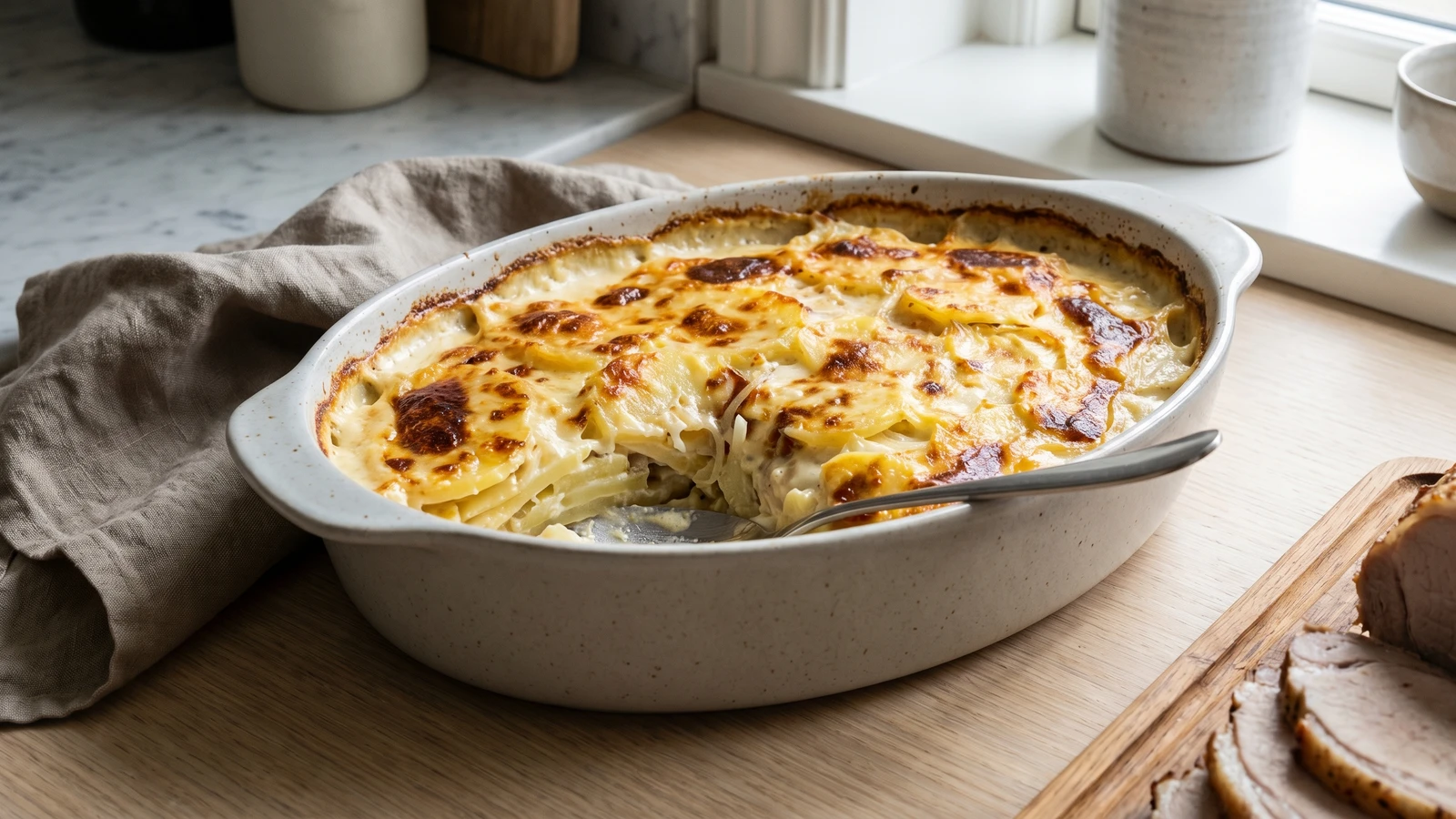
Flødekartofler
Created by Chef Freja
Thin potato slices layered with onion and heavy cream, baked until the top turns deep gold and the edges bubble. The quiet, rich dish that holds its place beside duck and pork on every Danish Christmas table.
December in Denmark is dark by three in the afternoon. The candles are lit, the kitchen windows fog with warmth, and somewhere in the oven, a dish of flødekartofler is turning golden. This is the side dish that holds the Danish Christmas table together.
Flødekartofler is not complicated. Potatoes, onion, cream. That's it. You slice, you layer, you pour, you bake. The oven does the rest, transforming those plain ingredients into something rich and yielding and quietly magnificent. It sits beside the flæskesteg, the roast pork with its crackling skin, and the andesteg, the duck with its dark, rendered juices, and it belongs there the way a bass note belongs in a chord. Without it, the meal is thinner than it should be.
Two things matter here. First, slice your potatoes evenly. Uneven slices cook unevenly, and you'll have soft layers next to chalky ones. A mandoline is the right tool. Second, don't rinse the starch from the slices. That starch is what thickens the cream into a sauce as it bakes. Rinse it away and you're left with potatoes sitting in thin liquid. Leave it on and you get something closer to silk. You'll know when it's right: the knife slides through every layer without catching, and the cream at the edges has thickened to a deep gold that just barely holds its shape on the spoon.
Flødekartofler became a fixture of the Danish Christmas table in the early 20th century, as heavy cream grew more widely available beyond the dairy farms of Jutland. The dish has roots in the French gratin dauphinois, likely introduced through the culinary influence that French cuisine exerted on Danish bourgeois cooking from the 1800s onward. The Danish version distinguishes itself through the addition of sliced onion between the layers, a practical, savoury note that no French kitchen would have sanctioned, and through its role as the essential companion to the Christmas roasts, a position it has held unchallenged for over a century.
The technique, the tradition, and the story behind every dish.
Discover Culinary AdvisorIngredients
waxy potatoes
Quantity
1.2kg
peeled, sliced 2-3mm thin
yellow onions
Quantity
2 medium
halved and thinly sliced
heavy cream
Quantity
500ml
unsalted butter
Quantity
30g
for the dish
fine sea salt
Quantity
1 teaspoon, plus more between layers
white pepper
Quantity
freshly ground, to taste
bay leaf
Quantity
1
nutmeg (optional)
Quantity
pinch
freshly grated
| Ingredient | Quantity |
|---|---|
| waxy potatoespeeled, sliced 2-3mm thin | 1.2kg |
| yellow onionshalved and thinly sliced | 2 medium |
| heavy cream | 500ml |
| unsalted butterfor the dish | 30g |
| fine sea salt | 1 teaspoon, plus more between layers |
| white pepper | freshly ground, to taste |
| bay leaf | 1 |
| nutmeg (optional)freshly grated | pinch |
Equipment Needed
- •Ovenproof gratin dish, approximately 25cm by 35cm
- •Mandoline or sharp knife
- •Aluminium foil
Instructions
- 1
Prepare the dish
Heat the oven to 180°C. Take the butter and rub it generously across the inside of a large ovenproof dish, about 25cm by 35cm or an oval gratin of similar size. Get into the corners and up the sides. The butter isn't just for preventing sticking. It browns where the cream meets the edges and gives you those dark, caramelized patches that everyone fights over at the table.
- 2
Slice the potatoes
Peel the potatoes and slice them 2 to 3 millimetres thin. Consistency matters more than precision. If some slices are thicker than others, they'll cook unevenly and you'll have soft layers next to hard ones. A mandoline makes this fast and even. If you're using a knife, take your time and keep the thickness steady. Don't rinse the slices. You want the starch on the surface because it thickens the cream as it bakes and gives the dish its body.
If you're slicing ahead of time, keep the potatoes submerged in cold water to prevent browning, then drain and pat them completely dry before layering. Wet potatoes dilute the cream. - 3
Layer the potatoes
Arrange the first layer of potato slices across the bottom of the buttered dish, overlapping each slice by about a third. Scatter a handful of sliced onion over the top. Season lightly with salt and a few turns of white pepper. Repeat: potatoes, onion, salt, pepper. Build four to five layers, pressing each one down gently with your palm before adding the next. The pressing removes air pockets and ensures the cream reaches every layer. Tuck the bay leaf into the middle layer, where it will release its fragrance slowly without sitting on the surface and scorching. Finish with a final layer of potatoes, neatly arranged, and no onion on top. The top layer is what browns, and onion burns before potato does.
Season between every layer, not just on top. Salt can't travel downward through dense potato. Each layer needs its own. - 4
Add the cream
Pour the cream evenly over the layered potatoes. It should come about two-thirds of the way up the side of the dish. If you can see the top layer sitting above the cream, that's correct. Those exposed edges will catch the heat and turn golden while the submerged layers cook gently below. Grate the nutmeg directly over the surface, just a whisper of it. Nutmeg is not a main flavor here. It's the note underneath the cream that you can't quite name but would miss if it were gone.
Take the cream out of the fridge thirty minutes before you need it. Room-temperature cream heats faster in the oven, which means more even cooking from the start. - 5
Bake until golden
Cover the dish tightly with aluminium foil and bake for forty-five minutes. The foil traps moisture and lets the potatoes steam from below, cooking them through before the top dries out. After forty-five minutes, remove the foil and continue baking for another twenty-five to thirty minutes, until the surface is deep golden and the cream is bubbling thickly at the edges. The bubbling tells you the starch and cream have thickened into a sauce. If it's still thin and watery, give it ten more minutes.
Test with a thin knife pushed into the centre. It should slide through every layer with no resistance at all. If there's any firmness, cover again and give it another ten minutes. - 6
Rest before serving
Let the dish rest for ten minutes out of the oven before you bring it to the table. This is not optional. The cream is boiling when it comes out, and the layers are too soft to hold. Ten minutes lets everything settle and firm just enough that a serving spoon lifts a portion cleanly. Bring it to the table in the dish it was baked in. That's how it's done. Flødekartofler is not transferred to another plate. The browned edges and the bubbling cream are part of the presentation.
Chef Tips
- •Use waxy potatoes, not floury. Floury potatoes break down in the cream and you lose the layered structure. Waxy varieties hold their shape and give you clean, distinct layers that a spoon can lift without falling apart.
- •The cream should be heavy, 38% fat or higher. Low-fat cream splits in the oven and turns grainy. This is a dish that asks for richness, and the cream is doing the work of both sauce and seasoning. Use good cream and the dish needs almost nothing else.
- •Flødekartofler sits beside strong-flavored meats: roast pork, duck, goose. Keep the seasoning gentle. Salt, white pepper, a breath of nutmeg. The dish is a counterpoint, not a competition.
- •If you're making this for a crowd, it scales easily. Use a larger dish and add more cream until it reaches two-thirds of the way up. The baking time stays roughly the same as long as the depth of the layers doesn't change much.
Advance Preparation
- •You can assemble the dish up to six hours ahead: layer the potatoes and onion, pour over the cream, cover tightly, and refrigerate. Add fifteen minutes to the covered baking time if going straight from the fridge to the oven.
- •Flødekartofler reheats well. Cover with foil and warm at 160°C for twenty minutes. The top won't recrisp, but the layers stay creamy and tender. It keeps in the fridge for three days.
Frequently Asked Questions
Nutrition Information
1 serving (about 290g)
Where cooking meets culture.
Culinary mentorship, cultural storytelling, and the editorial depth that makes cooking meaningful.
Explore Culinary Advisor