Culinary Advisor
A cooking platform built around craft, culture, and the stories behind what we eat.
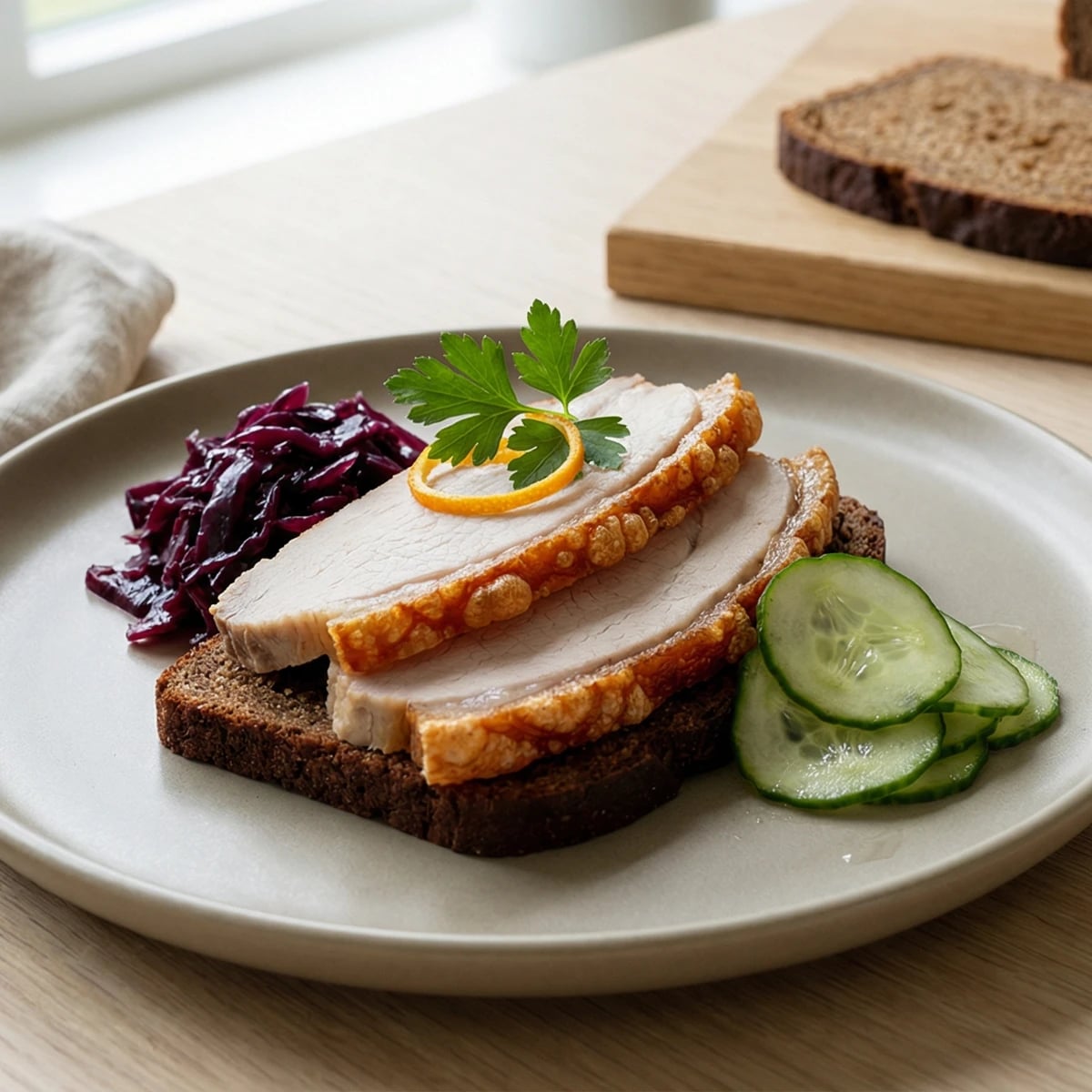
Flaeskesteg paa Rugbrod
Created by Chef Freja
Cold Danish Christmas roast pork with crisp golden crackling, served on dark rugbrod with sweet-sour red cabbage, cool cucumber salad, and a thin twist of orange. The julefrokost plate gathered into a single bite.
December in Denmark is a dark month. The sun gives up around three in the afternoon, the windows go black early, and the kitchen becomes the warmest room in the house. This is julefrokost season, the long Danish Christmas lunches that begin around noon and end when the candles burn down and somebody finally stands up from the table.
Flaeskesteg is the centerpiece of that table. A pork loin with its rind scored deep and salted hard, roasted until the crackling turns golden and cracks under the knife, served warm on the first night with rodkaal and boiled potatoes. But there's a secret most Danes will only admit quietly: flaeskesteg is often better cold. The next day, when the fat has set and the meat has firmed, you cut thin slices and lay them on buttered rugbrod with sweet-sour red cabbage, cool cucumber salad, and a twist of orange. That's flaeskesteg paa rugbrod. For many of us it's the piece of the julefrokost we actually wait for.
What matters most is the crackling. If the crackling fails, the whole dish fails, and I'll walk you through every step so yours doesn't. Dry rind, deep scores, coarse salt pressed into every cut, high heat at the start to lift the fat. You'll hear it before you see it, a soft popping from inside the oven that means the rind is giving up its water and turning crisp. That's the sound of the dish working. You'll know when it's right.
Ingredients
pork loin with rind
Quantity
1kg
scored, ask the butcher for flaeskesteg
coarse sea salt
Quantity
2 tablespoons
black pepper
Quantity
1 teaspoon
freshly ground
| Ingredient | Quantity |
|---|---|
| pork loin with rindscored, ask the butcher for flaeskesteg | 1kg |
| coarse sea salt | 2 tablespoons |
| black pepperfreshly ground | 1 teaspoon |