Culinary Advisor
A cooking platform built around craft, culture, and the stories behind what we eat.
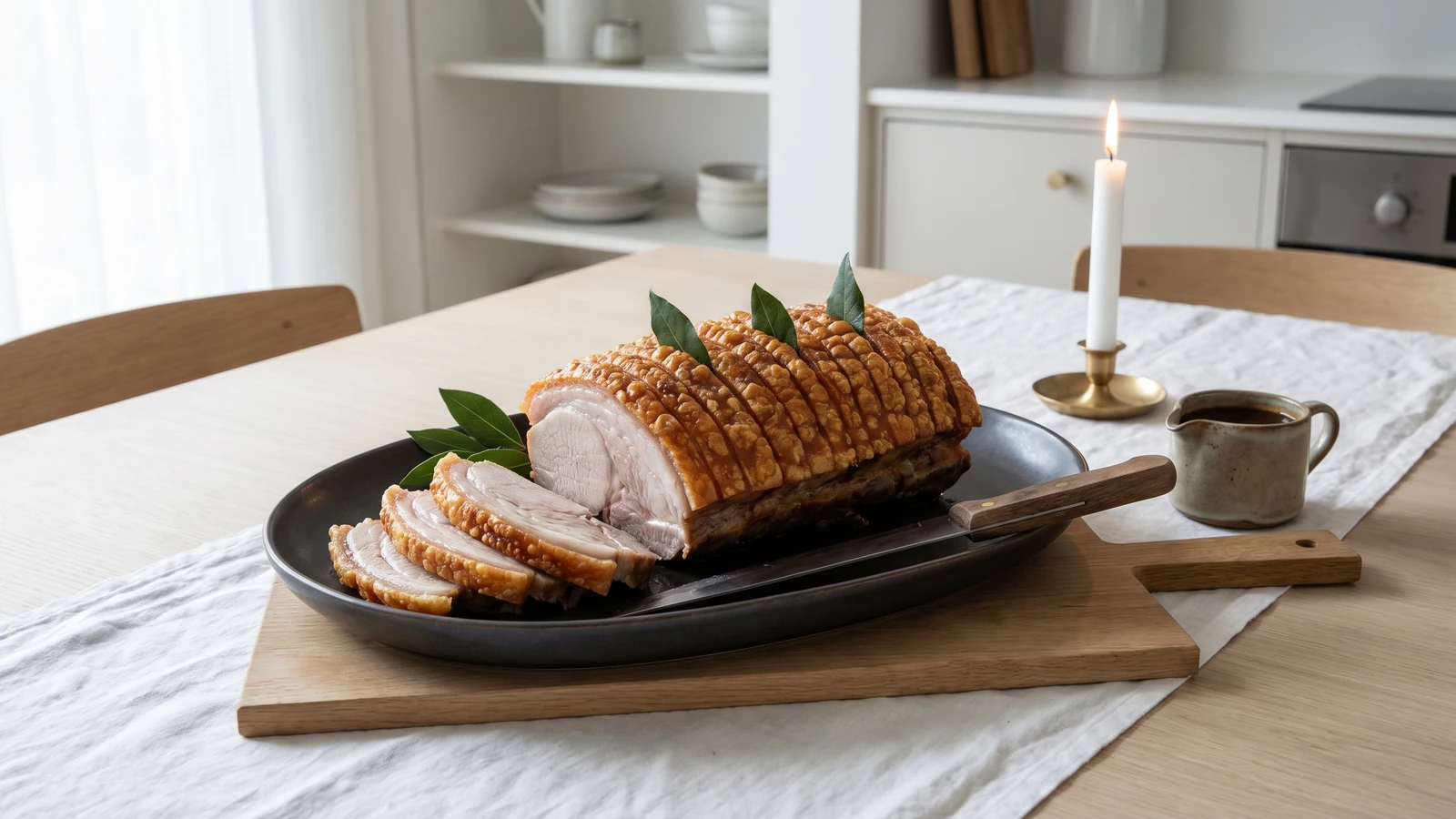
Flaeskesteg
Created by Chef Freja
The Danish Christmas roast, scored and salted until the rind crackles into golden ridges that snap when you bite through. Bay leaves pressed into the grooves, brun sovs poured alongside, and the whole house smelling like juleaften.
December in Denmark is dark by three in the afternoon. The streets light up with candles in every window, and the kitchen becomes the warmest room in the house. This is when flaeskesteg takes over.
On juleaften, Christmas Eve, the whole country sits down to the same meal. Roast pork with crackling, caramelized potatoes, red cabbage, and brown gravy. It's not a suggestion. It's closer to a national agreement, the kind that doesn't need a vote because everyone already knows. The smell of pork fat rendering and bay leaves warming in the oven is the smell of the twenty-fourth of December, and it has been for generations.
The crackling is the test of the cook. Svaer, the Danes call it. Getting it right means understanding three things: the scoring must go deep enough for the salt to reach into every groove, the salt must be coarse enough to draw moisture from the rind as it roasts, and the rind must stay dry throughout cooking. I'll walk you through each step so you understand not just what to do but why it works. The meat itself is forgiving. Pork loin roasted slowly stays juicy and tender without fuss. But the crackling demands your attention, and when you hear it crackle and pop in the oven, when you tap the surface and it sounds hollow, you'll know you've done it right. That sound is juleaften.
Flaeskesteg has been the dominant Christmas Eve dish in Denmark since at least the mid-1800s, when pork overtook goose as the festive centrepiece in most Danish households. Denmark's long history of pig farming, dating back to the Viking age when pigs foraged in beech forests, made pork the most accessible and celebrated meat in the country. The tradition of scoring and salting the rind for crackling is shared with other Nordic and German traditions, but the Danish insistence on serving it specifically on juleaften, with brunede kartofler and rodkal alongside, has made flaeskesteg as much a ritual as a recipe. In some families, the quality of the svaer is discussed with the same seriousness as the tree.
The technique, the tradition, and the story behind every dish.
Discover Culinary AdvisorIngredients
bone-in pork loin roast with rind (svaer)
Quantity
2kg
scored deeply through the rind
coarse sea salt
Quantity
3 tablespoons, plus extra
whole black peppercorns
Quantity
1 tablespoon
lightly crushed
fresh bay leaves
Quantity
8-10
whole cloves
Quantity
6-8
boiling water
Quantity
500ml
cold water
Quantity
500ml
plain flour
Quantity
2 tablespoons
butter
Quantity
1 tablespoon
fine sea salt
Quantity
to taste
black pepper
Quantity
freshly ground, to taste
| Ingredient | Quantity |
|---|---|
| bone-in pork loin roast with rind (svaer)scored deeply through the rind | 2kg |
| coarse sea salt | 3 tablespoons, plus extra |
| whole black peppercornslightly crushed | 1 tablespoon |
| fresh bay leaves | 8-10 |
| whole cloves | 6-8 |
| boiling water | 500ml |
| cold water | 500ml |
| plain flour | 2 tablespoons |
| butter | 1 tablespoon |
| fine sea salt | to taste |
| black pepper | freshly ground, to taste |
Equipment Needed
- •Deep roasting pan with a rack
- •Stanley blade or very sharp knife for scoring
- •Probe thermometer
- •Heavy carving knife
- •Fine-mesh sieve for the gravy
- •Warm serving platter
Instructions
- 1
Score the rind
If your butcher hasn't done it, score the rind yourself. Use the sharpest knife you own or a clean Stanley blade. Cut straight lines through the rind and fat, about half a centimetre apart, going all the way down to the meat but never into it. This is the step that makes or breaks the crackling. Cut too shallow and the salt can't reach deep enough. Cut into the meat and the juices run out during roasting, and the pork dries. You want to see the white fat open along each line, with the pink meat still hidden underneath.
A Stanley blade or box cutter gives the cleanest, most even lines. Many Danish cooks swear by it. If you use a knife, press firmly and draw it steadily. The rind fights back; don't let it win. - 2
Salt the rind
Rub the coarse sea salt into every groove of the scored rind. Use your fingers and press it in firmly, working the salt into each line so the grains sit deep in the cuts. Then rub the crushed peppercorns over the rind. Tuck a bay leaf and a clove into the grooves at regular intervals, pressing them in so they stay put. The salt draws moisture out of the rind as it roasts, and dry rind is what crackles. Coarse salt matters here because fine salt dissolves too fast and doesn't pull enough moisture. This is chemistry, not preference.
Don't be timid with the salt. The rind is thick and dense, and you need the salt to penetrate. Most of it stays on the surface and gets brushed away or forms part of the crackling. The meat underneath does not become salty. - 3
Set up the roasting pan
Place the pork rind-side up on a rack set in a deep roasting pan. Pour 500ml of cold water into the bottom of the pan. The water serves two purposes: it keeps the pan drippings from burning during the long roast, and it creates the base for your brun sovs later. The rack lifts the pork above the water so the rind stays dry. Wet rind cannot crackle. This is the single most important principle of the whole dish.
If you don't have a rack, crumple two long sheets of foil into ropes and lay them in the pan as a makeshift cradle. The pork must sit above the liquid. - 4
Start hot, then slow
Heat the oven to 220°C. Place the pork on the middle shelf and roast for 25 minutes. This initial blast of heat starts the rind blistering and sets the surface. Then reduce the temperature to 160°C and continue roasting for about two hours, or until the internal temperature of the meat reaches 68°C on a probe thermometer. The slow, gentle heat after the initial blast renders the fat slowly and cooks the meat evenly. If you keep the oven hot the whole time, the outside scorches before the inside is done.
Check the water level in the pan after the first hour. If it has evaporated, add a little more. You need those drippings for the gravy, and burnt drippings taste of bitterness and regret. - 5
Finish the crackling
When the meat reaches 68°C, remove it from the oven and check the rind. If it has crackled evenly into golden, bubbly ridges that sound hollow when you tap them, it's done. If some patches are still soft and pale, turn the oven up to 250°C or switch to the grill. Return the pork to the top shelf and watch it closely, turning the pan every few minutes so the heat reaches evenly. This takes five to ten minutes. Do not walk away. The line between perfect crackling and burned rind is measured in seconds, not minutes. You'll hear it popping and see the surface lifting into crisp ridges.
If a few stubborn patches refuse to crackle, you can cut them off after resting and crisp them under the grill separately on a baking sheet. Nobody needs to know. - 6
Rest the roast
Transfer the pork to a carving board, rind-side up, and cover loosely with foil. Let it rest for at least twenty minutes. Resting is not optional. The heat inside the meat redistributes, the juices settle back into the muscle fibres, and when you carve, the slices hold their moisture instead of bleeding it onto the board. While the meat rests, make the gravy.
- 7
Make the brun sovs
Pour the pan drippings through a sieve into a jug. Skim off most of the fat, keeping a couple of tablespoons. Return that fat to the roasting pan set over a medium flame on the stovetop. Add the flour and stir it into the fat, scraping up all the dark bits stuck to the bottom of the pan. Those bits are where the flavour lives. Cook for a minute until the flour smells toasty, then gradually add the defatted drippings and 500ml of boiling water, whisking constantly. Simmer for ten minutes until the gravy has the consistency of pouring cream. Taste it. Season with salt and pepper. Stir in the butter at the very end for a glossy, rounded finish. Strain into a warm jug.
Good brun sovs is never thick like English gravy. It should coat the back of a spoon and run gently, not sit in a lump. If it's too thick, add more water. If too thin, simmer longer. Trust your eyes. - 8
Carve and serve
Use a sharp, heavy knife to carve the pork. Cut between the score lines, so each slice carries its own strip of crackling on top. If the crackling is properly done, the knife will go through with a clean snap. Arrange the slices on a warm serving platter with the crackling facing up. Serve with brunede kartofler, rodkal, and the warm brun sovs in its jug. This is how Christmas Eve arrives at the table. Tak for mad.
Chef Tips
- •Ask your butcher to score the rind for you if you're not confident. A good butcher does it in thirty seconds with a blade that's sharper than anything in your kitchen drawer. There's no shame in this. It's the smart move.
- •Use coarse sea salt, not fine table salt. The large crystals sit in the grooves and work slowly, drawing moisture out of the rind over the roasting time. Fine salt dissolves too quickly and doesn't do the same job.
- •A probe thermometer removes all the guesswork from roasting. Insert it into the thickest part of the meat, away from the bone, and set your target for 68°C. The temperature will rise a few degrees as the meat rests. This is the single best tool you can own for roasting.
- •The water in the bottom of the pan is not optional. It catches the drippings, prevents burning, and becomes the foundation of your brun sovs. Without it, you're starting the gravy from nothing.
- •Brunede kartofler, the caramelized potatoes, are the traditional companion. Small waxy potatoes, boiled and then turned in a pan of melted sugar and butter until glossy and amber. They deserve their own recipe, and they're worth the effort.
Advance Preparation
- •Score and salt the rind the night before and leave the pork uncovered in the fridge overnight. The cold air dries the surface further, and dry rind crackles better. This is the single best thing you can do for your crackling.
- •The brun sovs can be made up to two days ahead and reheated gently. It thickens as it cools, so thin it with a little water or stock when you warm it through.
- •Take the pork out of the fridge a full hour before roasting. Cold meat straight from the fridge cooks unevenly, and the centre stays pink while the edges overcook.
Frequently Asked Questions
Nutrition Information
1 serving (about 220g)
Where cooking meets culture.
Culinary mentorship, cultural storytelling, and the editorial depth that makes cooking meaningful.
Explore Culinary Advisor