Culinary Advisor
A cooking platform built around craft, culture, and the stories behind what we eat.
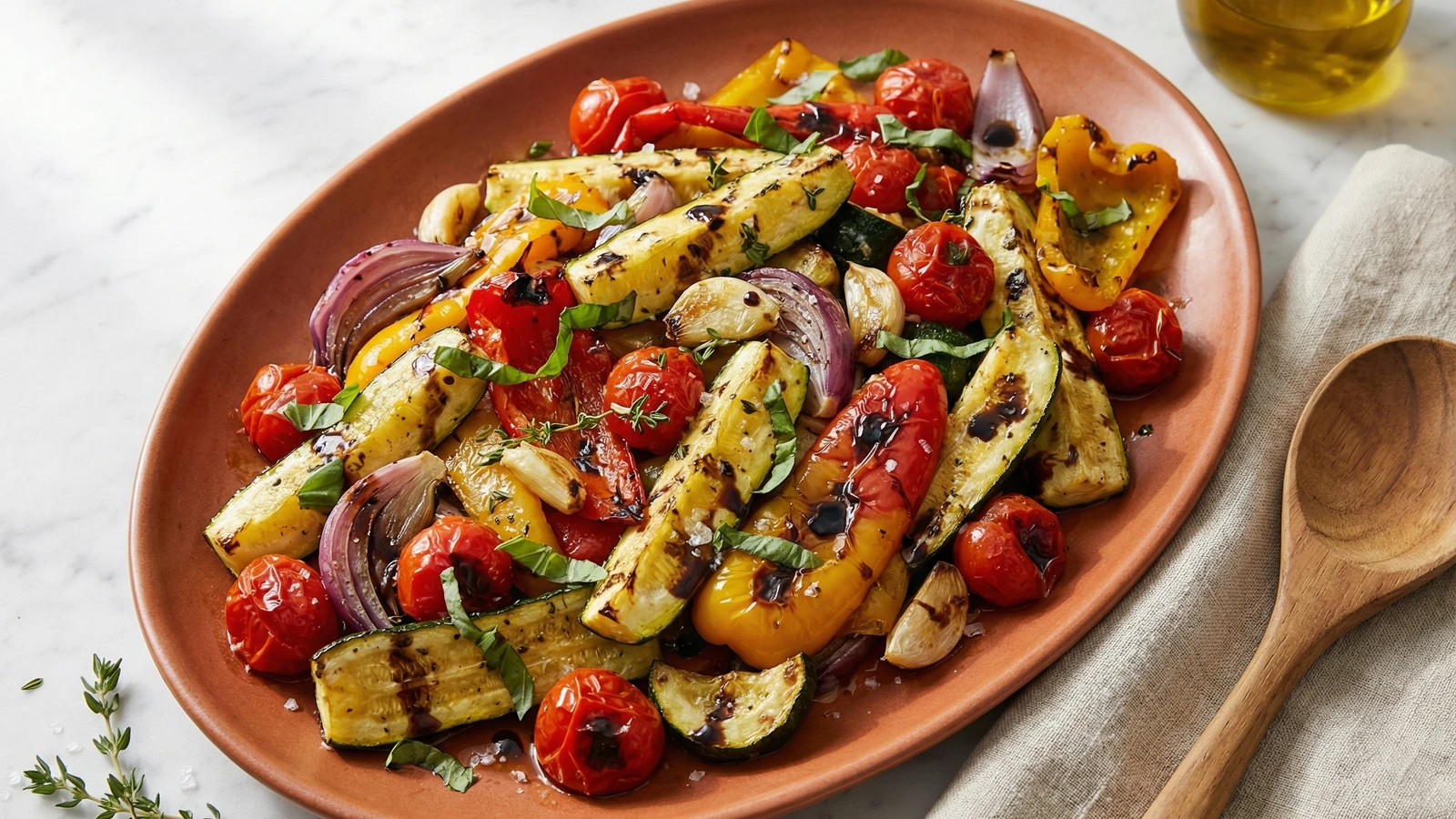
Fire-Roasted Summer Vegetable Medley
Created by
Summer vegetables roasted at screaming-high heat until their edges blacken and their sugars concentrate into something approaching worship. This is California produce at its honest best, requiring nothing more than good olive oil and restraint.
California taught me something the French already knew: when produce is perfect, the cook's job is to stay out of the way. These vegetables need heat, fat, and salt. Nothing more. The transformation happens in a 450-degree oven where natural sugars caramelize and edges char into something savory and slightly sweet.
I've made this dish at backyard barbecues from Santa Barbara to Sacramento. It works alongside grilled tri-tip, sits beautifully next to butterflied leg of lamb, and holds its own as a vegetarian main spooned over polenta or crusty bread. The technique travels too. Take it to a Midwest potluck or a Texas smokehouse gathering. Good vegetables cooked with confidence belong everywhere.
The secret is ruthless simplicity. Cut your pieces large enough that they won't steam into mush. Spread them in a single layer so heat can reach every surface. And resist the urge to fiddle. Let the oven do its work. When you pull that pan out, you'll have vegetables that taste roasted, not boiled. That char isn't a mistake. It's the whole point.
This recipe works indoors year-round, but if you've got a grill running hot, throw a cast iron pan directly over the coals. The smoke adds another dimension entirely. Summer cooking should be adaptable. Make it yours.
The technique, the tradition, and the story behind every dish.
Discover Culinary AdvisorIngredients
zucchini
Quantity
2 medium (about 1 pound)
cut into 1-inch half-moons
yellow summer squash
Quantity
2 medium (about 1 pound)
cut into 1-inch half-moons
red bell peppers
Quantity
2 medium
cored and cut into 1-inch pieces
yellow bell pepper
Quantity
1 medium
cored and cut into 1-inch pieces
cherry tomatoes
Quantity
1 pint
halved
red onion
Quantity
1 medium
cut into 1-inch wedges
garlic
Quantity
6 cloves
smashed and peeled
extra-virgin olive oil
Quantity
1/4 cup, plus more for finishing
fresh thyme leaves
Quantity
1 tablespoon
stripped from stems
kosher salt
Quantity
1 teaspoon
freshly ground black pepper
Quantity
1/2 teaspoon
red pepper flakes
Quantity
1/4 teaspoon
fresh basil leaves
Quantity
2 tablespoons
torn
aged balsamic vinegar
Quantity
1 tablespoon
flaky sea salt (optional)
Quantity
for finishing
| Ingredient | Quantity |
|---|---|
| zucchinicut into 1-inch half-moons | 2 medium (about 1 pound) |
| yellow summer squashcut into 1-inch half-moons | 2 medium (about 1 pound) |
| red bell pepperscored and cut into 1-inch pieces | 2 medium |
| yellow bell peppercored and cut into 1-inch pieces | 1 medium |
| cherry tomatoeshalved | 1 pint |
| red onioncut into 1-inch wedges | 1 medium |
| garlicsmashed and peeled | 6 cloves |
| extra-virgin olive oil | 1/4 cup, plus more for finishing |
| fresh thyme leavesstripped from stems | 1 tablespoon |
| kosher salt | 1 teaspoon |
| freshly ground black pepper | 1/2 teaspoon |
| red pepper flakes | 1/4 teaspoon |
| fresh basil leavestorn | 2 tablespoons |
| aged balsamic vinegar | 1 tablespoon |
| flaky sea salt (optional) | for finishing |
Equipment Needed
- •Large rimmed half sheet pan (18 by 13 inches)
- •Thin metal spatula for flipping
- •Large mixing bowl
- •Thick oven mitts
Instructions
- 1
Heat the oven
Position a rack in the upper third of your oven and preheat to 450°F. You want serious heat here. If your oven runs cool, push it to 475°F. The goal is aggressive caramelization, not gentle steaming. While the oven heats, place your largest sheet pan inside to preheat as well. A hot pan means the vegetables start sizzling the moment they hit the surface.
If roasting on a grill, heat a large cast iron skillet or plancha directly over high heat until it begins to smoke lightly. - 2
Prepare the vegetables
Cut all vegetables into roughly uniform pieces, about one inch. This matters. Uniform pieces cook at the same rate. The zucchini and squash get half-moons, the peppers get rough squares, the onion gets wedges with some root attached to hold the layers together. Halve those cherry tomatoes. They'll collapse into jammy pockets of sweetness. Smash the garlic with the flat of your knife but leave the cloves mostly whole. They'll turn golden and mellow in the heat.
- 3
Season and toss
In a large bowl, combine all the cut vegetables with the olive oil. Add the thyme leaves, kosher salt, black pepper, and red pepper flakes. Toss thoroughly with your hands. Every piece should glisten. The oil isn't just for flavor. It conducts heat and promotes browning. Skimping here means steamed vegetables, which is not what we're after.
Hold back the cherry tomatoes if you're worried about them burning. Add them halfway through roasting for a fresher, brighter result. - 4
Roast in single layer
Carefully remove the hot pan from the oven. It will be screaming hot, so use thick oven mitts. Spread the vegetables across the pan in a single layer with space between pieces. If they're crowded and touching, they'll steam instead of roast. You may need two pans. Don't compromise on this. Return the pan to the upper third of the oven.
Use a half sheet pan (18 by 13 inches) for best results. Quarter sheet pans crowd the vegetables and prevent proper browning. - 5
Roast until charred
Roast for 12 minutes without touching. Resist the urge to stir. The bottoms are building a crust, developing that Maillard reaction that separates good roasted vegetables from forgettable ones. After 12 minutes, use a thin metal spatula to flip the pieces. You should see dark brown, even blackened edges in spots. This is exactly right. Return to the oven for another 10 to 12 minutes until all vegetables are tender and charred at the edges. The tomatoes will have collapsed. The onions will be soft and slightly caramelized. The peppers will have blistered skins.
- 6
Finish and serve
Transfer the hot vegetables to a serving platter. Drizzle with a thread of your best olive oil and the balsamic vinegar. Scatter the torn basil over top and finish with a generous pinch of flaky sea salt. The basil should wilt slightly from the residual heat, releasing its perfume. Serve immediately while the vegetables still hold their warmth and the edges remain crisp. This dish waits for no one.
Chef Tips
- •Seek out farmers market vegetables at the height of summer. Supermarket zucchini in January cannot compare to what a local grower brings you in August. The water content is different. The sugar concentration is different. The flavor is simply better.
- •A preheated pan is non-negotiable. Cold pan means moisture pools and creates steam before it can evaporate. Hot pan means immediate sizzle and proper browning from the first second of contact.
- •If grilling outdoors, toss these vegetables in a grill basket over direct high heat, shaking every two minutes. The smoke from dripping olive oil adds another layer of flavor you cannot replicate indoors.
- •Leftovers (if there are any) make an excellent frittata filling or pasta sauce the next day. Chop them roughly, fold into beaten eggs, or toss with hot orecchiette and a handful of pecorino.
- •This technique works with virtually any summer vegetable. Swap in eggplant, corn cut from the cob, green beans, or fennel. Adjust cooking times based on density. Corn needs less time. Eggplant needs a bit more.
Advance Preparation
- •Vegetables can be cut and stored in an airtight container in the refrigerator up to one day ahead. Bring to room temperature and pat dry before oiling and roasting.
- •The dressed vegetables (everything except the basil and balsamic finish) can wait on the pan at room temperature for up to 30 minutes before roasting if you're coordinating with other dishes.
- •Roasted vegetables can be held in a 200°F oven for up to 20 minutes, though they're best served immediately. The edges will soften as they sit.
Frequently Asked Questions
Nutrition Information
1 serving (about 370g)
Where cooking meets culture.
Culinary mentorship, cultural storytelling, and the editorial depth that makes cooking meaningful.
Explore Culinary Advisor