Culinary Advisor
A cooking platform built around craft, culture, and the stories behind what we eat.
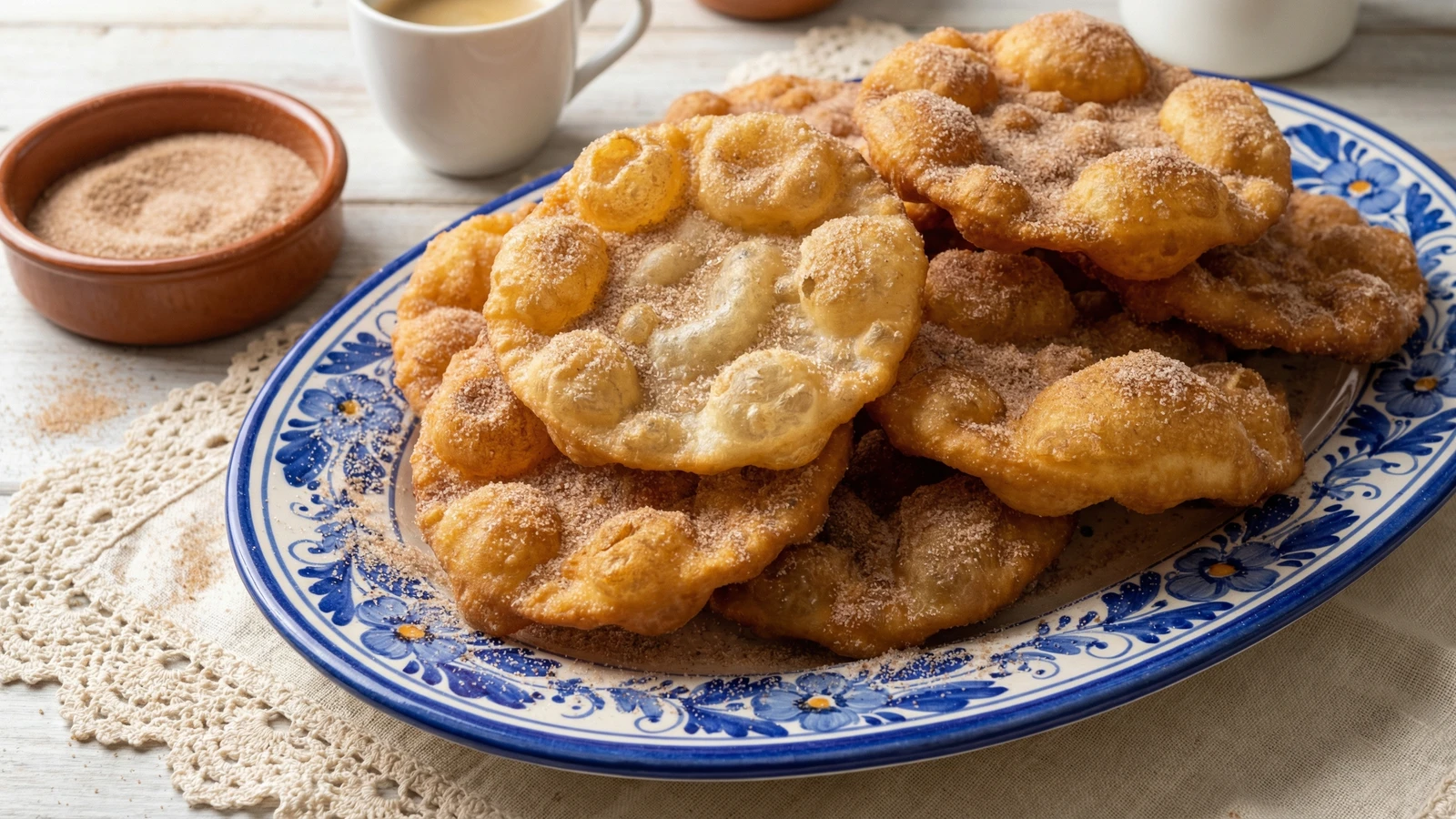
Filhós de Natal
Created by
The Christmas fried dough that every Portuguese grandmother shapes differently, stretched thin by hand and fried golden, then buried under cinnamon sugar while still warm. This is what December smells like.
When I was small, I knew Christmas was coming by the smell. Not pine or cinnamon candles. Frying oil and sugar. Avó Leonor would take over the kitchen for an entire afternoon, her hands working dough that she'd been making since before my mother was born.
Filhós are chaos and tradition wrapped together. The dough is sticky, temperamental, alive. You stretch it thin over your knuckles until you can almost see through it. Then you drop it into hot oil and watch it puff and twist and turn golden. Every family shapes them differently. Some make roses. Some make figure-eights. Some just pull and stretch until the dough decides what it wants to be.
There are two schools: abóbora or aguardente. Pumpkin or brandy. Avó Leonor was firmly in the pumpkin camp. The abóbora makes the dough tender, slightly sweet, easier to work. The aguardente version is lighter, crispier, with that warmth of alcohol that burns off in the frying. I'll give you both variations because this is a recipe where families get fierce about doing it their way.
At Mesa da Avó, we serve these still warm, sugar clinging to the oil, stacked on grandmother's platters like golden clouds. People close their eyes when they bite in. They're tasting December. They're tasting childhood. They're tasting home.
Filhós descend from medieval fritters brought to Portugal through Moorish and Roman influence, with the name derived from the Latin 'folium' (leaf) for their thin, delicate shape. The tradition of making them at Christmas solidified in the 16th and 17th centuries as part of the elaborate 'consoada' feast. Regional variations developed over centuries: Beira uses more pumpkin, Trás-os-Montes favors aguardente, and the Alentejo stretches them thinner than anywhere else.
The technique, the tradition, and the story behind every dish.
Discover Culinary AdvisorIngredients
all-purpose flour
Quantity
500g
plus more for dusting
cooked pumpkin (abóbora)
Quantity
300g
mashed smooth
aguardente or brandy (optional)
Quantity
3 tablespoons
substitute for pumpkin in aguardente version
eggs
Quantity
3 large
sugar
Quantity
50g
orange zest
Quantity
from 1 orange
lemon zest
Quantity
from 1 lemon
salt
Quantity
1 teaspoon
aguardente or brandy
Quantity
1 tablespoon
vegetable oil or mild olive oil
Quantity
about 1 liter
for frying
sugar
Quantity
200g
for cinnamon sugar coating
ground cinnamon
Quantity
2 tablespoons
for coating
| Ingredient | Quantity |
|---|---|
| all-purpose flourplus more for dusting | 500g |
| cooked pumpkin (abóbora)mashed smooth | 300g |
| aguardente or brandy (optional)substitute for pumpkin in aguardente version | 3 tablespoons |
| eggs | 3 large |
| sugar | 50g |
| orange zest | from 1 orange |
| lemon zest | from 1 lemon |
| salt | 1 teaspoon |
| aguardente or brandy | 1 tablespoon |
| vegetable oil or mild olive oilfor frying | about 1 liter |
| sugarfor cinnamon sugar coating | 200g |
| ground cinnamonfor coating | 2 tablespoons |
Equipment Needed
- •Large deep pot for frying
- •Kitchen thermometer
- •Slotted spoon or spider
- •Clean kitchen towels
- •Large serving platter
Instructions
- 1
Prepare the pumpkin
If using pumpkin, you need it completely smooth and not too wet. Cut abóbora menina or butternut squash into chunks, roast at 200°C until completely soft, about 40 minutes. Scoop out the flesh and mash until no lumps remain. If it seems watery, spread it on a clean kitchen towel and let it drain for 10 minutes. Wet pumpkin makes sticky dough.
Avó Leonor roasted the pumpkin the night before and let it sit in a colander overnight. The drier the pumpkin, the easier the dough. - 2
Make the dough
In a large bowl, combine the flour, sugar, salt, orange zest, and lemon zest. Make a well in the center. Add the eggs, mashed pumpkin (or 3 tablespoons aguardente if making the brandy version), and the tablespoon of aguardente. Mix with your hands, bringing the flour in gradually from the edges. The dough will be sticky. This is correct. Keep working it until it comes together into a shaggy mass.
- 3
Knead until smooth
Turn the dough onto a floured surface and knead for 8 to 10 minutes. Add flour sparingly, only if it sticks so badly you can't work it. The dough should become smooth, soft, and elastic. It should feel alive under your hands. When you poke it, it should spring back slowly. Cover with a clean towel and let it rest for 30 minutes. Resting relaxes the gluten so you can stretch it thin.
Don't skip the resting. Dough that hasn't rested will fight you when you try to stretch it. - 4
Heat the oil
Pour oil into a large, deep pot to a depth of at least 8 centimeters. Heat to 170°C (340°F). Use a thermometer. Too hot and the outside burns before the inside cooks. Too cool and they absorb oil and turn heavy. Have a plate lined with paper towels ready, and a slotted spoon or spider for turning.
- 5
Shape the filhós
Pinch off a piece of dough about the size of a golf ball. On a lightly floured surface, press it flat. Now here's where it gets interesting. Pick up the dough and drape it over your knuckles. Gently stretch and rotate, letting gravity help, pulling it thinner and thinner until you can nearly see through the center. The edges will stay thicker. This is fine. This is traditional. Some people make slits with scissors. Some twist into figure-eights. Some let it stay irregular. Every family has their shape.
Avó Leonor stretched hers over the back of her fist, turning slowly like she was spinning a plate. I still can't do it as thin as she did. But you don't need perfection. You need character. - 6
Fry until golden
Carefully lay the stretched dough into the hot oil. It will puff immediately. Use the slotted spoon to gently turn it after about 30 seconds, when the bottom is golden. Fry another 30 seconds on the second side. The whole process takes barely a minute. The filhó should be golden brown with darker spots where the dough was thicker. Remove to the paper-lined plate. Work in batches, never crowding the pot.
- 7
Coat in cinnamon sugar
While the filhós are still warm and slightly oily, toss them in the cinnamon sugar mixture. Don't be shy. The sugar should coat every surface, clinging to the oil. Stack them on a serving platter as you go. They're best eaten within a few hours of frying, while still slightly warm and impossibly crispy.
Chef Tips
- •The aguardente version is lighter and crispier but harder to stretch because there's no pumpkin to soften the gluten. If you're new to filhós, start with pumpkin.
- •Portuguese grandmothers traditionally fried in lard or a mix of lard and olive oil. Use vegetable oil if you prefer, but lard gives an incredible crispness that's hard to replicate.
- •Shape all your dough pieces before you start frying. Once you're at the stove, you won't have time to stretch more dough. The frying goes fast.
- •Filhós don't keep well. They're best the day they're made. By the next day, the oil has made them soft. This is why we make them for celebrations: they demand to be eaten immediately, surrounded by family.
- •In some regions, people drizzle honey over them instead of using cinnamon sugar. In others, they dust with plain sugar and serve with cups of hot honey on the side for dipping. All are correct.
Advance Preparation
- •The pumpkin can be roasted and mashed up to 2 days ahead. Refrigerate and bring to room temperature before using.
- •The dough can be made and rested up to 4 hours ahead, covered tightly. Longer than that and it becomes too sticky to work.
- •Do not fry ahead. Filhós must be fried and eaten the same day. This is a dish that gathers people in the kitchen, waiting for the next batch to come out of the oil.
Frequently Asked Questions
Nutrition Information
1 serving (about 50g)
Where cooking meets culture.
Culinary mentorship, cultural storytelling, and the editorial depth that makes cooking meaningful.
Explore Culinary Advisor