Culinary Advisor
A cooking platform built around craft, culture, and the stories behind what we eat.
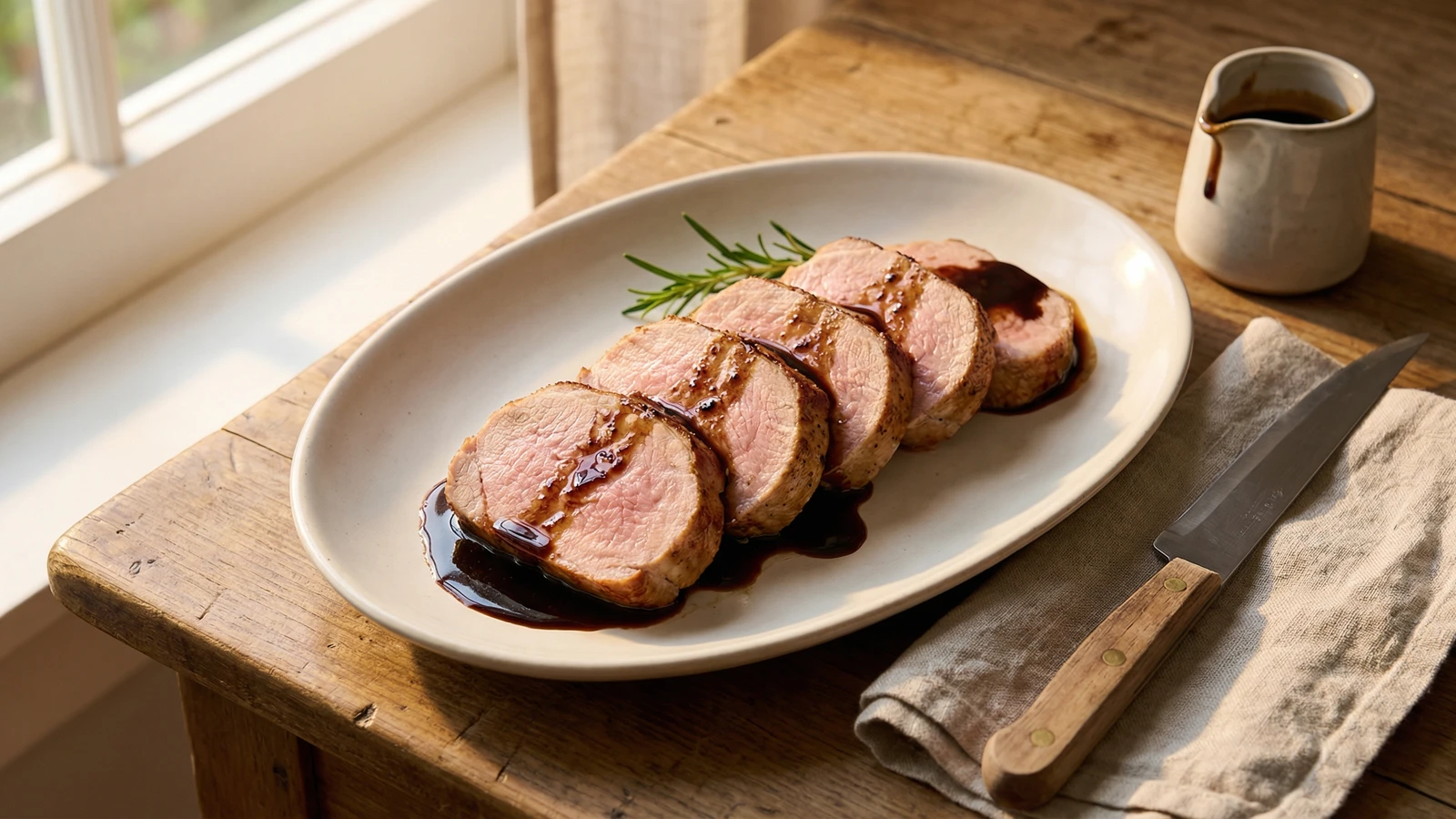
Filetto di Maiale al Balsamico
Created by Chef Graziella
Pork tenderloin seared until deeply golden, then finished with a reduction of Modena's aged balsamic vinegar. Two ingredients at their peak, married by heat and patience.
In Emilia-Romagna, we do not waste good balsamic vinegar on salad dressing. We age it in wooden barrels for decades, then use it sparingly, where its complexity can be appreciated. Drizzled over shavings of Parmigiano-Reggiano. Spooned onto fresh strawberries. And here, reduced into a glaze for pork tenderloin.
The tenderloin is the most tender cut of the pig, which also makes it the most unforgiving. It has no fat to protect it, no collagen to forgive overcooking. You must sear it properly, cook it just to the edge of doneness, and rest it completely. There is no recovering from mistakes.
What you keep out matters as much as what you put in. This dish contains pork, balsamic vinegar, aromatics for the searing butter, and nothing else. No cream to muddy the sharpness. No mustard to compete with the vinegar's complexity. The restraint is the point. When your balsamic has aged for years in a succession of chestnut, cherry, juniper, and mulberry barrels, when your pork is properly raised and carefully butchered, you do not need to add things. You need to get out of their way.
Balsamic vinegar has been produced in Modena and Reggio Emilia since at least the 11th century, when it was recorded as a gift to Holy Roman Emperor Henry III. For centuries, families passed down their acetaie (vinegar attics) like heirlooms, topping and transferring the vinegar through batteries of progressively smaller barrels. The pairing with pork honors Emilia-Romagna's twin traditions: the province is equally famous for its cured pork products and its liquid black gold.
The technique, the tradition, and the story behind every dish.
Discover Culinary AdvisorIngredients
pork tenderloins
Quantity
2 (about 1 pound each)
trimmed of silver skin
extra virgin olive oil
Quantity
3 tablespoons
unsalted butter
Quantity
2 tablespoons
fresh rosemary
Quantity
4 sprigs
fresh sage leaves
Quantity
4
garlic cloves
Quantity
2
lightly crushed with skin on
aged balsamic vinegar
Quantity
1/2 cup
dry white wine
Quantity
1/2 cup
chicken or veal stock
Quantity
1 cup
kosher salt
Quantity
to taste
black pepper
Quantity
to taste
freshly ground
| Ingredient | Quantity |
|---|---|
| pork tenderloinstrimmed of silver skin | 2 (about 1 pound each) |
| extra virgin olive oil | 3 tablespoons |
| unsalted butter | 2 tablespoons |
| fresh rosemary | 4 sprigs |
| fresh sage leaves | 4 |
| garlic cloveslightly crushed with skin on | 2 |
| aged balsamic vinegar | 1/2 cup |
| dry white wine | 1/2 cup |
| chicken or veal stock | 1 cup |
| kosher salt | to taste |
| black pepperfreshly ground | to taste |
Equipment Needed
- •Heavy 12-inch ovenproof skillet (cast iron is ideal)
- •Instant-read meat thermometer
- •Sharp carving knife
Instructions
- 1
Temper the meat
Remove the tenderloins from the refrigerator 45 minutes before cooking. Cold meat does not sear properly. It releases moisture instead of browning, and the interior cooks unevenly. Pat the pork completely dry with paper towels. Season generously with salt and pepper on all sides.
- 2
Sear the pork
Heat a heavy skillet over medium-high heat until very hot. Add the olive oil. When the oil shimmers and flows easily across the pan, add the tenderloins. Do not move them. Let them sear undisturbed for 3 to 4 minutes until a deep golden crust forms. Turn and sear the second side. Continue turning to brown all surfaces evenly, about 10 to 12 minutes total. The meat should be deeply colored all around.
The crust is not optional. It provides flavor, texture, and the fond that builds your sauce. If you move the meat too soon, you will not achieve this. Patience. - 3
Add aromatics and butter
Reduce heat to medium. Add the butter, rosemary, sage, and crushed garlic to the pan. As the butter foams, tilt the pan and baste the pork with the flavored butter for 2 minutes. The garlic should turn golden and fragrant. The herbs will sizzle and release their oils into the fat.
- 4
Finish in the oven
Transfer the skillet to a 400°F oven. Cook until an instant-read thermometer inserted into the thickest part reads 140°F, about 8 to 12 minutes depending on thickness. The meat will continue cooking as it rests. Remove from oven, transfer the pork to a cutting board, and tent loosely with foil. Rest for 10 minutes. This is not optional. Cut into the meat before resting and you lose all those juices to the cutting board instead of the plate.
Modern pork can be served at 145°F after resting, with a blush of pink at the center. The old fears of trichinosis required temperatures that made pork dry and flavorless. Times have changed. Let them. - 5
Build the sauce
While the meat rests, return the skillet to medium-high heat. Discard the garlic and herb sprigs. Add the white wine and scrape up all the browned bits from the bottom of the pan. Let the wine reduce by half, about 2 minutes. Add the stock and reduce by half again. Add the balsamic vinegar and simmer until the sauce becomes syrupy and coats the back of a spoon, about 4 minutes. The sauce should be glossy, thick enough to cling but still pourable. Taste and adjust salt.
- 6
Slice and serve
Slice the rested pork into medallions about half an inch thick. Arrange on a warm platter or individual plates. Spoon the balsamic glaze over and around the meat. Serve immediately. The glaze will begin to set as it cools, which is correct, but the dish is best eaten promptly.
Chef Tips
- •The balsamic vinegar determines this dish. Do not use the thin, harsh stuff sold in supermarkets for two dollars. Seek out vinegar labeled 'Aceto Balsamico di Modena IGP' with an age statement, or true Tradizionale if your budget permits. You need not use the 25-year Tradizionale for cooking, but the vinegar must have density and sweetness from proper aging.
- •Ask your butcher to remove the silver skin, the thin membrane that runs along the tenderloin. It shrinks when heated and causes the meat to curl. If you must do it yourself, slide a sharp knife under the membrane and pull it away in strips.
- •The fond, those browned bits stuck to the pan after searing, contains concentrated flavor. This is why you deglaze with wine before building the sauce. Do not skip this step. Do not use a nonstick pan that prevents fond from forming.
Advance Preparation
- •The pork can be seared up to 2 hours ahead and held at room temperature, then finished in the oven and sauced just before serving. The initial sear sets the crust; the final cooking can be timed to your guests' arrival.
- •The balsamic sauce can be made ahead and reheated gently. Add a splash of stock if it has thickened too much.
Frequently Asked Questions
Nutrition Information
1 serving (about 180g)
Where cooking meets culture.
Culinary mentorship, cultural storytelling, and the editorial depth that makes cooking meaningful.
Explore Culinary Advisor