Culinary Advisor
A cooking platform built around craft, culture, and the stories behind what we eat.
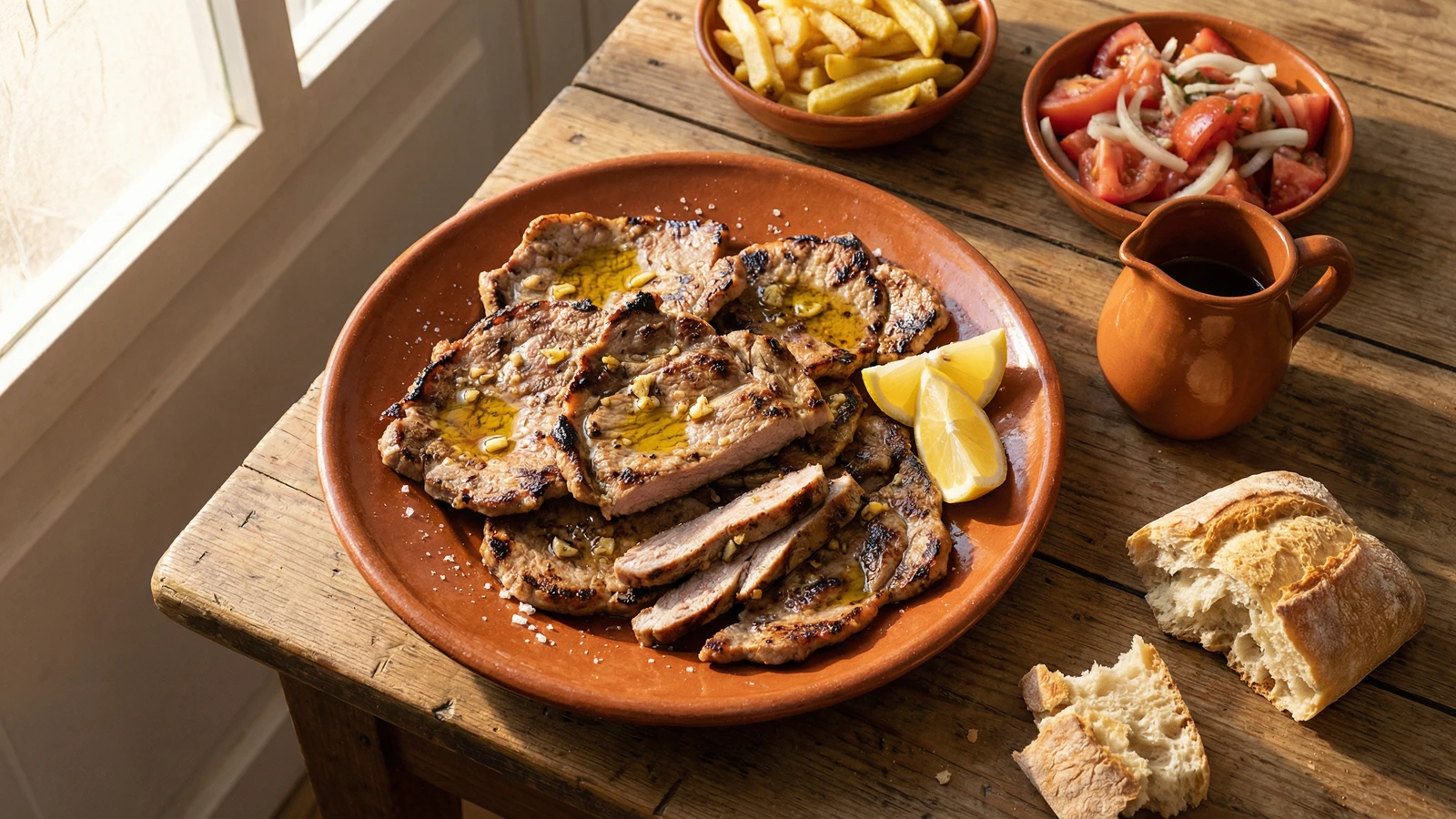
Febras de Porco Grelhadas
Created by
The grilled pork of every Portuguese tasca, marinated in garlic and wine, charred fast over high heat. Weeknight food that proves simple cooking is genius cooking.
This is the dish you smell before you see it. Walk down any street in Portugal at lunchtime and that smoky, garlicky perfume drifting from restaurant kitchens and backyard grills? That's febras.
Thin pork steaks. Garlic. White wine. Bay leaf. A hot grill. That's the whole recipe. No secret technique, no fancy equipment, no complicated steps. Just time for the marinade to work and heat to do its job. This is tasca cooking, the food of working people who needed something fast, filling, and delicious after a long morning.
Avó Leonor made febras when she didn't have time for anything else. She'd pull the pork from the marinade where it had been sitting since the night before, throw it on the grill while the potatoes fried, and lunch was ready in fifteen minutes. "A cozinha não precisa de ser complicada," she'd say. The kitchen doesn't need to be complicated.
At Mesa da Avó, I serve this with hand-cut batatas fritas and a simple tomato salad. People are always surprised that something so simple can taste so complete. But that's the secret of Portuguese cooking. We don't complicate what doesn't need complicating. The ingredients are good. The technique is honest. The result speaks for itself.
Febras are the everyday grilled pork of Portuguese tascas and churrasqueiras, dating back centuries to when pork was the most accessible meat for common people. The word 'febra' simply means a thin slice or strip of meat. The garlic and wine marinade reflects the Roman influence on Portuguese cooking, a combination so fundamental it appears across the Iberian Peninsula in countless forms.
The technique, the tradition, and the story behind every dish.
Discover Culinary AdvisorIngredients
pork loin or leg
Quantity
800g
sliced into thin steaks (about 1cm thick)
garlic cloves
Quantity
6
smashed and roughly chopped
dry white wine (vinho branco)
Quantity
1 cup
extra virgin olive oil (azeite)
Quantity
3 tablespoons, plus more for finishing
bay leaves (louro)
Quantity
2
sweet paprika (colorau doce)
Quantity
1 teaspoon
coarse sea salt
Quantity
1 teaspoon
black pepper
Quantity
freshly ground, to taste
lemon wedges
Quantity
for serving
| Ingredient | Quantity |
|---|---|
| pork loin or legsliced into thin steaks (about 1cm thick) | 800g |
| garlic clovessmashed and roughly chopped | 6 |
| dry white wine (vinho branco) | 1 cup |
| extra virgin olive oil (azeite) | 3 tablespoons, plus more for finishing |
| bay leaves (louro) | 2 |
| sweet paprika (colorau doce) | 1 teaspoon |
| coarse sea salt | 1 teaspoon |
| black pepper | freshly ground, to taste |
| lemon wedges | for serving |
Equipment Needed
- •Charcoal grill, gas grill, or cast iron grill pan
- •Shallow dish for marinating
- •Meat mallet or heavy pan for pounding
Instructions
- 1
Prepare the pork
If your butcher hasn't done it already, slice the pork into thin steaks, about 1cm thick. Not paper-thin, but thin enough to cook quickly. Lay them flat on a cutting board and pound gently with the heel of your hand or a meat mallet to even out the thickness. This ensures they cook evenly and stay tender.
- 2
Build the marinade
In a shallow dish large enough to hold all the steaks, combine the garlic, white wine, olive oil, bay leaves, paprika, salt, and a generous grinding of pepper. Stir it together. The smell should hit you immediately: garlic, wine, louro. This is the smell of every tasca kitchen in Portugal.
Use a wine you'd actually drink. Nothing fancy, but decent. If you wouldn't pour it in a glass, don't pour it on your meat. - 3
Marinate the pork
Lay the pork steaks in the marinade, turning to coat both sides. Press the garlic pieces onto the meat. Cover and refrigerate for at least 4 hours, or overnight if you have the time. Turn them once or twice if you remember. The wine and garlic need time to work their way into the meat. Não tenhas pressa.
Overnight is better. Avó Leonor would start this before bed and grill it for lunch the next day. The flavors deepen with time. - 4
Bring to room temperature
Remove the pork from the refrigerator 30 minutes before cooking. Cold meat on a hot grill seizes up and cooks unevenly. Let it come to room temperature while you heat the grill.
- 5
Heat the grill
Get your grill screaming hot. Charcoal is ideal, the way it's done at every churrasqueira in Portugal, but a gas grill or cast iron grill pan works too. You want high, direct heat. Clean and oil the grates. The meat should sizzle the moment it touches the surface.
If using a grill pan indoors, turn on your exhaust fan. This will smoke. That's the point. - 6
Grill the febras
Shake off the excess marinade but leave the garlic clinging to the meat. Lay the steaks on the hot grill and don't touch them. Let them char, 2 to 3 minutes per side. You want dark grill marks and slightly charred edges. The thin cut means they cook fast. Don't walk away. Don't overcook them or they'll turn to leather.
- 7
Rest and serve
Transfer to a warm platter and let rest for 2 minutes. Drizzle with fresh olive oil, the good stuff, straight from the bottle. Serve with lemon wedges on the side. Batatas fritas are traditional, or rice and a simple salad of tomatoes and onions dressed with azeite and vinegar. Pão on the table, always.
Chef Tips
- •Ask your butcher to slice the pork thin, about 1cm. If they give you thick steaks, you'll end up with raw centers or overcooked edges. Thin is non-negotiable.
- •The marinade works on pork leg too, which has more flavor than loin but needs the tenderizing effect of the wine. Avó Leonor preferred leg for this reason.
- •Save some of the marinade before adding the raw pork. Simmer it briefly and spoon it over the cooked meat for extra garlic flavor.
- •If you don't have a grill, a cast iron pan over high heat works. Get it smoking hot. Don't crowd the pan or the meat will steam instead of sear.
Advance Preparation
- •The pork must marinate for at least 4 hours. Overnight is better, up to 24 hours.
- •Bring the meat to room temperature 30 minutes before grilling.
- •This dish is best served immediately. Febras don't reheat well; they dry out. Cook only what you'll eat.
Frequently Asked Questions
Nutrition Information
1 serving (about 165g)
Where cooking meets culture.
Culinary mentorship, cultural storytelling, and the editorial depth that makes cooking meaningful.
Explore Culinary Advisor