Culinary Advisor
A cooking platform built around craft, culture, and the stories behind what we eat.
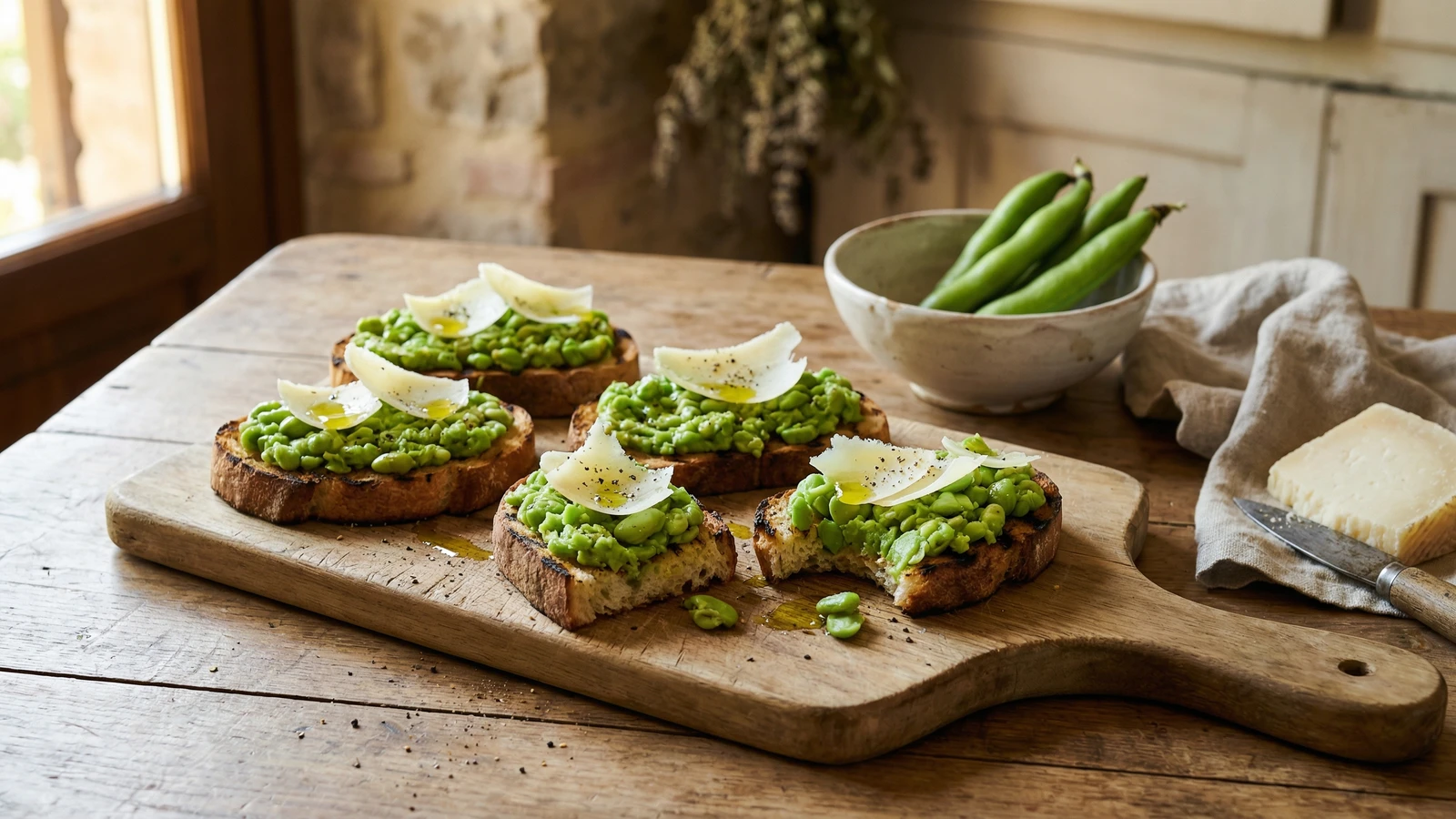
Fava Bean Crostini with Shaved Pecorino
Created by Chef Ally
Young fava beans at their springtime peak, blanched just long enough to shed their skins, crushed simply with garlic and good olive oil, spread onto charred bread, and finished with whisper-thin curls of aged pecorino.
Start at the market. Look for fava pods that feel heavy, their seams still tight, their green bright and unblemished. Hold one in your hand. It should feel like spring.
This is Tuscan cooking at its most honest. The technique exists only to serve the ingredient. You blanch the beans briefly, peel away the pale skins to reveal what is underneath, and crush them with nothing more than olive oil, garlic, and salt. The bread gets charred. The pecorino gets shaved so thin it curls. That is all.
I learned this in Italy, where cooks treat the first favas of spring the way the French treat the first asparagus. There is ceremony in it. Not fussiness, but attention. You are marking a moment in the calendar, a fleeting window when these beans taste like nothing else on earth.
Every meal is a meaningful choice. When you buy favas from someone who grew them, when you take the time to peel each one, you are participating in something larger than dinner. The simplicity is the point. Perfect ingredients need almost nothing done to them.
The technique, the tradition, and the story behind every dish.
Discover Culinary AdvisorIngredients
fresh fava beans in pods
Quantity
2 pounds (about 1 1/2 cups shelled and peeled)
extra virgin olive oil
Quantity
1/4 cup, plus more for drizzling
garlic
Quantity
1 small clove
minced very fine
flaky sea salt
Quantity
1/2 teaspoon, plus more to taste
black pepper
Quantity
to taste
freshly cracked
rustic country loaf or ciabatta
Quantity
1 loaf
cut into 1/2-inch slices
garlic clove for bread
Quantity
1 whole
halved
aged Pecorino Romano or Pecorino Toscano
Quantity
2 ounces
for shaving
fresh mint leaves (optional)
Quantity
small handful
| Ingredient | Quantity |
|---|---|
| fresh fava beans in pods | 2 pounds (about 1 1/2 cups shelled and peeled) |
| extra virgin olive oil | 1/4 cup, plus more for drizzling |
| garlicminced very fine | 1 small clove |
| flaky sea salt | 1/2 teaspoon, plus more to taste |
| black pepperfreshly cracked | to taste |
| rustic country loaf or ciabattacut into 1/2-inch slices | 1 loaf |
| garlic clove for breadhalved | 1 whole |
| aged Pecorino Romano or Pecorino Toscanofor shaving | 2 ounces |
| fresh mint leaves (optional) | small handful |
Equipment Needed
- •Large pot for blanching
- •Bowl of ice water
- •Cast iron grill pan or skillet
- •Vegetable peeler for shaving cheese
Instructions
- 1
Shell the favas
Split open each fava pod along its seam and run your thumb down the interior, releasing the beans into a bowl. The pods are surprisingly beautiful inside, lined with what feels like velvet. Two pounds of pods will yield roughly a cup and a half of beans, enough to spread generously across twelve toasts. This is meditative work. Do not rush it.
Choose pods that feel plump but not swollen. Overgrown favas turn starchy. The best ones are the size of your thumbnail, bright green, and tender. - 2
Blanch briefly
Bring a pot of well-salted water to a boil. Add the shelled favas and cook for sixty to ninety seconds, just until the skins loosen. You are not cooking them through, only softening that outer membrane so it slips away. Drain and transfer immediately to a bowl of ice water. This stops the cooking and keeps the color impossibly green.
- 3
Peel the inner skins
This is the step that separates good fava crostini from great. Each bean has a pale outer skin that must come off. Pinch one end gently between your thumb and forefinger. The bright green interior will slip out like a small gem. Discard the skins. What remains are favas so tender and sweet they barely need cooking at all.
Very young favas, no bigger than your pinky nail, can sometimes skip this step. But by mid-spring, the skins toughen. Peel them. The texture difference is everything. - 4
Crush with olive oil
Place the peeled favas in a bowl. Add the minced garlic, a good pour of olive oil, and half a teaspoon of flaky salt. Use a fork to crush the beans roughly. Some should break down into a coarse paste. Others should stay in pieces. This is not hummus. The texture should feel alive, varied, green. Taste. Adjust the salt. Add more oil if it seems dry.
- 5
Grill the bread
Heat a grill pan or cast iron skillet over medium-high heat until it smokes lightly. Brush both sides of your bread slices with olive oil and grill until you have dark char marks and the bread turns crisp at the edges, about two minutes per side. The bread should crackle when you press it. While still warm, rub one side of each slice with the cut garlic clove. The heat opens the bread's pores and pulls in the garlic's flavor.
- 6
Assemble and finish
Spoon the fava mixture generously onto each warm toast, spreading it to the edges so every bite has beans. Use a vegetable peeler to shave thin curls of pecorino over the top. Finish with a crack of black pepper and a final thread of olive oil. If you have fresh mint, tear a few small leaves and scatter them across. Serve immediately, while the bread still holds its warmth.
Chef Tips
- •Seek out favas at farmers' markets in April and May. Supermarket favas, shipped from far away, often sit too long and turn mealy. Ask when they were picked. Freshness is everything here.
- •Save the pods for vegetable stock. They add a subtle, grassy sweetness. Waste nothing the plant gives you.
- •The olive oil matters as much as the beans. Use something peppery and green, something you would happily drink from a spoon. This is not the moment for neutral oil.
- •If you cannot find fresh favas, frozen and peeled favas (available at some specialty markets) work in a pinch. They will not have the same aliveness, but they honor the spirit of the dish.
- •Pecorino Toscano is milder than Romano. Either works, but Toscano keeps the dish softer, more pastoral. Romano adds salt and sharpness.
Advance Preparation
- •Favas can be shelled, blanched, and peeled up to one day ahead. Store them covered in the refrigerator with a drizzle of olive oil to prevent browning.
- •The crushed fava mixture is best made within a few hours of serving. It loses its bright color if it sits too long.
- •Bread can be grilled up to two hours ahead and kept at room temperature. Assemble just before guests arrive.
Frequently Asked Questions
Nutrition Information
1 serving (about 140g)
Where cooking meets culture.
Culinary mentorship, cultural storytelling, and the editorial depth that makes cooking meaningful.
Explore Culinary Advisor