Culinary Advisor
A cooking platform built around craft, culture, and the stories behind what we eat.
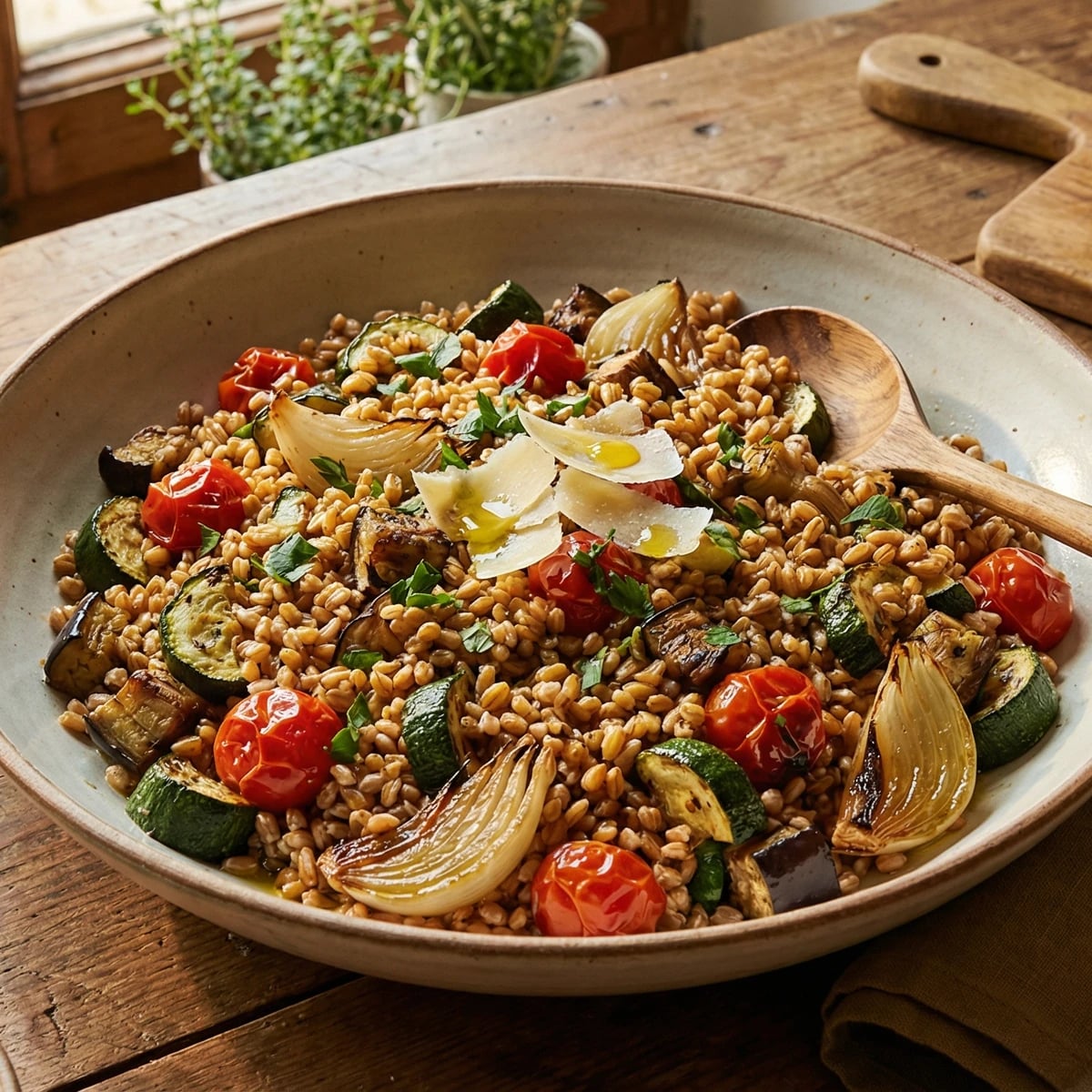
Farro con Verdure
Created by Chef Graziella
The grain that fed Roman legions and Tuscan farmers for millennia, prepared simply with vegetables charred at high heat and dressed with nothing more than good olive oil.
Farro is older than Italy itself. This grain, a form of emmer wheat, sustained the Roman legions, fed generations of Tuscan farmers, and remains a staple in the hills around Lucca. When pasta arrived in Italy, most regions abandoned their ancient grains. Tuscany did not. The Garfagnana valley still grows farro as it has for two thousand years.
The grain must be cooked properly. Not soft, not mushy, but tender with resistance. You will know it is done when you bite through and find that pleasant chew, like good pasta cooked al dente. Americans overcook everything. Do not be American about this.
The vegetables roast at high heat until their edges char and their sugars concentrate. This is not steaming. This is not sautéing in a crowded pan. Spread them out, give them space, let the oven do its work. The charred bits are not mistakes. They are flavor.
Ingredients
farro
Quantity
1 1/2 cups
semi-pearled or perlato
kosher salt
Quantity
to taste
zucchini
Quantity
2 medium
cut into 3/4-inch pieces
| Ingredient | Quantity |
|---|---|
| farrosemi-pearled or perlato | 1 1/2 cups |
| kosher salt | to taste |
| zucchinicut into 3/4-inch pieces | 2 medium |