Culinary Advisor
A cooking platform built around craft, culture, and the stories behind what we eat.
Espetada Madeirense
Created by
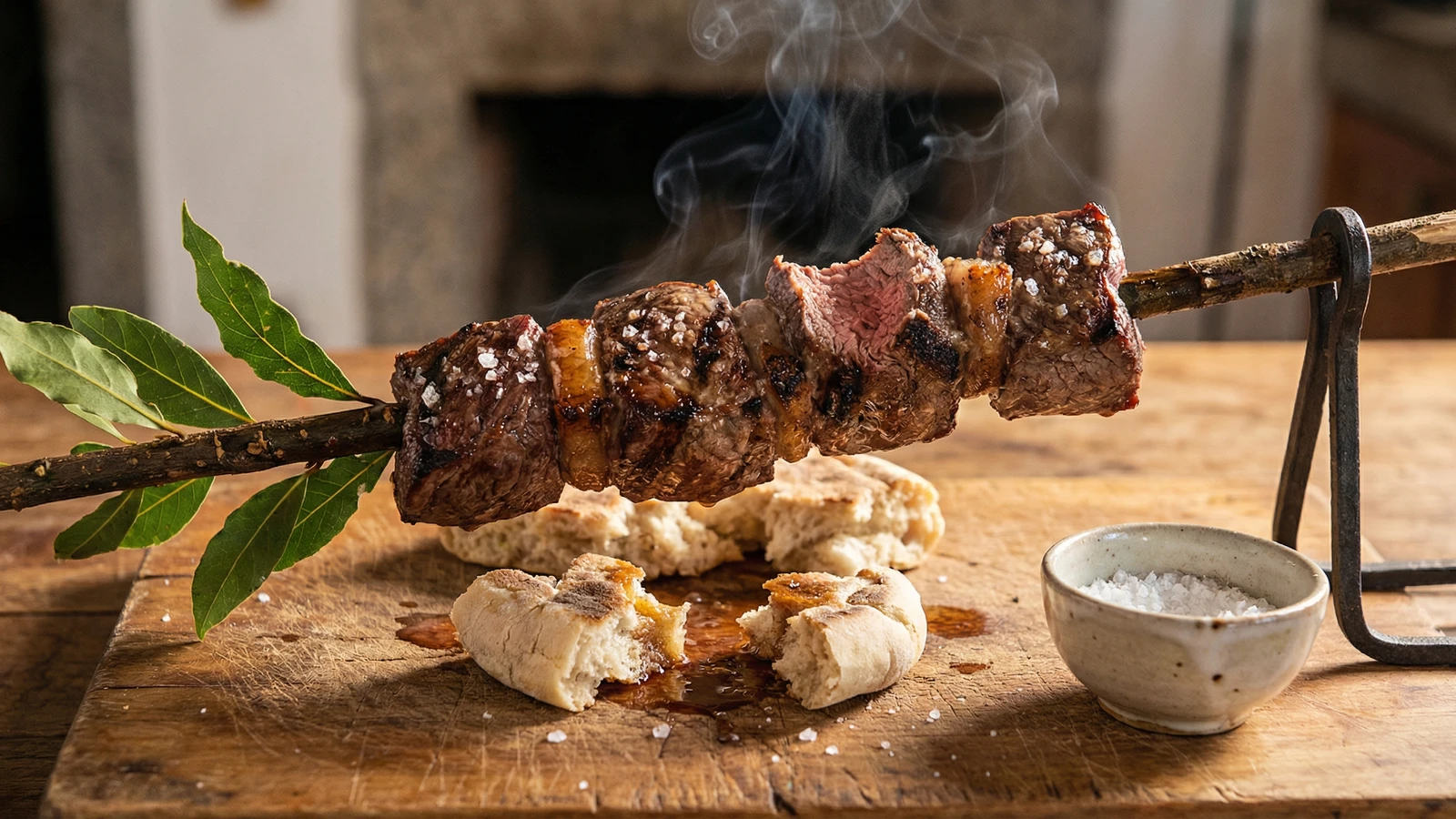
Beef cubes threaded on laurel branches, grilled over coals until charred and smoky, hung vertically at the table while the juices drip onto waiting bread. This is Madeira on a stick.
Ididn't grow up with espetada. Avó Leonor was from the mainland, from Alentejo, where we cooked pork over coals but never this way. I discovered espetada on my first trip to Madeira, sitting at a tasca in Câmara de Lobos, watching the skewers hang from iron hooks above the table. The waiter placed bread beneath them and said nothing. I understood immediately.
This is elemental cooking. Beef, salt, garlic, fire. The laurel branch isn't decoration; it's the soul of the dish. The wood releases its oils as it heats, perfuming the meat with something you can't get from metal skewers or a gas grill. When I documented recipes from grandmothers in Madeira's mountain villages, they all said the same thing: without the louro branch, it's just grilled meat.
The presentation matters too. Espetada traditionally hangs vertically on a hook called a cabide, the meat dangling while its juices drip onto bolo do caco below. That bread, warm and garlicky, drinks the beef fat and becomes part of the dish. You can lay the skewers flat on a platter and call it espetada, but you'll be missing half the experience.
At my Mesa da Avó dinners, when I serve espetada, I hang them properly. People gather around, tearing bread, sliding meat off the branches, catching drips with their fingers. It's communal, messy, perfect. This is food that forces you to pay attention to each other.
Espetada originated in the mountainous interior of Madeira, particularly in the Serra de Água and Curral das Freiras regions, where farmers and shepherds grilled beef over open fires during festivals and celebrations. The use of laurel branches dates back centuries, when the island's indigenous laurisilva forests provided abundant wood. What began as rustic mountain cooking is now Madeira's most celebrated dish, served at every village festa and exported to Portuguese communities worldwide.
The technique, the tradition, and the story behind every dish.
Discover Culinary AdvisorIngredients
beef rump or sirloin
Quantity
1.5 kg
cut into 4cm cubes
garlic
Quantity
6 cloves
minced
coarse sea salt
Quantity
2 tablespoons
black pepper
Quantity
1 teaspoon
freshly ground
fresh bay leaves
Quantity
4
torn
extra virgin olive oil
Quantity
3 tablespoons
laurel branches
Quantity
6, about 40cm long
bark partially stripped
bolo do caco bread
Quantity
for serving
| Ingredient | Quantity |
|---|---|
| beef rump or sirloincut into 4cm cubes | 1.5 kg |
| garlicminced | 6 cloves |
| coarse sea salt | 2 tablespoons |
| black pepperfreshly ground | 1 teaspoon |
| fresh bay leavestorn | 4 |
| extra virgin olive oil | 3 tablespoons |
| laurel branchesbark partially stripped | 6, about 40cm long |
| bolo do caco bread | for serving |
Equipment Needed
- •Charcoal grill or open fire pit
- •Laurel branches or long metal skewers
- •Espetada hook stand (cabide) if available
Instructions
- 1
Season the beef
In a large bowl, combine the beef cubes with the minced garlic, coarse salt, pepper, torn bay leaves, and olive oil. Use your hands to massage everything together, making sure each piece is coated. The salt should be visible on the meat. Cover and let it rest at room temperature for at least 30 minutes, or refrigerate for up to 4 hours. The longer it sits, the deeper the flavor penetrates.
Don't be shy with the salt. The coarse crystals form a crust on the outside while the interior stays properly seasoned. This is mountain food, made for people who worked hard. - 2
Prepare the laurel branches
If using fresh laurel branches, strip the bark from the bottom half and sharpen one end to a point. The leaves and bark on the top half stay intact. Soak the branches in water for 30 minutes before threading. This prevents burning and releases more aroma during grilling. If you can't find laurel branches, use long metal skewers and tuck fresh bay leaves between the meat cubes.
In Madeira, the branches come from the indigenous laurel forests in the mountains. The aromatic smoke is part of what makes espetada what it is. Metal skewers work, but you lose that perfume. - 3
Thread the meat
Thread the beef cubes onto the laurel branches, pressing them close together but not crushing them. Leave about 5cm of branch exposed at each end for handling. Each skewer should hold 6 to 8 pieces. The cubes should touch but not be compressed; they need space for heat to circulate.
- 4
Prepare the fire
Build a hot charcoal fire and let it burn down to glowing coals with no active flames. You want intense, even heat. Hold your hand about 10cm above the grill; if you can only hold it there for 2 to 3 seconds, you're ready. This is not gentle cooking. The outside should char while the inside stays pink.
- 5
Grill the espetadas
Place the skewers directly over the hottest part of the coals. Grill for about 3 to 4 minutes per side for medium-rare, turning only once or twice. The fat should sizzle and drip, the edges should char, and the laurel should release its smoke. Listen for that sizzle. Watch for the char. Don't fidget with them. Let the fire do its work.
In Madeira, the skewers hang vertically over the fire, and the juices drip down onto bread placed below. If you have a way to rig this, do it. The bread catches all the goodness. - 6
Rest and serve
Rest the skewers for 2 minutes. In Madeira, they're traditionally hung on a special hook stand at the table, with bolo do caco placed underneath to catch the juices. Serve the meat directly from the branch, letting people slide pieces onto their plates. The bread is essential. Tear it, don't slice it. Soak up every drop.
Chef Tips
- •The beef should be at room temperature before grilling. Cold meat doesn't char properly and steams instead of sears. Take it out of the refrigerator 30 minutes before cooking.
- •Coarse salt is essential, not fine table salt. The large crystals create texture and don't dissolve completely, giving you bursts of salinity with the beef. Flor de sal works beautifully.
- •If you can't find fresh laurel branches, order dried ones online or use metal skewers with fresh bay leaves tucked between the meat. It's not the same, but it's better than nothing.
- •The traditional hanging presentation isn't just theater. Vertical cooking lets fat drip away cleanly while the bread below catches every precious drop. Rig something up. It's worth it.
- •In Madeira, espetada is always served with milho frito (fried cornmeal cubes) alongside the bolo do caco. If you want the full experience, make both.
Advance Preparation
- •The beef can marinate for up to 4 hours in the refrigerator. Longer than that and the salt begins to cure the meat, changing the texture.
- •Laurel branches should be soaked in water for 30 minutes before use to prevent them from catching fire.
- •Bolo do caco can be made earlier in the day and rewarmed on the grill while the espetadas rest.
Frequently Asked Questions
Nutrition Information
1 serving (about 195g)
Where cooking meets culture.
Culinary mentorship, cultural storytelling, and the editorial depth that makes cooking meaningful.
Explore Culinary Advisor