Culinary Advisor
A cooking platform built around craft, culture, and the stories behind what we eat.
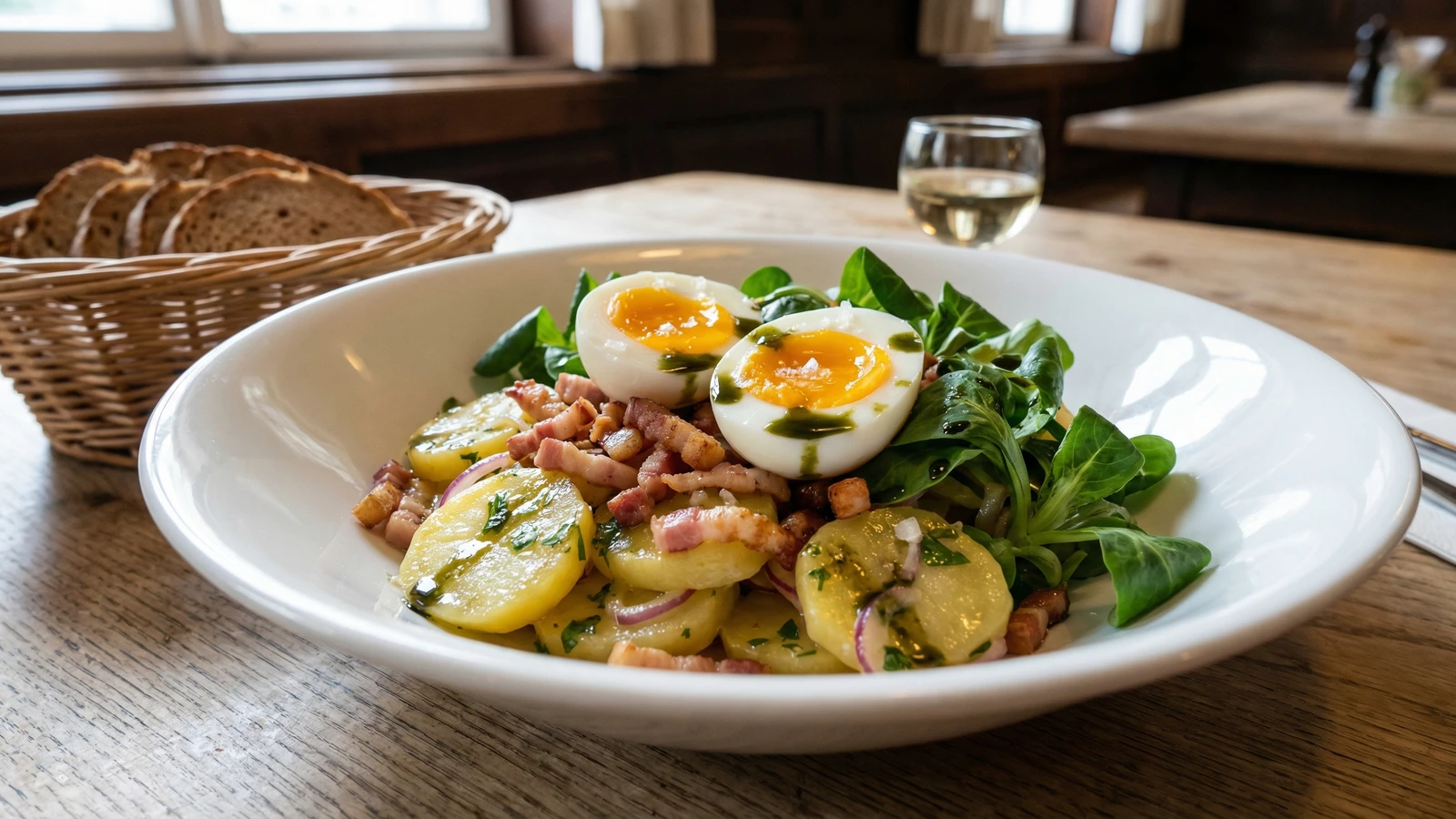
Erdäpfel-Vogerlsalat mit Speck
Created by Chef Elsa
Warm broth-soaked potatoes and crispy Speck over tender Vogerlsalat, finished with a drizzle of dark Steirisches Kürbiskernöl and a soft-boiled egg that ties the whole bowl together.
The first time I tasted Kürbiskernöl, I was about eight years old and sitting in a Gasthaus in Graz with Gretel and my grandmother Eva. Gretel ordered a Vogerlsalat for the table and when the bowl arrived, this dark green oil was pooled across the leaves. I thought something had gone wrong. Then I tasted it. Nutty, almost sweet, with a depth that made the little round lettuce leaves taste like they'd been waiting their whole life for exactly that dressing. I've been hooked ever since.
Erdäpfel-Vogerlsalat mit Speck is the salad I put on my restaurant menu in Salzburg every autumn and keep there until spring. It's a composed salad, which in Austrian terms means each element is prepared separately, with care, and brought together on the plate so you can taste every part. Warm potatoes dressed in broth and vinegar while they're still hot. Crispy Speck fried until it shatters. A handful of Vogerlsalat, those small, nutty rosettes of lamb's lettuce that Austrians love. And a soft-boiled egg, split open at the table so the yolk runs into everything and becomes part of the dressing.
The technique here is not complicated, but the timing matters. The potatoes must be dressed while hot because that's when they absorb the broth and vinegar. The Speck must be crispy. The Vogerlsalat must be added last, barely dressed, so it stays tender and doesn't wilt under the warmth of everything else. Get those three things right and you have a salad that could anchor a whole meal. Good Austrian home cooking at its most honest.
Vogerlsalat, known as Feldsalat in Germany and mâche in France, has been foraged and cultivated in Austria since at least the 18th century. The name Vogerlsalat (literally 'little bird's salad') is distinctly Austrian. Pairing it with warm Erdäpfelsalat and Kürbiskernöl is a Styrian tradition rooted in the region's protected-origin pumpkin seed oil production, which dates to the 18th century in southeastern Styria. Steirisches Kürbiskernöl g.g.A. received EU protected geographical indication status in 1996, making it one of Austria's most rigorously protected food products.
The technique, the tradition, and the story behind every dish.
Discover Culinary AdvisorIngredients
festkochende (waxy) potatoes
Quantity
600g
unpeeled
warm beef broth
Quantity
200ml
homemade if possible
Apfelessig (apple cider vinegar) or Hesperidenessig
Quantity
3 tablespoons
white onion
Quantity
1 small
very finely diced
smooth Dijon mustard
Quantity
1 teaspoon
neutral oil (sunflower or rapeseed)
Quantity
3 tablespoons
salt and freshly ground black pepper
Quantity
to taste
sugar
Quantity
pinch
Speck (Austrian smoked bacon)
Quantity
150g
sliced 3mm thick, cut into lardons
Vogerlsalat (lamb's lettuce)
Quantity
150g
roots trimmed, washed and dried
Steirisches Kürbiskernöl g.g.A. (Styrian pumpkin seed oil)
Quantity
3 tablespoons
Apfelessig (for the Vogerlsalat)
Quantity
1 tablespoon
eggs
Quantity
4 large
for soft-boiling
flaky salt
Quantity
for finishing
| Ingredient | Quantity |
|---|---|
| festkochende (waxy) potatoesunpeeled | 600g |
| warm beef brothhomemade if possible | 200ml |
| Apfelessig (apple cider vinegar) or Hesperidenessig | 3 tablespoons |
| white onionvery finely diced | 1 small |
| smooth Dijon mustard | 1 teaspoon |
| neutral oil (sunflower or rapeseed) | 3 tablespoons |
| salt and freshly ground black pepper | to taste |
| sugar | pinch |
| Speck (Austrian smoked bacon)sliced 3mm thick, cut into lardons | 150g |
| Vogerlsalat (lamb's lettuce)roots trimmed, washed and dried | 150g |
| Steirisches Kürbiskernöl g.g.A. (Styrian pumpkin seed oil) | 3 tablespoons |
| Apfelessig (for the Vogerlsalat) | 1 tablespoon |
| eggsfor soft-boiling | 4 large |
| flaky salt | for finishing |
Equipment Needed
- •Large pot for boiling potatoes
- •Small pot for eggs
- •Heavy pan or skillet (24cm) for Speck
- •Wide shallow serving bowls
Instructions
- 1
Boil the potatoes
Place the potatoes whole and unpeeled in a pot of well-salted cold water. Bring to a boil, then reduce to a steady simmer. Cook until a knife slides through the center without resistance, about twenty minutes depending on size. Don't rush this by cutting them smaller. Whole potatoes absorb less water, which means better flavor and a firmer texture when you slice them. Drain and let them sit just until you can handle them.
Festkochende (waxy) potatoes hold their shape when sliced warm. If you use mehligkochende (floury) potatoes, your salad will turn to mash the moment the broth hits it. This is the single most important ingredient choice in the whole dish. - 2
Peel and slice warm
Peel the potatoes while they're still hot. Use a tea towel to hold them if you need to. Slice them into rounds about four millimeters thick, letting them fall into a wide, shallow bowl. You want a thin slice that can absorb the Marinade without falling apart, and you want them hot when the broth hits. This is the step where the salad is made or lost.
- 3
Dress with warm broth
Warm the beef broth until it's properly hot. In a small bowl, whisk together the hot broth, three tablespoons of Apfelessig, the finely diced onion, mustard, neutral oil, a pinch of sugar, and a good amount of salt and pepper. Pour this Marinade over the warm potato slices immediately. Toss gently with your hands or a soft spatula, being careful not to break the slices. Let the potatoes sit for at least ten minutes to absorb the liquid. They'll drink up most of it. That's exactly what you want.
The broth must be hot when it meets the hot potatoes. Warm starch absorbs liquid. Cold starch repels it. This is why Austrian Erdäpfelsalat tastes completely different from mayonnaise-dressed potato salads. The flavor is inside the potato, not sitting on top of it. - 4
Soft-boil the eggs
Bring a small pot of water to a rolling boil. Lower the eggs in gently with a spoon. Boil for exactly six and a half minutes. Transfer immediately to ice water and leave them there for at least three minutes. This gives you a yolk that's set at the edges but still molten and golden at the center. Peel carefully. The eggs can wait in their shells while you finish everything else.
Start with eggs straight from the fridge if you can. Cold eggs in boiling water gives more consistent timing than room-temperature eggs. And don't skip the ice bath. Without it, the residual heat keeps cooking the yolk and you lose that golden center. - 5
Fry the Speck
Place the Speck lardons in a cold pan. Set it over medium heat. Let the fat render slowly as the pan comes up to temperature. This is not the same as throwing bacon into a hot pan. Starting cold draws the fat out gradually, and the Speck crisps evenly without burning at the edges while the center stays soft. After about five to seven minutes, the pieces should be deeply golden and crisp all the way through. Lift them out with a slotted spoon onto a piece of kitchen paper. Save a tablespoon of the rendered fat.
- 6
Dress the Vogerlsalat
In a small bowl, whisk one tablespoon of Apfelessig with the reserved tablespoon of warm Speck fat and a pinch of salt. Toss the Vogerlsalat gently in this dressing. The warmth of the fat will barely soften the leaves without wilting them. Vogerlsalat is tender and bruises easily. Handle it like you're holding something you care about. Don't overdress it. You want each rosette lightly coated, not drowned.
- 7
Compose the salad
Spoon the warm potato salad onto plates or into wide shallow bowls, spreading it into a generous bed. Pile the dressed Vogerlsalat loosely on top. Scatter the crispy Speck over everything. Halve the soft-boiled eggs and nestle them into the salad, yolk side up. Drizzle each plate with Kürbiskernöl. Let it fall in dark green ribbons across the potatoes and leaves. Finish with flaky salt over the egg yolks. Serve immediately while the potatoes are still warm and the Speck is still crisp. Mahlzeit!
Kürbiskernöl is never heated. It's a finishing oil, always added at the table or just before serving. Heat destroys its flavor and turns it bitter. If you cook with it, you've wasted it.
Chef Tips
- •Steirisches Kürbiskernöl g.g.A. is the real thing: dark green, almost black, thick and nutty. If the oil in the bottle looks pale or thin, it's not what you want. The protected-origin oil costs more and it's worth every cent. A little goes a long way. Buy a small bottle and keep it in a cool cupboard, never in the fridge.
- •Gretel always said the Marinade for Erdäpfelsalat should taste too sharp on its own. The potatoes absorb the vinegar and mellow it. If the dressing tastes balanced in the bowl, it will taste flat on the plate. Trust the sourness. The potatoes know what to do with it.
- •Vogerlsalat has a short season, from late autumn through early spring. If you can't find it, use young spinach leaves or a mix of mâche and watercress. It won't be the same, but the spirit of the salad will carry through.
- •The rendered Speck fat is not waste. Dressing the Vogerlsalat in warm fat is an old Styrian trick that gives the leaves a savory depth no olive oil can match. Don't pour it down the drain.
Advance Preparation
- •The Erdäpfelsalat base (potatoes dressed in warm broth) can be made up to two hours ahead and left at room temperature. It should not be refrigerated. Austrian potato salad is served at room temperature or slightly warm, never cold.
- •Speck can be fried and drained up to thirty minutes ahead. It stays crisp at room temperature.
- •The Vogerlsalat must be washed and thoroughly dried ahead of time, but dressed only at the moment of serving. Wet leaves dilute the dressing and wilt faster.
Frequently Asked Questions
Nutrition Information
1 serving (about 370g)
Where cooking meets culture.
Culinary mentorship, cultural storytelling, and the editorial depth that makes cooking meaningful.
Explore Culinary Advisor