Culinary Advisor
A cooking platform built around craft, culture, and the stories behind what we eat.
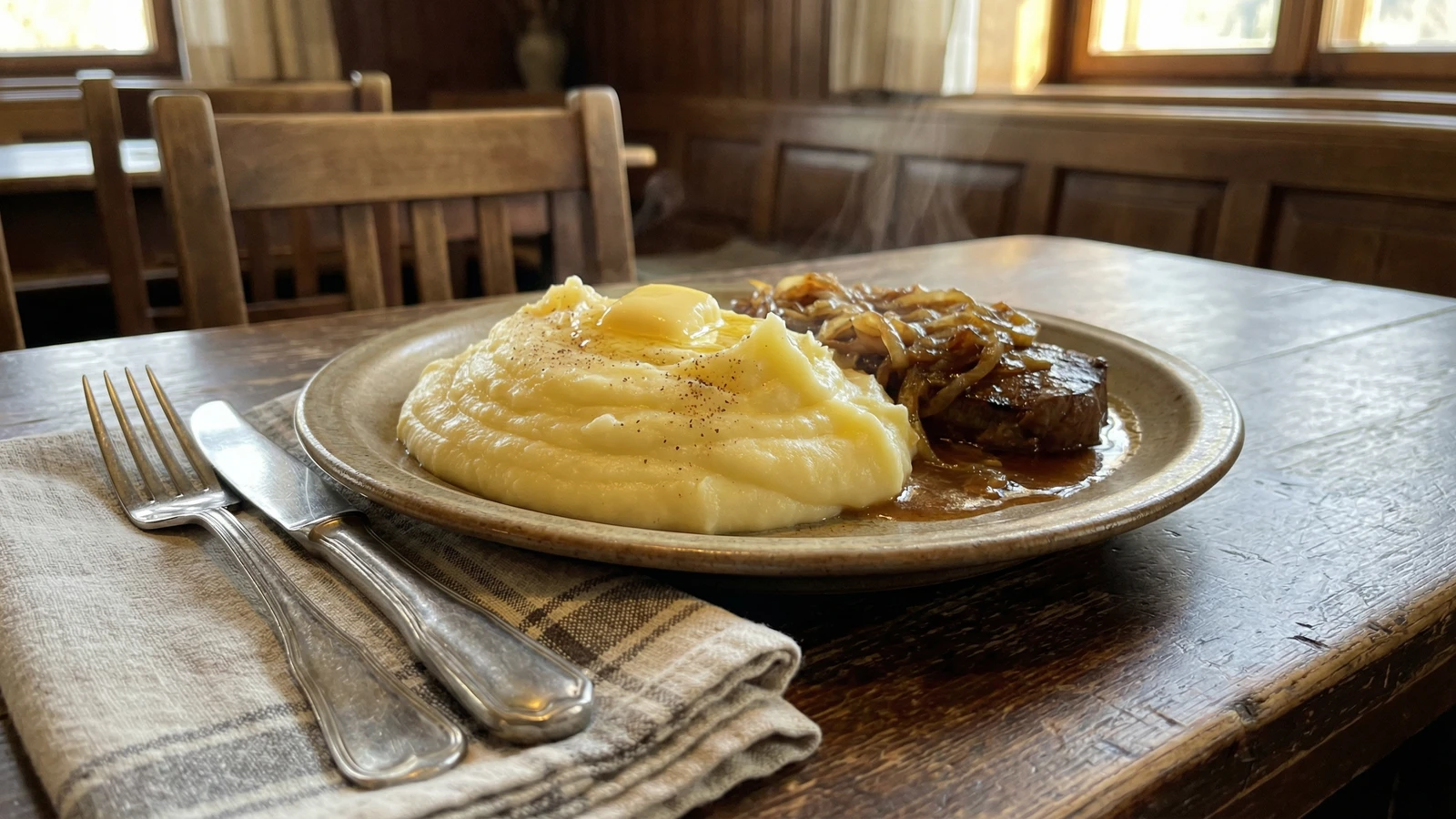
Erdäpfelpüree (Viennese Mashed Potatoes)
Created by Chef Elsa
Silky Viennese mashed potatoes pressed through a ricer, enriched with cold butter and warm milk, finished with a whisper of nutmeg. The quiet side dish that makes the whole plate work.
Every Gasthaus in Austria serves Erdäpfelpüree and most of them get it right, which tells you something about the dish. It's not complicated. Potatoes, butter, warm milk, nutmeg. Four ingredients. But the technique has to be correct or you end up with something heavy and gluey that sits on the plate like cement instead of pooling gently beside your Gulasch the way it should.
In my grandmother Eva's kitchen, this was Tuesday night food. Nothing fancy, nothing fussed over. She'd boil the Erdäpfel, rice them while they were still too hot to handle comfortably, and stir in butter until the whole pot smelled like a warm afternoon. The nutmeg came last, grated fresh from a whole nut she kept in a small tin. Gretel always said you should smell the nutmeg before you taste it. If you can't catch it when you lean over the pot, there isn't enough.
The Viennese call their potatoes Erdäpfel, earth apples, and they treat them with more respect than people realize. Erdäpfelpüree is a side dish, yes. But it's the side dish that turns Schweinsbraten into a meal and makes Zwiebelrostbraten complete. It does the quiet work. Get it right and nobody mentions it. Get it wrong and nobody forggets.
Austrians adopted the potato later than much of northern Europe, with widespread cultivation beginning in the late 18th century under Maria Theresa's agricultural reforms. The Viennese term Erdäpfel (earth apple, from the French pomme de terre) replaced the standard German Kartoffel and persists in Austrian dialect today. Erdäpfelpüree became a cornerstone of Bürgerliche Küche, the solid middle-class home cooking tradition that defined Viennese food culture through the 19th and 20th centuries, served alongside braised meats and pan sauces as the dependable foundation of the plate.
The technique, the tradition, and the story behind every dish.
Discover Culinary AdvisorIngredients
mehlige Erdäpfel (floury potatoes)
Quantity
1 kg
peeled and quartered
unsalted butter
Quantity
80g
cold, cubed
whole milk
Quantity
200ml
warmed
fine sea salt
Quantity
1/2 teaspoon, plus more to taste
nutmeg
Quantity
1/4 teaspoon
freshly grated
white pepper
Quantity
to taste
| Ingredient | Quantity |
|---|---|
| mehlige Erdäpfel (floury potatoes)peeled and quartered | 1 kg |
| unsalted buttercold, cubed | 80g |
| whole milkwarmed | 200ml |
| fine sea salt | 1/2 teaspoon, plus more to taste |
| nutmegfreshly grated | 1/4 teaspoon |
| white pepper | to taste |
Equipment Needed
- •Large pot (4-liter minimum)
- •Potato ricer
- •Wooden spoon
- •Small saucepan for warming milk
- •Fine grater or Microplane for nutmeg
Instructions
- 1
Cook the potatoes
Place the peeled, quartered potatoes in a large pot and cover with cold water by about three centimeters. Add a generous pinch of salt. Starting in cold water is important. It lets the potatoes heat evenly from the outside in, so you don't end up with mushy edges and a chalky center. Bring to a gentle boil over medium-high heat, then reduce to a steady simmer. Cook for 18 to 22 minutes, until a knife slides through the thickest piece with no resistance at all.
Cut the potatoes into even-sized pieces so they cook at the same rate. A quarter that's twice the size of its neighbor will still be hard in the middle when the small ones are falling apart. - 2
Drain and dry
Drain the potatoes thoroughly in a colander, then return them to the empty pot. Set the pot back on the turned-off burner for one to two minutes, shaking it gently a few times. You'll see the surface of the potatoes go matte and chalky as the residual heat drives off the last of the water. This step matters. Wet potatoes make gluey Püree. Dry potatoes absorb butter and milk properly.
- 3
Rice the potatoes
Press the hot potatoes through a potato ricer back into the pot. Do this while they're still very hot. Cold potatoes resist the ricer and the starch tightens up, leaving you with lumps that no amount of stirring will fix. If you don't have a ricer, use a fine-mesh sieve and push the potatoes through with the back of a spoon. Never use a food processor, a blender, or an electric mixer. The blades break the starch cells open and you'll get wallpaper paste instead of Püree.
A potato ricer is a small investment that makes an enormous difference. Every Austrian kitchen has one. It's the only tool that gives you the silk-smooth texture without overworking the starch. - 4
Add butter first
Set the pot with the riced potatoes over the lowest heat your stove can manage. Add the cold, cubed butter all at once and stir with a wooden spoon until every piece has melted and disappeared into the potato. Butter goes in before milk. This is the Viennese way and there's good reason for it: the fat coats the starch granules first, which keeps them from absorbing too much liquid and turning gummy. The order matters.
- 5
Add warm milk gradually
Pour the warm milk in slowly, a little at a time, stirring gently as you go. The milk must be warm. Cold milk shocks the starch and tightens everything up, and you'll spend five minutes stirring out lumps that didn't need to exist. You may not need all the milk. Stop when the Püree drops off the spoon in a slow, heavy ribbon. It should be loose enough to pool slightly on a plate but thick enough to hold a gentle shape.
Gretel always said the Püree tells you when it's had enough milk. Watch the consistency, not the measuring cup. Some days the potatoes are drier and want more. Some days they don't. - 6
Season and serve
Grate the nutmeg directly over the pot. A quarter teaspoon is right for this quantity, but taste and trust your own palate. Add the salt and a careful pinch of white pepper. White pepper because Viennese cooks don't like black specks in their Püree. Taste once more. Good Erdäpfelpüree should taste like butter and potato and just a warm breath of nutmeg behind it all. Serve it immediately, straight from the pot to the plate, next to whatever it's meant to accompany. Mahlzeit!
Chef Tips
- •Use mehlige (floury) potatoes, not festkochende (waxy) ones. Floury varieties like King Edward or Russet have more starch and less moisture, which gives you that smooth, light texture. Waxy potatoes make dense, sticky Püree no matter what you do to them.
- •Never reheat Erdäpfelpüree in a microwave. It tightens the starch and turns it gummy. If you must warm it up, do it gently in a pot over low heat with a splash of warm milk, stirring constantly. But honestly, this is best made fresh.
- •If you want to go the way my restaurant kitchen does it, replace half the milk with warm heavy cream. It's richer, more indulgent, and exactly the kind of thing a Gasthaus serves when it wants to remind you why you came.
- •Grate the nutmeg fresh from a whole nut. Pre-ground nutmeg loses its volatile oils within weeks and tastes like sawdust compared to the real thing. A single whole nutmeg will last you months.
Advance Preparation
- •Erdäpfelpüree is best made fresh and served immediately. It loses its silky texture as it sits.
- •If you need a head start, you can peel and quarter the potatoes up to four hours ahead. Keep them submerged in cold water so they don't oxidize and turn gray.
- •Warm the milk just before you need it. It can sit covered on the counter for ten minutes without losing too much heat.
Frequently Asked Questions
Nutrition Information
1 serving (about 275g)
Where cooking meets culture.
Culinary mentorship, cultural storytelling, and the editorial depth that makes cooking meaningful.
Explore Culinary Advisor