Culinary Advisor
A cooking platform built around craft, culture, and the stories behind what we eat.
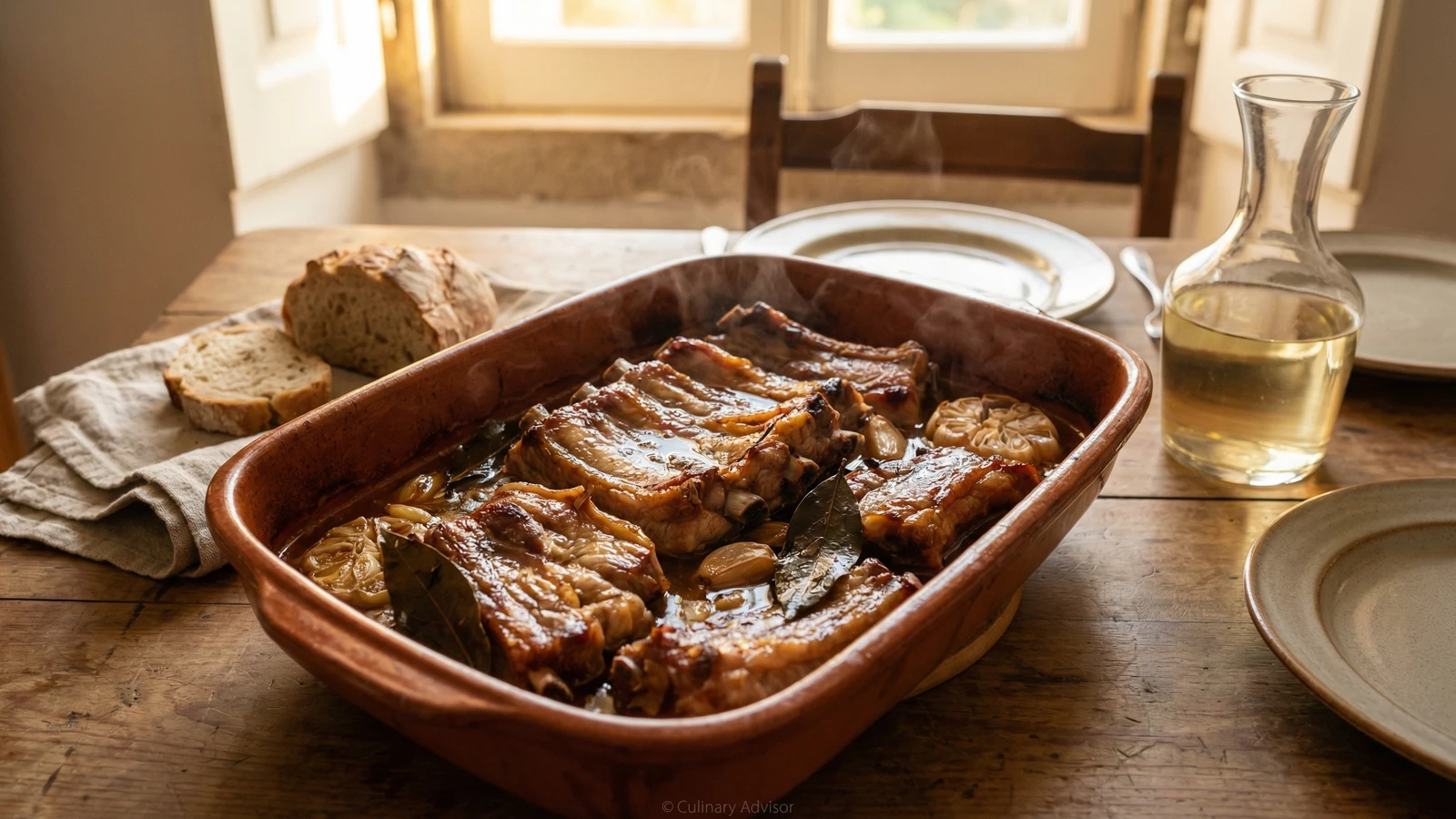
Entrecosto no Forno
Created by
The Sunday roast that fills the house with the smell of garlic and wine, pork ribs lacquered and glistening, fat rendered until the meat surrenders. This is what ovens were made for.
Sundays in my grandmother's house smelled like this. The whole morning building toward that moment when she'd open the oven door and the kitchen would fill with garlic, wine, and roasting pork. Entrecosto no forno. Ribs in the oven. Nothing complicated. Nothing fancy. Just time, heat, and patience.
This is peasant cooking at its finest. Pork has been the backbone of Portuguese cuisine since before anyone was writing recipes down. Every part of the pig was used, nothing wasted. The ribs got this treatment: rubbed with garlic, drowned in wine, roasted slow until the fat turned to silk and the meat wanted to leave the bone.
Avó Leonor would baste every twenty minutes. She'd set her kitchen timer and no matter what else she was doing, when that timer rang, she'd open the oven and spoon those juices over the meat. That's the secret. The basting. It builds layers of flavor, creates that lacquered exterior that makes your eyes close when you bite into it.
At Mesa da Avó, I've served these ribs with roasted potatoes, with migas, with nothing but bread to soak up the juices. They don't need much. The wine and garlic do all the work. You just have to give them time. Não tenhas pressa. This isn't a dish for people in a hurry.
Pork has been central to Portuguese identity since the Reconquista, when eating pork became a way to demonstrate Christian faith. Entrecosto no forno appears in household cooking across Portugal, from Minho to the Alentejo, with each region adding its own variations. The combination of white wine and garlic as a marinade dates back centuries, originally used as much for preservation as for flavor.
The technique, the tradition, and the story behind every dish.
Discover Culinary AdvisorIngredients
pork ribs (entrecosto)
Quantity
1.5 kg
in one or two racks
garlic cloves
Quantity
8
smashed
dry white wine
Quantity
250 ml
bay leaves
Quantity
4
extra virgin olive oil (azeite)
Quantity
1/4 cup
sweet paprika (colorau)
Quantity
1 tablespoon
coarse sea salt
Quantity
1 teaspoon
black pepper
Quantity
freshly ground, to taste
red wine vinegar
Quantity
1 tablespoon
fresh parsley (optional)
Quantity
for serving
| Ingredient | Quantity |
|---|---|
| pork ribs (entrecosto)in one or two racks | 1.5 kg |
| garlic clovessmashed | 8 |
| dry white wine | 250 ml |
| bay leaves | 4 |
| extra virgin olive oil (azeite) | 1/4 cup |
| sweet paprika (colorau) | 1 tablespoon |
| coarse sea salt | 1 teaspoon |
| black pepper | freshly ground, to taste |
| red wine vinegar | 1 tablespoon |
| fresh parsley (optional) | for serving |
Equipment Needed
- •Large roasting pan or deep baking dish
- •Aluminum foil
- •Large spoon for basting
Instructions
- 1
Build the marinade
In a large roasting pan or deep baking dish, combine the smashed garlic, white wine, olive oil, bay leaves, paprika, salt, pepper, and vinegar. Mix it together with your hands. The smell should already be making promises about what's to come.
- 2
Coat the ribs
Place the ribs in the marinade and turn them several times, rubbing the mixture into every surface. Make sure the garlic gets into the crevices between the bones. Cover with plastic wrap and refrigerate for at least 4 hours, or overnight if you have the patience. The longer it sits, the deeper the flavor goes.
Overnight is best. Avó Leonor would prepare the ribs before bed on Saturday and let them dream in the marinade until Sunday morning. - 3
Bring to room temperature
Remove the ribs from the refrigerator one hour before cooking. Cold meat in a hot oven cooks unevenly. Let them sit on the counter, still in their marinade, while you preheat the oven to 180°C (350°F).
- 4
Begin the roast
Place the ribs bone-side down in the roasting pan, making sure all the marinade and garlic stays in the pan. Cover tightly with aluminum foil. This first hour is about steaming, softening, letting the wine work its way into the meat. Roast for 1 hour covered.
- 5
Uncover and baste
Remove the foil. The ribs should be sitting in a pool of rendered fat and wine. This is liquid gold. Baste the ribs generously with the pan juices. Return to the oven uncovered. From here on, you'll baste every 20 minutes. Set a timer. The basting is what builds that lacquered, caramelized exterior.
Use a large spoon or a brush. Spoon is better. You can scoop up the garlic and spread it over the meat. - 6
Finish to golden perfection
Continue roasting for another 1 hour to 1 hour 30 minutes, basting every 20 minutes, until the ribs are deep golden brown and the meat has pulled back from the bones. The fat should be rendered and crispy at the edges. The meat should be tender enough that it threatens to fall off the bone when you lift it. If it's browning too fast, tent loosely with foil. If it's not browning enough, raise the heat to 200°C (400°F) for the final 15 minutes.
- 7
Rest and serve
Remove from the oven and let rest for 10 minutes. Don't skip this. The juices redistribute, and you can spoon off excess fat from the pan juices if you like (though Avó Leonor never did). Cut between the bones into individual ribs or serve the rack whole for people to tear apart at the table. Spoon the pan juices over the meat. The garlic cloves have become soft and sweet. Eat them with the pork. Scatter parsley if you want color, but it's not necessary.
Chef Tips
- •Ask your butcher to leave the membrane on the back of the ribs. Some people remove it, but it helps keep the meat moist during the long roast and crisps up beautifully.
- •The wine matters. Use something you'd drink. Vinho verde is traditional, but any dry white will work. Never cook with wine you wouldn't put in your glass.
- •Those soft garlic cloves at the bottom of the pan are a treasure. Spread them on bread. Fight over them. This is the best part, and anyone who leaves them behind doesn't understand Portuguese cooking.
- •If you want heat, add a small dried malagueta pepper to the marinade. Just one. It should warm, not burn.
Advance Preparation
- •The ribs must marinate at least 4 hours, preferably overnight. Plan accordingly.
- •Leftovers reheat beautifully. Cover and warm at 150°C (300°F) until heated through, about 20 minutes. Add a splash of wine to the pan to keep them moist.
Frequently Asked Questions
Nutrition Information
1 serving (about 250g)
Where cooking meets culture.
Culinary mentorship, cultural storytelling, and the editorial depth that makes cooking meaningful.
Explore Culinary Advisor