Culinary Advisor
A cooking platform built around craft, culture, and the stories behind what we eat.
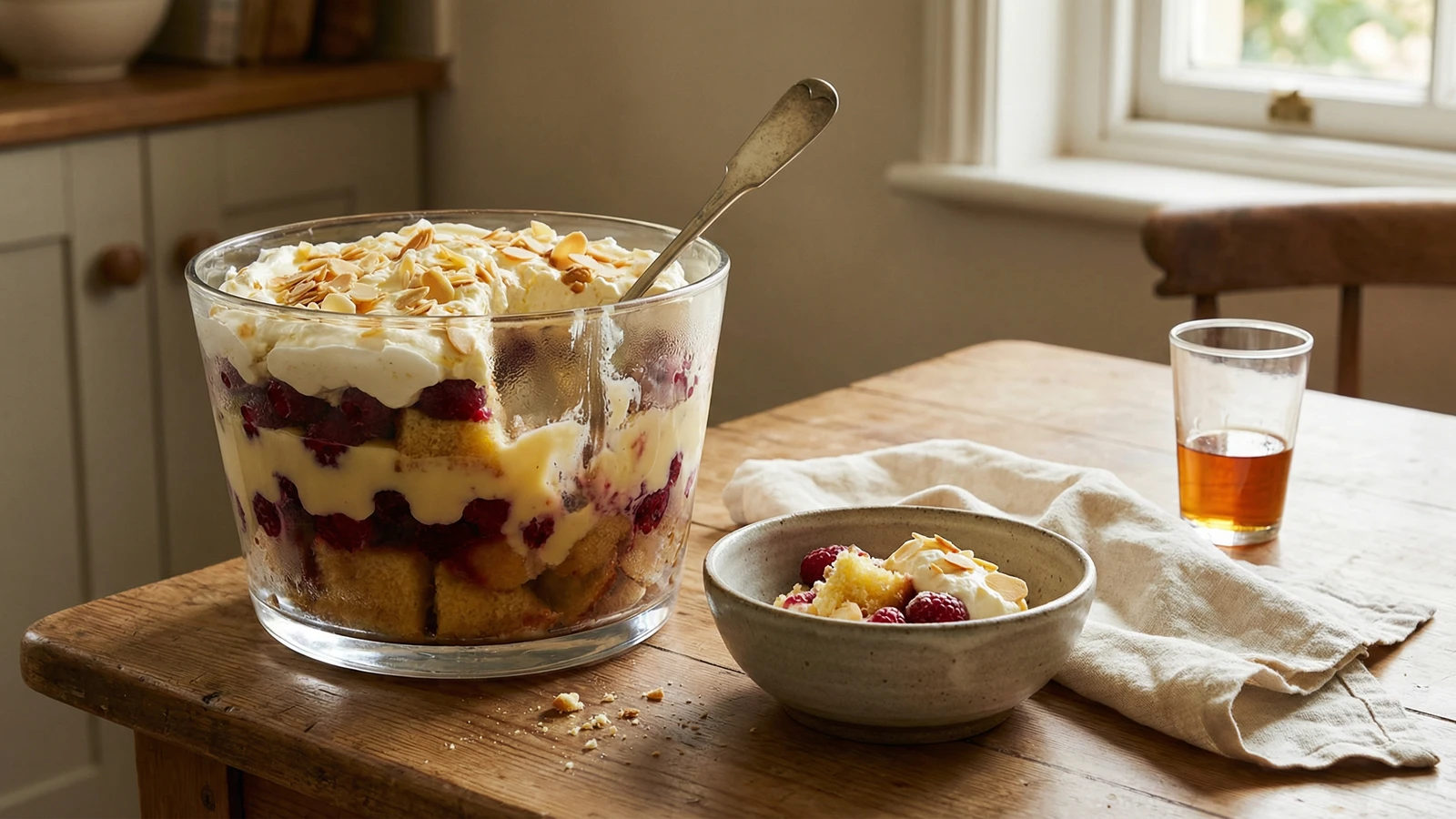
English Sherry Trifle
Created by Chef Thomas
A proper English trifle built in layers on a cold December afternoon: sponge drunk on good sherry, custard made by hand, raspberries, and softly whipped cream on top. No jelly. No apology.
It's dark by four in the afternoon and the kitchen is the only room worth being in. Something else is on in the oven, and you're standing at the hob stirring custard with a wooden spoon, watching for the moment it thickens and coats the back of the spoon. This is the quiet part of Christmas. The part before anyone arrives, when the house is still yours and the windows are steamed up and the radio is on low.
A proper trifle is made in layers, unhurried, over the course of a morning or an afternoon. Sponge spread with good raspberry jam. Enough sherry that the sponge forgets what it was. Raspberries. Proper egg custard, the kind you make with yolks and a vanilla pod and your full attention. Softly whipped cream on top. A scattering of toasted almonds. That's it. No jelly. I know some people swear by it. I'm not one of them.
I make this once a year, always a day ahead, and it lives in the fridge overnight so the sponge can drink up the sherry and the custard can settle into the fruit. By the time we eat it, every layer tastes of the day before. I wrote it down in the notebook years ago: trifle, Christmas Eve, cold kitchen, happy. Still true.
The technique, the tradition, and the story behind every dish.
Discover Culinary AdvisorIngredients
trifle sponges or Madeira cake
Quantity
8 sponges or 300g cake
sliced
good raspberry jam
Quantity
4 tablespoons
oloroso or amontillado sherry
Quantity
150ml
raspberries
Quantity
400g
frozen is fine in December
whole milk
Quantity
500ml
double cream (for custard)
Quantity
150ml
vanilla pod
Quantity
1
split and seeds scraped
large egg yolks
Quantity
6
golden caster sugar
Quantity
80g
cornflour
Quantity
2 teaspoons
double cream (for topping)
Quantity
300ml
icing sugar
Quantity
1 tablespoon
flaked almonds
Quantity
2 tablespoons
toasted
| Ingredient | Quantity |
|---|---|
| trifle sponges or Madeira cakesliced | 8 sponges or 300g cake |
| good raspberry jam | 4 tablespoons |
| oloroso or amontillado sherry | 150ml |
| raspberriesfrozen is fine in December | 400g |
| whole milk | 500ml |
| double cream (for custard) | 150ml |
| vanilla podsplit and seeds scraped | 1 |
| large egg yolks | 6 |
| golden caster sugar | 80g |
| cornflour | 2 teaspoons |
| double cream (for topping) | 300ml |
| icing sugar | 1 tablespoon |
| flaked almondstoasted | 2 tablespoons |
Equipment Needed
- •1.5 to 2 litre glass trifle bowl
- •Heavy-bottomed saucepan
- •Wooden spoon
- •Fine sieve
- •Balloon whisk
Instructions
- 1
Make the custard
Pour the milk and 150ml of cream into a heavy saucepan. Add the vanilla pod and the scraped seeds. Warm gently until it's just about to simmer, then take it off the heat and let it sit for a few minutes while the vanilla does its work. In a bowl, whisk the egg yolks with the caster sugar and cornflour until pale and thickened. Pour the warm milk slowly onto the yolks, whisking all the while, then tip the lot back into the pan.
Cornflour sounds like cheating but it isn't. It stabilises the custard so it holds its shape under the cream without going floury or flat. A teaspoon or two is the difference between a trifle that stands up and one that weeps. - 2
Cook it gently
Back on a low heat, stir the custard constantly with a wooden spoon. Not a whisk now. A spoon, so you can feel the bottom of the pan and catch the moment it starts to thicken. It takes five or six minutes, sometimes longer, and then it shifts all at once: from thin to coating the back of the spoon, leaving a clean line when you draw a finger through it. Take it off the heat the second that happens. Overcooked custard splits, and there's no coming back from that. Strain it through a fine sieve into a cold bowl, press cling film directly onto the surface, and let it cool completely.
- 3
Layer the sponge
Split the trifle sponges in half, or slice the Madeira cake into thick fingers. Spread them generously with raspberry jam and sandwich back together. Arrange them across the bottom of a glass trifle bowl in a single layer, breaking pieces to fit the gaps. You want the whole base covered, no bare patches.
- 4
Pour the sherry
Pour the sherry slowly over the sponge, moving the jug as you go so every piece gets a share. Don't be mean with it. This is the whole point of the pudding. The sponge should be properly drunk, not damp. Leave it for ten minutes to drink it all in.
- 5
Scatter the fruit
Tip the raspberries over the soaked sponge in an even layer. Press some gently against the inside of the glass so you can see them from the outside. If you're using frozen berries, let them thaw for twenty minutes first so they release a bit of their juice into the sponge. That juice is part of the pudding.
- 6
Pour over the custard
Give the cooled custard a good stir to loosen it, then pour it slowly over the raspberries, letting it find its own level. Smooth the top gently with the back of a spoon. Cover with cling film and put it in the fridge overnight. The sponge needs the hours to soften completely, and the custard needs the cold to set properly.
Trifle is a pudding that rewards patience. Made in a hurry, the layers sit there politely but don't speak to each other. Left overnight, they become one thing. - 7
Whip the cream
On the day you're serving, whip the remaining 300ml of double cream with the icing sugar until it holds soft peaks. Not stiff. You want the cream to droop gently when you lift the whisk, not stand up like meringue. Spoon it over the custard in generous, cloudy heaps and pull it into soft waves with the back of the spoon.
- 8
Finish and serve
Scatter the toasted almonds over the cream. That's it. Bring the whole bowl to the table and serve it with a large spoon that reaches all the way to the bottom. Every serving should have a bit of everything: sponge, fruit, custard, cream. That's the agreement the pudding makes with you.
Chef Tips
- •The sherry matters. Use oloroso or amontillado, something nutty and dry with a bit of backbone. Cream sherry is too sweet and turns the whole pudding flabby. If you can stretch to a bottle of Pedro Ximenez, pour a small glass of that over the sponge instead and call the day made.
- •Make your own custard. I know it's the longer route, but packet custard tastes of packet, and there's nowhere for it to hide in a pudding this simple. Real custard, made with yolks and a vanilla pod, is what turns a trifle from a nostalgic joke into something you actually want seconds of.
- •A glass bowl is worth owning for this one pudding. The layers are half the pleasure. A plain kitchen mixing bowl does the job, but you miss the ruby of the raspberries pressed against the glass, and that's a small sadness on Christmas Day.
- •Frozen raspberries are honest in December. The English raspberry season ended months ago and anything fresh on the shelf has travelled further than you'd like. A good bag from the freezer, thawed slowly, gives you juice as well as fruit. That's not a compromise, it's just cooking by the calendar.
Advance Preparation
- •The trifle must be assembled at least the day before, and ideally the night before you serve it. The overnight rest is not optional. The sponge needs time to drink the sherry, and the custard needs time to set into the fruit.
- •The custard alone can be made up to two days ahead and kept in the fridge with cling film pressed directly onto the surface. Give it a good stir to loosen before pouring over the raspberries.
- •Don't add the whipped cream topping more than a few hours before serving. It holds better fresh, and a trifle with its cream spooned on just before the meal looks like it was made that day, which in the best way it was.
Frequently Asked Questions
Nutrition Information
1 serving (about 255g)
Where cooking meets culture.
Culinary mentorship, cultural storytelling, and the editorial depth that makes cooking meaningful.
Explore Culinary Advisor