Culinary Advisor
A cooking platform built around craft, culture, and the stories behind what we eat.
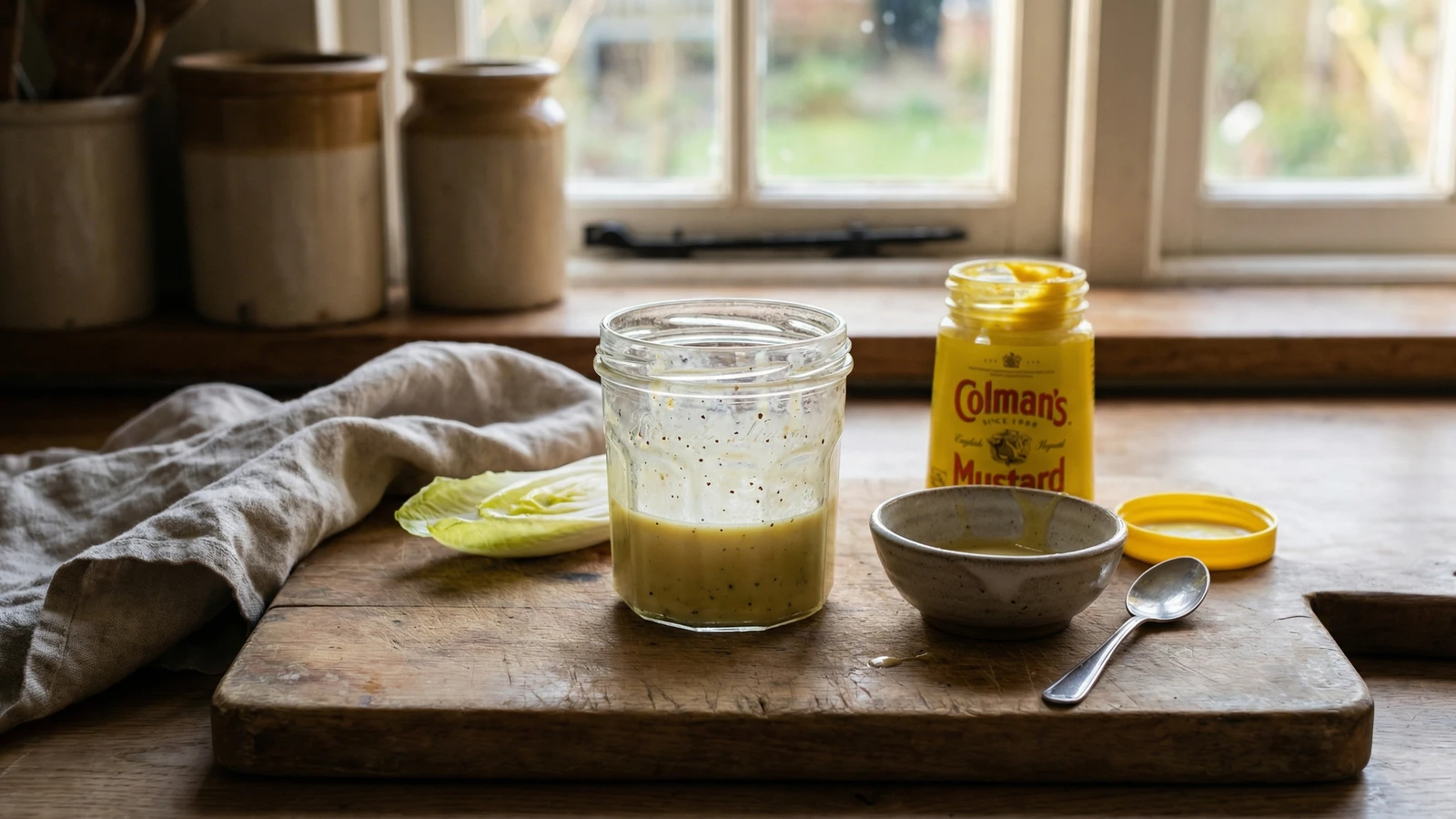
English Mustard Vinaigrette
Created by Chef Thomas
A sharp, sinus-clearing dressing built around a spoonful of Colman's, the sort that wakes up a tired plate of leaves and asks nothing of you except five minutes and a jam jar.
There's a jar of Colman's in nearly every British fridge, and most of it gets used on a Sunday with the beef and then forgotten about until the next roast. That's a waste. The same yellow heat that cuts through cold meat will cut through a bowl of bitter winter leaves, or a plate of boiled new potatoes, or a few slices of cold ham eaten standing up at the kitchen counter.
This is the dressing I make most weeks, and the one I almost never write down because there's nothing to write. A spoon of mustard. A splash of vinegar. Garlic if I can be bothered, honey to take the edge off, and good olive oil whisked in until the whole thing turns the colour of pale custard. Five minutes, one bowl, no fuss.
The trick, if there is one, is the mustard itself. Colman's is meant to be sharp. Properly sharp. The kind of sharp that climbs up the back of your nose and makes your eyes water for half a second. If your jar has gone tame, replace it. A good vinaigrette starts with a mustard that still bites back. We're only making dinner, but we may as well make it taste of something.
The technique, the tradition, and the story behind every dish.
Discover Culinary AdvisorIngredients
Colman's English mustard
Quantity
1 heaped teaspoon
from the jar, or made up from the powder
white wine vinegar
Quantity
2 tablespoons
garlic
Quantity
1 small clove
crushed to a paste with a pinch of salt
runny honey
Quantity
1 teaspoon
good extra virgin olive oil
Quantity
100ml
fine sea salt
Quantity
to taste
freshly ground black pepper
Quantity
to taste
| Ingredient | Quantity |
|---|---|
| Colman's English mustardfrom the jar, or made up from the powder | 1 heaped teaspoon |
| white wine vinegar | 2 tablespoons |
| garliccrushed to a paste with a pinch of salt | 1 small clove |
| runny honey | 1 teaspoon |
| good extra virgin olive oil | 100ml |
| fine sea salt | to taste |
| freshly ground black pepper | to taste |
Equipment Needed
- •Small bowl and whisk, or a clean jam jar with a tight lid
- •Garlic crusher or the side of a knife
Instructions
- 1
Wake up the mustard
Spoon the mustard into a small bowl or a clean jam jar. Add the vinegar and the garlic paste and whisk, or screw the lid on and shake, until you have a smooth, ochre-coloured slurry. Lean over it and breathe in. If it doesn't make your eyes prickle a little, the mustard isn't doing its job. Open a fresher jar.
Colman's loses its punch quickly once opened. A jar that's been sat at the back of the fridge for six months will give you a tired, flat dressing. Buy small jars and use them quickly. - 2
Add the honey
Stir in the honey. Just a teaspoon, no more. You're not making it sweet. You're rounding the edges so the mustard doesn't bite without warning. The dressing should still be sharp enough to wake you up; the honey is there to make sure it doesn't shout.
- 3
Bring in the oil
Pour in the olive oil in a slow, steady stream, whisking all the while. Or, if you're using a jar, add it all at once, screw the lid on tight, and shake the daylights out of it. The dressing will turn from translucent to opaque, the colour of clotted cream stained yellow, thick enough to coat the back of a spoon. That's emulsion. That's what you want.
- 4
Season and taste
Salt, pepper, taste. Then taste again. It should make you sit up straight. If it's too sharp, another drop of honey or oil. If it's too flat, more salt before you reach for more vinegar. Good vinaigrette balances on a knife edge. Trust your tongue, not the measurements.
Dip a leaf of whatever salad you're going to dress into the bowl and taste it that way. Vinaigrette tasted off a spoon is misleading. Tasted on a leaf, you'll know straight away whether it's right.
Chef Tips
- •Make it in a jam jar. Keep the jar. The next batch lives in the same jar, with the dried-on residue from the last one adding character. This is how good kitchens work, not by sterility but by continuity.
- •Use it on things that can take a punch. Bitter leaves like chicory, frisée, or the tougher outer leaves of a cos. Boiled potatoes still warm enough to drink it up. Cold roast beef the day after Sunday lunch. Soft butterhead lettuce will be flattened by it; save those for something gentler.
- •If you've only got Dijon in the cupboard, that's a different dressing. Pleasant, but not this one. The whole point here is the specific, eye-watering heat of English mustard. Don't substitute and expect the same result.
- •A splash of cold water at the end can help the emulsion hold together if it looks like it's about to split. A teaspoon at most. Whisk it in and the dressing will come back to you.
Advance Preparation
- •Keeps in a sealed jar in the fridge for up to a week. The garlic gets stronger as it sits, which I don't mind, but bear it in mind if you're sensitive.
- •Bring back to room temperature before using and give the jar a good shake. Cold olive oil seizes up and the dressing won't pour properly straight from the fridge.
Frequently Asked Questions
Nutrition Information
1 serving (about 37g)
Where cooking meets culture.
Culinary mentorship, cultural storytelling, and the editorial depth that makes cooking meaningful.
Explore Culinary Advisor