Culinary Advisor
A cooking platform built around craft, culture, and the stories behind what we eat.
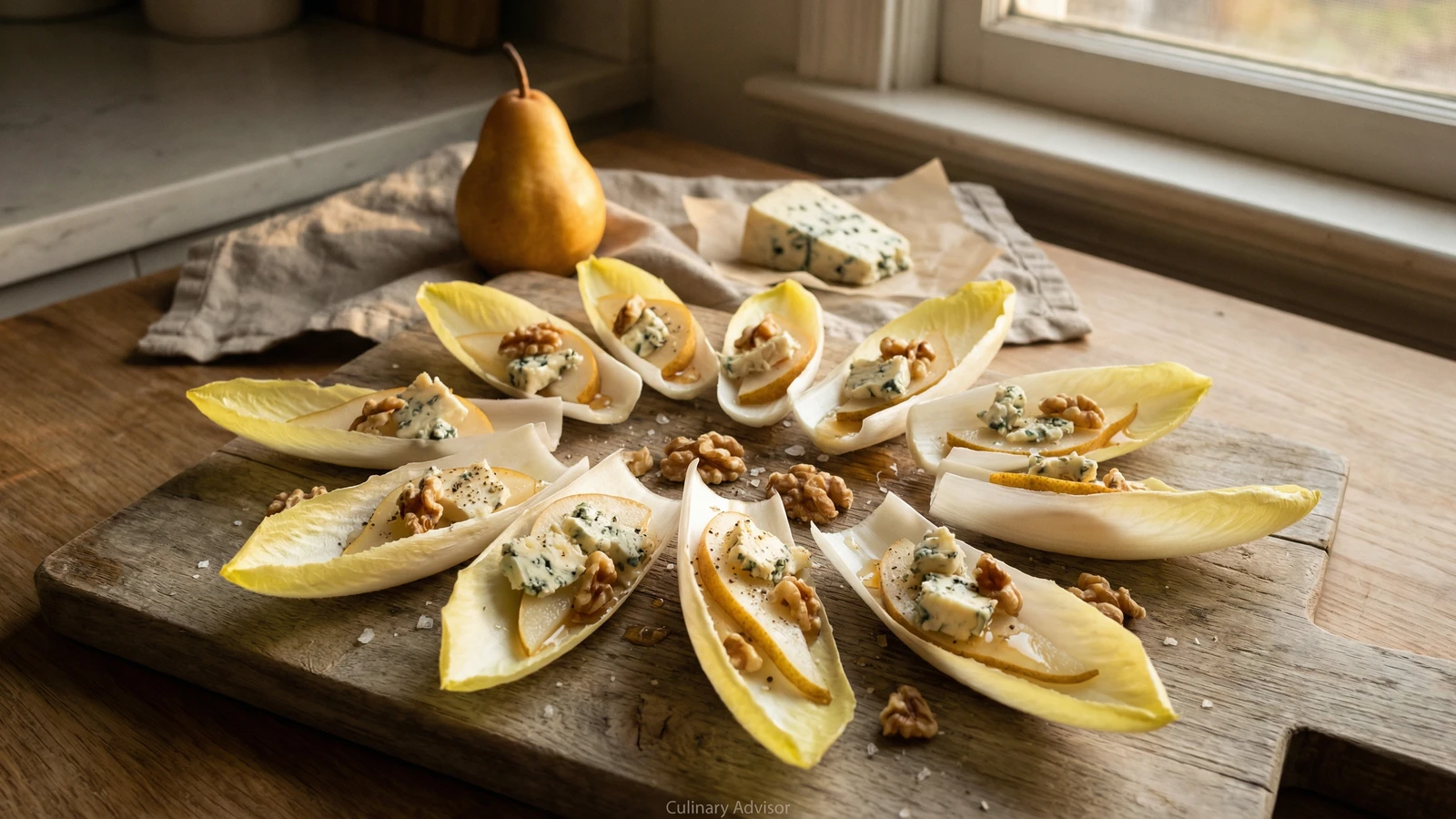
Endive Leaves with Blue Cheese and Pear
Created by Chef Ally
Crisp, bitter endive leaves become elegant vessels for creamy blue cheese and thin slices of ripe pear, finished with toasted walnuts and a whisper of honey. Three bites of perfect balance.
Start with the pear. It should be heavy in your hand, fragrant at the stem, yielding to gentle pressure without collapsing. This is a dish that lives or dies by ripeness. If the pear is not ready, neither is the recipe.
The French have understood this combination for centuries: bitter, sweet, sharp, earthy. Each element arrives at its best in the same season, late autumn through winter, when pears hang heavy on the branch and endive is crisp from cool storage. Your choices at the market become the meal.
There is almost nothing to do here, which is exactly the point. You are not cooking so much as assembling, letting things taste of what they are. The endive is bitter and refreshing. The blue cheese is rich and pungent. The pear is sweet and floral. The walnuts bring warmth and crunch. A drizzle of honey pulls everything together. Perfect ingredients need almost nothing done to them.
The technique, the tradition, and the story behind every dish.
Discover Culinary AdvisorIngredients
Belgian endive
Quantity
3 heads (about 12 ounces total)
quality blue cheese
Quantity
4 ounces
ripe pear
Quantity
1
preferably Bosc or Comice
walnut halves
Quantity
1/3 cup
lightly toasted
honey
Quantity
1 tablespoon
preferably local
fresh lemon juice
Quantity
1 teaspoon
flaky sea salt
Quantity
to taste
black pepper
Quantity
to taste
freshly cracked
| Ingredient | Quantity |
|---|---|
| Belgian endive | 3 heads (about 12 ounces total) |
| quality blue cheese | 4 ounces |
| ripe pearpreferably Bosc or Comice | 1 |
| walnut halveslightly toasted | 1/3 cup |
| honeypreferably local | 1 tablespoon |
| fresh lemon juice | 1 teaspoon |
| flaky sea salt | to taste |
| black pepperfreshly cracked | to taste |
Equipment Needed
- •Small dry skillet for toasting walnuts
- •Sharp paring knife
- •Serving platter
Instructions
- 1
Select and separate the endive
Choose endive heads that feel heavy and tightly closed, with pale yellow tips fading to white at the base. Brown edges mean they have been sitting too long. Trim the base of each head and carefully separate the leaves, working from the outside in. You want whole, boat-shaped leaves that can cradle the filling. The smaller inner leaves are tender and sweet for eating on their own.
Belgian endive prefers darkness. If yours has green-tinged tips, it was exposed to light and will taste more bitter than intended. - 2
Prepare the pear
The pear should yield to gentle pressure near the stem, fragrant and ready. Quarter it lengthwise, cut away the core, then slice each quarter into thin pieces. Toss with lemon juice to keep the flesh from browning. Work quickly. A pear this ripe will not wait.
If your pear is not quite ripe, let it sit at room temperature for a day or two. Never refrigerate an unripe pear. - 3
Crumble the cheese
Break the blue cheese into small, irregular pieces with your fingers. You want some larger chunks for impact and some smaller crumbles that will nestle into the curve of each leaf. Good blue cheese should be creamy at the center with pockets of blue-green veining throughout. If it smells of ammonia, it has turned. Seek out cheese from a proper cheesemonger who can tell you where it came from and how long it has aged.
- 4
Toast the walnuts
Warm a small dry skillet over medium heat. Add the walnut halves and toast, shaking the pan occasionally, until fragrant and slightly darkened, about three to four minutes. Watch them closely. The oils in walnuts burn easily, and burned nuts taste only of regret. Transfer to a plate to cool, then break into smaller pieces.
- 5
Assemble the leaves
Arrange the endive leaves on a platter in a single layer or overlapping gently like fallen petals. Place a small piece of blue cheese in the curve of each leaf, then a slice or two of pear, then a few walnut pieces. The bitter endive, sharp cheese, sweet pear, and earthy walnut should all be present in every bite. That balance is the whole point.
- 6
Finish and serve
Drizzle the assembled leaves with honey in a thin stream, just enough to catch the light. A pinch of flaky salt and a crack of black pepper over everything. Serve within thirty minutes. The leaves will soften if they sit too long, and the pear will begin to weep. This is food that wants to be eaten now.
Chef Tips
- •Seek out a blue cheese you love. Roquefort is the classic French choice, but a good local blue from a small creamery can be extraordinary. Ask your cheesemonger what is at its peak.
- •Bosc and Comice pears hold their shape and have the floral sweetness this dish needs. Bartletts work but are softer. Asian pears offer crunch but less perfume.
- •If pears are not in season, try this with fresh figs in late summer or persimmons in early winter. The principle remains: sweet fruit, sharp cheese, bitter green.
- •These can be assembled on a platter for guests to pick up, or arranged on individual plates for a more composed first course. The food does not change, only the gesture.
Advance Preparation
- •Endive leaves can be separated and stored in cold water for up to four hours. Dry thoroughly before assembling.
- •Walnuts can be toasted up to three days ahead and stored in an airtight container at room temperature.
- •The pear must be sliced just before serving. There is no getting around this.
Frequently Asked Questions
Nutrition Information
1 serving (about 29g)
Where cooking meets culture.
Culinary mentorship, cultural storytelling, and the editorial depth that makes cooking meaningful.
Explore Culinary Advisor