Culinary Advisor
A cooking platform built around craft, culture, and the stories behind what we eat.
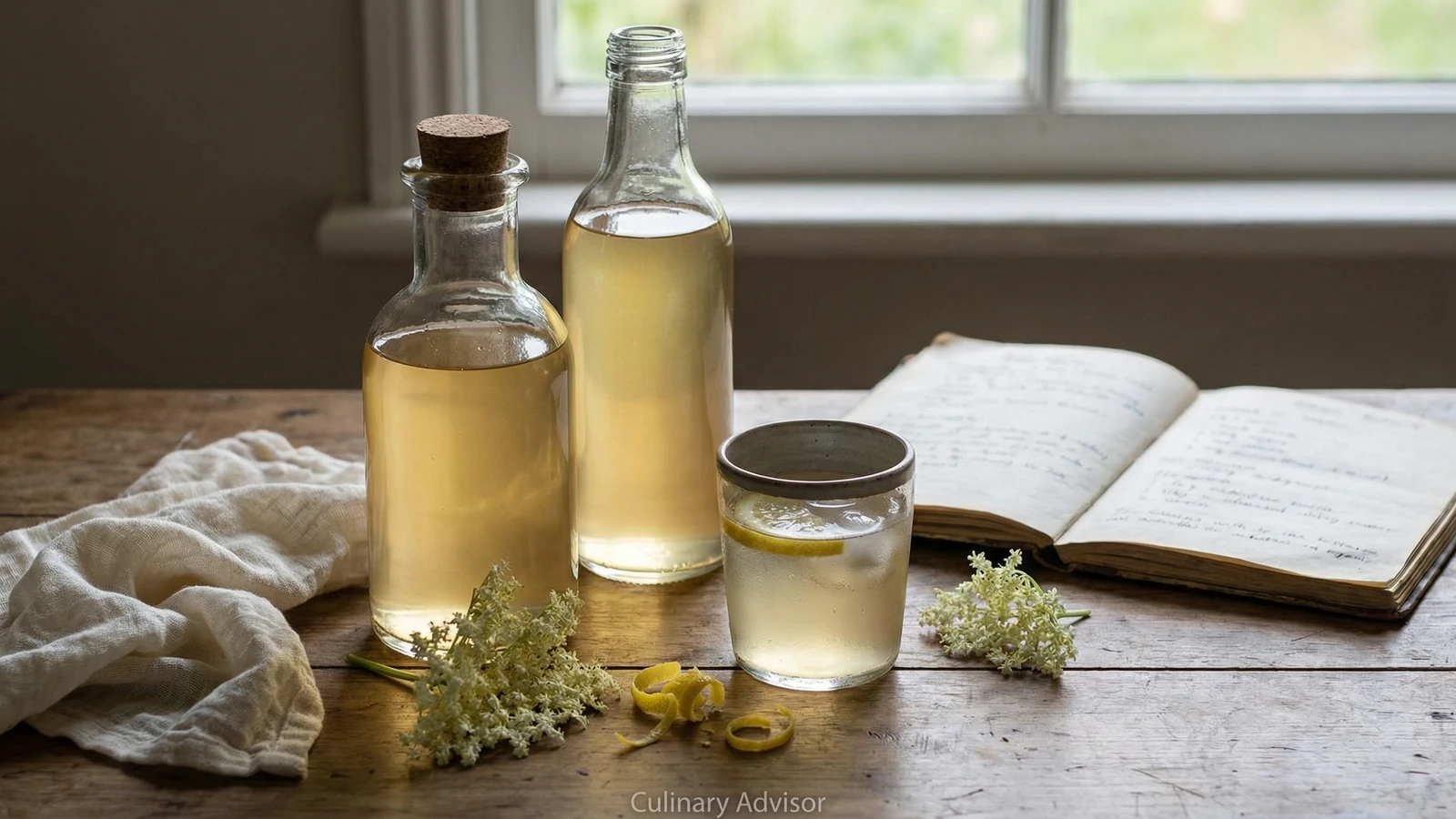
Elderflower Cordial
Created by Chef Thomas
A pale gold cordial made from hedgerow elderflower in late May, steeped overnight with lemon and citric acid, the sort of thing you bottle in June and are grateful for in January.
Late May into June, the hedgerows turn cream. You smell it before you see it, a sweet, muscat, slightly foxy perfume that drifts across lanes and field edges and tells you the year has tipped into its brief golden stretch. Elderflower season is short. Two weeks, maybe three, and then the flowers brown and the moment has gone. If you want to catch it, you have to go out and catch it.
This is the cordial I make every year without fail. It asks very little of you: a walk on a dry morning, a pan of syrup, a bowl big enough to hold it all, and the patience to let it steep for a full day. That's it. The flowers do the clever bit. The sugar carries the perfume. The citric acid keeps it fresh and gives it that little lift that stops it tasting flabby.
A splash in a glass of cold water on a hot afternoon. A slug over a scoop of good vanilla ice cream. A measure with gin and soda and a sprig of mint when someone drops by unexpectedly. In February, when the garden is bare and the days are dark at four, you pour a little into hot water with a slice of lemon and suddenly June is in the room again.
I wrote it down in the notebook the first year I made it: "Walked the lane. Picked twenty-five heads. Smells of summer coming in the window." That's still the whole recipe, as far as I'm concerned. Everything after is just the doing.
The technique, the tradition, and the story behind every dish.
Discover Culinary AdvisorIngredients
elderflower heads
Quantity
25
freshly picked, shaken free of insects, stems trimmed
white caster sugar
Quantity
1.5kg
water
Quantity
1.5 litres
unwaxed lemons
Quantity
3
zest pared, then sliced
citric acid
Quantity
60g
| Ingredient | Quantity |
|---|---|
| elderflower headsfreshly picked, shaken free of insects, stems trimmed | 25 |
| white caster sugar | 1.5kg |
| water | 1.5 litres |
| unwaxed lemonszest pared, then sliced | 3 |
| citric acid | 60g |
Equipment Needed
- •Large saucepan or stockpot (at least 4 litres)
- •Large bowl or food-grade bucket for steeping
- •Muslin cloth or fine clean tea towel
- •Fine sieve
- •Glass bottles with tight-fitting lids, sterilised
- •Vegetable peeler
- •Funnel for bottling
Instructions
- 1
Pick the elderflowers
Go out on a dry, sunny morning, ideally before noon. This is when the flowers are at their most fragrant, the pollen still heavy on the heads. Look for creamy-white umbels that smell sweet and muscat-like when you hold them to your nose. Any that smell of cat or nothing at all are past it, leave them for the birds. Snip the heads with a bit of stem to hold onto, and lay them loose in a basket, not a bag. They bruise.
Don't wash the flowers. Water strips the pollen, and the pollen is where most of the perfume lives. Shake the heads gently to dislodge any insects and trust the overnight steep to do the rest. - 2
Make the syrup
Put the sugar and water in a large saucepan over a medium heat. Stir now and then until the sugar has completely dissolved and the liquid runs clear. Bring it just to the boil, then take it off the heat. You're not making jam. Keep it bright.
- 3
Prepare the lemons
While the syrup warms, pare the zest from the lemons in long strips with a vegetable peeler, keeping the white pith behind. Slice the peeled lemons into rounds and drop them into a large, clean bowl or bucket along with the zest and the citric acid.
- 4
Add the flowers
Trim the thickest stems from the elderflower heads, leaving the smaller stalks attached (this is fine, they carry perfume too). Tip the flowers into the bowl with the lemons. Pour the hot syrup over the top and give it all a gentle push under the liquid with a wooden spoon. The kitchen should smell, within a minute or two, of something between honeysuckle and warm summer air. That's exactly right.
- 5
Steep overnight
Cover the bowl with a clean tea towel or cling film and leave it somewhere cool for 24 hours. Stir it once or twice if you pass by. The liquid will turn from clear to pale gold as the flowers give up their scent. Don't be tempted to rush this. The difference between twelve hours and twenty-four is the difference between a nice drink and a proper cordial.
A dim corner of the kitchen is fine. You don't need the fridge. Cool, still, undisturbed. - 6
Strain and bottle
Line a sieve with a piece of muslin (or a clean, fine tea towel) and set it over a large jug or bowl. Pour the cordial through slowly, letting it drip through on its own. Don't press. Pressing cloudy bits through will only cloud the bottle. Decant into sterilised glass bottles, seal, and label with the date. You've just put the first week of June in a bottle.
Chef Tips
- •Pick away from roads. Elderflowers growing on verges have been breathed on by every passing lorry, and it shows. Walk a field edge, a lane, a quiet corner of a park. The further from traffic, the cleaner the perfume.
- •Citric acid isn't optional. It does two jobs: it preserves the cordial so it keeps for months, and it brightens the flavour so the sweetness doesn't sit heavy on the tongue. You'll find it in the home baking aisle or at any chemist. Don't substitute more lemon juice, it isn't the same.
- •Sterilise your bottles properly. Wash them in hot soapy water, rinse, then put them in a low oven at 120C for fifteen minutes. Hot cordial into warm bottles. It seals better and keeps longer.
- •If you find yourself with more flowers than you planned for, double the batch. This cordial keeps in the fridge for months once opened, and unopened in a cool cupboard for a year. You will not regret having too much. You will absolutely regret having too little.
Advance Preparation
- •The cordial must steep for a full 24 hours before straining. Plan for two days from picking to bottling.
- •Sealed in sterilised bottles and kept in a cool, dark cupboard, the cordial will keep for up to a year. Once opened, refrigerate and use within six weeks.
- •For longer keeping, the cordial freezes beautifully. Pour into ice cube trays and decant the frozen cubes into a freezer bag. A single cube in a glass of sparkling water in December is a small act of defiance against winter.
Frequently Asked Questions
Nutrition Information
1 serving (about 38g)
Where cooking meets culture.
Culinary mentorship, cultural storytelling, and the editorial depth that makes cooking meaningful.
Explore Culinary Advisor