Culinary Advisor
A cooking platform built around craft, culture, and the stories behind what we eat.
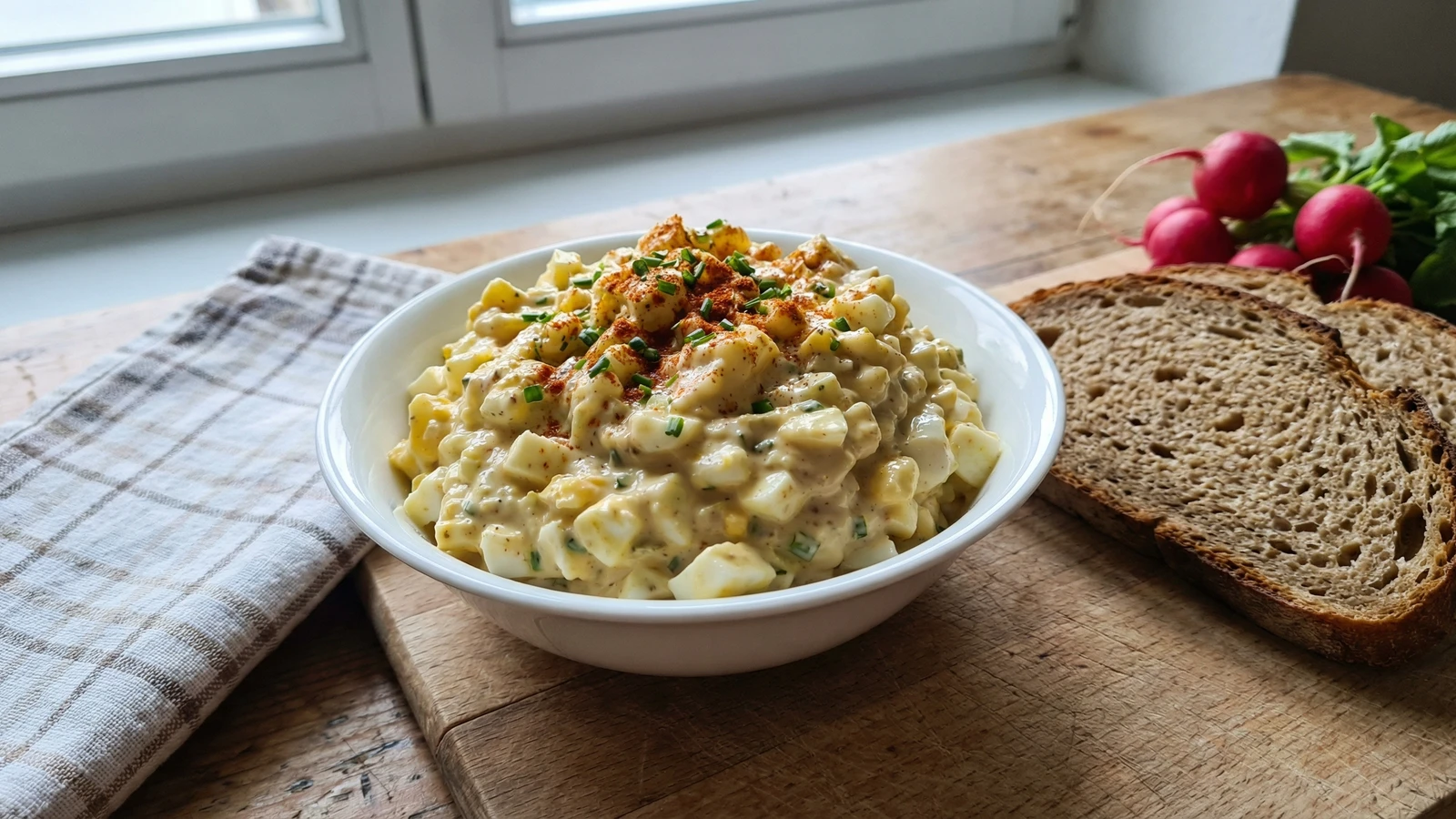
Eiersalat (Austrian Egg Salad)
Created by Chef Elsa
Cool, creamy Austrian egg salad with sour gherkins and tart apple in a mustard-yogurt dressing, the kind of honest Jause food that tastes like an Austrian Easter table and works beautifully all year round.
In my grandmother Eva's kitchen in Deal, hard-boiled eggs appeared constantly. Egg mayonnaise sandwiches for lunch, devilled eggs when people came round, eggs tucked into salads and onto open sandwiches. But the version I loved best was the one Gretel made when Easter was coming. She'd boil the eggs, chop them into big pieces, and fold them into a dressing that was lighter than anything British, sharpened with mustard and vinegar, softened with a spoonful of yogurt. Essiggurkerl diced small. Apple for crunch. Chives from the garden. It looked plain. It tasted like spring.
Eiersalat is Jause food, which means it belongs on a board with bread and butter and whatever else you have, radishes, cold cuts, maybe some cheese. Jause is the Austrian answer to afternoon tea, except instead of scones you get open-faced sandwiches and salads and things that taste honest and real. Eiersalat sits at the center of that tradition. It's not trying to impress you. It's trying to feed you well.
The trick is restraint. Good eggs, properly cooked so the yolks stay golden. A dressing that's tangy and light, not thick and cloying. Enough crunch from the gherkins and apple that every bite has something going on. You can make this in twenty-five minutes and it's better the next day. At Easter, Austrians pile it onto bread alongside Osterschinken (Easter ham) and freshly grated horseradish, and there's nothing on that table that doesn't earn its place.
Eiersalat belongs to the broader Austrian Jause tradition, the mid-afternoon meal that has structured Austrian daily life since at least the 18th century. The combination of hard-boiled eggs with a mustard-vinegar dressing reflects the Habsburg practice of pairing eggs with sharp condiments, a technique visible across Austrian, Bohemian, and Hungarian tables. At Easter, Eiersalat takes on particular significance: the Catholic fasting tradition meant eggs accumulated during Lent, and the Easter Jause became the celebratory moment to use them up alongside Osterschinken, fresh horseradish, and braided Osterbrot.
The technique, the tradition, and the story behind every dish.
Discover Culinary AdvisorIngredients
eggs
Quantity
8 large
good-quality mayonnaise
Quantity
3 tablespoons
natural yogurt (full fat)
Quantity
2 tablespoons
Austrian mustard (Kremser Senf or Estragonsenf)
Quantity
1 heaped teaspoon
Apfelessig (apple cider vinegar) or Hesperidenessig
Quantity
1 teaspoon
tart apple (Boskop or Granny Smith)
Quantity
1 small, about 120g
peeled and finely diced
Essiggurkerl (sour gherkins)
Quantity
4 small, about 80g
finely diced
fresh chives
Quantity
2 tablespoons
finely cut
salt
Quantity
to taste
white pepper
Quantity
to taste
sweet Hungarian paprika
Quantity
pinch
for finishing
Bauernbrot or Kornspitz
Quantity
for serving
| Ingredient | Quantity |
|---|---|
| eggs | 8 large |
| good-quality mayonnaise | 3 tablespoons |
| natural yogurt (full fat) | 2 tablespoons |
| Austrian mustard (Kremser Senf or Estragonsenf) | 1 heaped teaspoon |
| Apfelessig (apple cider vinegar) or Hesperidenessig | 1 teaspoon |
| tart apple (Boskop or Granny Smith)peeled and finely diced | 1 small, about 120g |
| Essiggurkerl (sour gherkins)finely diced | 4 small, about 80g |
| fresh chivesfinely cut | 2 tablespoons |
| salt | to taste |
| white pepper | to taste |
| sweet Hungarian paprikafor finishing | pinch |
| Bauernbrot or Kornspitz | for serving |
Equipment Needed
- •Medium saucepan
- •Bowl of ice water for cooling eggs
- •Large mixing bowl
- •Broad spoon or spatula for folding
Instructions
- 1
Cook the eggs properly
Place the eggs in a single layer in a pot and cover with cold water by about two centimeters. Set the pot over high heat and bring to a rolling boil. The moment the water boils, remove the pot from the heat, cover it, and let the eggs sit for exactly eleven minutes. Not nine, not fourteen. Eleven gives you a yolk that's fully set but still faintly golden in the center, not chalky and gray-green. A dry, overcooked yolk will make your whole salad taste sulphurous.
Use eggs that are at least five days old. Very fresh eggs are nearly impossible to peel cleanly, and you'll tear the whites to shreds. Save your freshest eggs for Nockerln or Palatschinken. - 2
Cool and peel
Transfer the eggs straight into a bowl of ice water. Let them sit for at least ten minutes. The cold shock stops the cooking dead and makes the shells release without a fight. Peel them under gently running water, starting from the air pocket at the wider end. Pat the peeled eggs dry with a clean kitchen towel.
- 3
Prepare the dressing
In a large mixing bowl, stir together the mayonnaise, yogurt, mustard, and vinegar until smooth. The yogurt lightens the dressing and gives it a clean tang that keeps the salad from feeling heavy. Austrian Eiersalat is not the thick, claggy egg salad you might know from deli counters. It should feel fresh, almost bright. Taste the dressing and adjust the salt. Kremser Senf is milder than Dijon, so if that's what you're using, add a little more.
Estragonsenf (tarragon mustard) is a beautiful option here. The anise note of tarragon has a natural affinity for eggs, and it's a very Austrian pairing. Look for it in specialty shops or make your own by steeping fresh tarragon in mild mustard. - 4
Cut the eggs
Cut the eggs in half, then into rough chunks, about one to two centimeters. You want pieces large enough that you can see and taste distinct pieces of egg, not a mush. A few smaller crumbles from the yolk are fine. They'll dissolve into the dressing and enrich it. This is a salad where the main ingredient should be visible and recognizable on the plate.
- 5
Add crunch and freshness
Dice the Essiggurkerl (sour gherkins) finely. Peel and dice the apple to roughly the same size. The gherkins bring salt and vinegar. The apple brings sweetness and a clean snap. Together they keep the salad from becoming one-note. Fold the gherkins, apple, and most of the chives into the dressing, reserving a tablespoon of chives for the top.
Use proper Essiggurkerl, the small sour pickled cucumbers, not sweet gherkins and not dill pickles. Austrian pickles are preserved in a vinegar brine with mustard seed and dill, and the sourness is what the salad needs. Cornichons are the closest substitute if you can't find them. - 6
Fold and rest
Add the egg pieces to the bowl and fold everything together gently with a broad spoon or spatula. Don't stir it. You're folding, not mashing. The eggs should be coated but still holding their shape. Cover the bowl and let the salad rest in the fridge for at least thirty minutes. The flavors need time to get acquainted. An hour is better. The dressing will settle into the eggs and everything will taste more like one dish and less like ingredients that just met.
- 7
Serve at Jause
Spoon the Eiersalat into a bowl or onto a plate. Scatter the reserved chives across the top and dust with a pinch of sweet paprika for color. Serve cool, not ice-cold. Pull it from the fridge ten minutes before serving so the flavors open up. Put good bread alongside: a crusty Bauernbrot or a Kornspitz if you can find one. This is Jause food. It belongs on a board with bread, maybe some radishes, maybe some sliced ham. Mahlzeit!
Chef Tips
- •White pepper, not black. This is a pale, elegant salad and black pepper specks look like something went wrong. White pepper also has a sharper, more direct heat that works better with eggs. Gretel always said black pepper in Eiersalat is how you spot someone who hasn't been taught properly.
- •The apple must be tart. A sweet apple like Fuji or Gala will make the whole salad taste muddled. You want Boskop, Granny Smith, or any firm cooking apple that pushes back against the richness of the egg and mayonnaise.
- •If you're serving this at Easter, make it the morning of and let it sit in the fridge until the afternoon Jause. The salad needs that resting time, and the flavors at four hours are noticeably better than at one. Don't dress it with extra chives until you're ready to serve.
- •Spread it generously onto dark Bauernbrot for open-faced sandwiches. The bread should be sturdy enough to hold the salad without going soggy. A Kornspitz, split and toasted lightly, is also beautiful.
Advance Preparation
- •Eiersalat improves with time. Make it at least one hour ahead, and up to 24 hours. The flavors meld and the dressing settles into the egg pieces.
- •If making a day ahead, hold back the apple and fold it in two hours before serving. It stays crisp enough overnight, but adding it later keeps the texture brighter.
- •Hard-boiled eggs can be cooked and peeled up to two days ahead, stored in a covered container in the fridge.
Frequently Asked Questions
Nutrition Information
1 serving (about 170g)
Where cooking meets culture.
Culinary mentorship, cultural storytelling, and the editorial depth that makes cooking meaningful.
Explore Culinary Advisor