Culinary Advisor
A cooking platform built around craft, culture, and the stories behind what we eat.
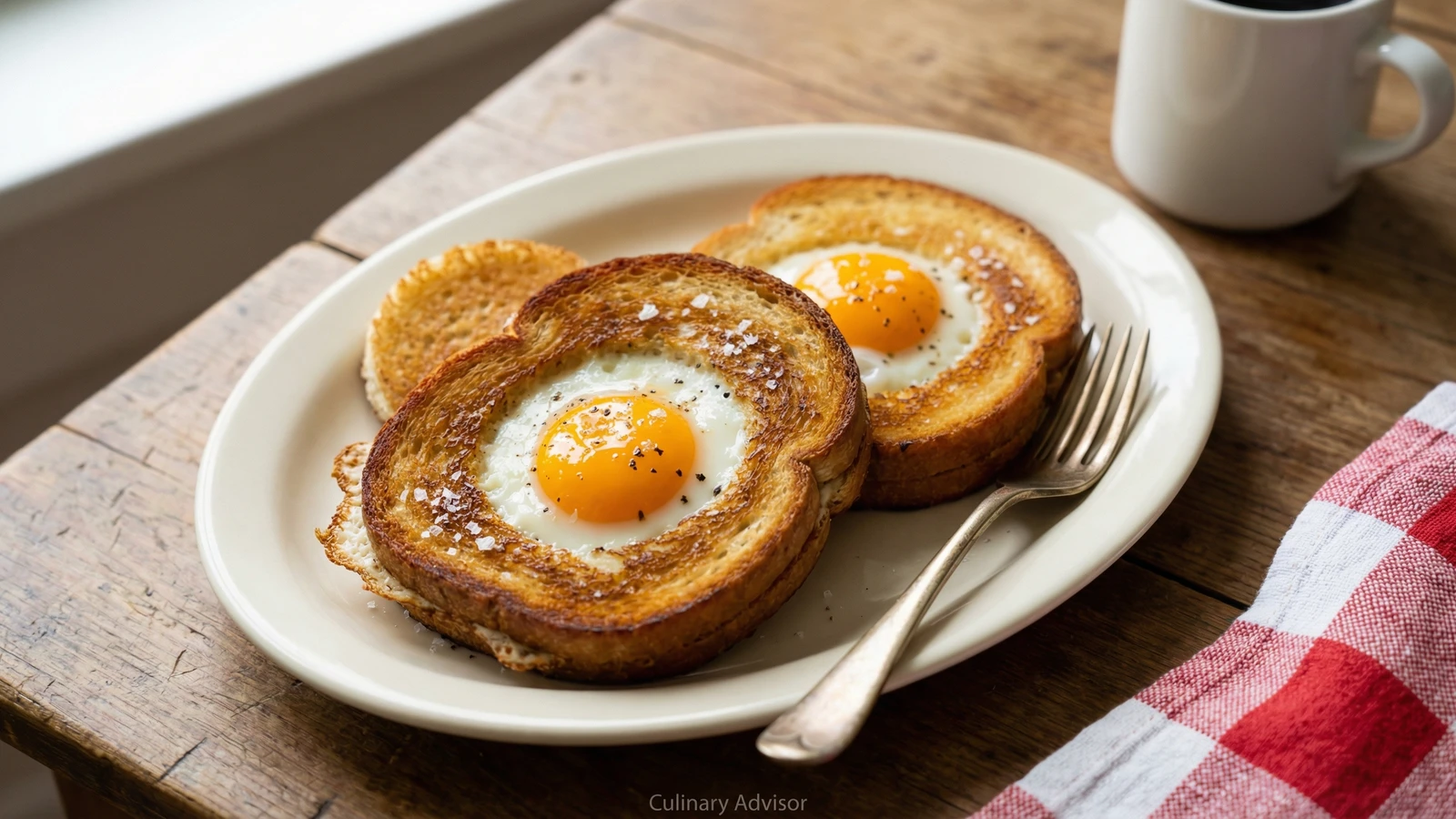
Eggs in a Basket
Created by
Buttery toast cradling a sunny-side egg with golden edges and a trembling yolk ready to spill at the first touch of your fork. This is the breakfast that made you feel loved.
Every family has a name for this dish. Toad in the hole. Egg in a frame. One-eyed jack. Bird's nest. The names differ but the love behind them doesn't. Someone in your family stood at the stove and made this for you, and that memory is baked into every bite.
The technique couldn't be simpler. Cut a hole in bread. Toast it in butter. Crack an egg into the center. Yet within this simplicity lives genuine craft. The bread must brown evenly while the egg white sets without overcooking the yolk. The butter should foam and sing in the pan, not burn. These small details separate a forgettable breakfast from one you'll remember.
I've made thousands of these over the years, for students, for friends, for myself on quiet mornings when only the simplest pleasures would do. The dish teaches patience. You can't rush it. You stand at the stove and watch, adjusting the flame, waiting for the white to turn opaque before that gentle flip. It's meditation disguised as cooking.
Don't let anyone tell you this is merely kid food. A perfectly executed egg in a basket, with the yolk still liquid and the bread crisp with butter, deserves a place at any table. Serve it with good bacon. A pile of roasted tomatoes. A cup of strong coffee. This is breakfast done right.
The technique, the tradition, and the story behind every dish.
Discover Culinary AdvisorIngredients
thick-cut white bread or brioche
Quantity
2 slices
3/4 inch thick
large eggs
Quantity
2
unsalted butter
Quantity
3 tablespoons
divided
kosher salt
Quantity
to taste
black pepper
Quantity
to taste
freshly cracked
flaky sea salt (optional)
Quantity
for finishing
| Ingredient | Quantity |
|---|---|
| thick-cut white bread or brioche3/4 inch thick | 2 slices |
| large eggs | 2 |
| unsalted butterdivided | 3 tablespoons |
| kosher salt | to taste |
| black pepperfreshly cracked | to taste |
| flaky sea salt (optional) | for finishing |
Equipment Needed
- •10 or 12-inch cast iron skillet or nonstick pan
- •2 1/2 to 3-inch round biscuit cutter or drinking glass
- •Wide spatula for flipping
Instructions
- 1
Cut the windows
Using a 2 1/2 to 3-inch round biscuit cutter, drinking glass, or the rim of a sturdy mug, press firmly into the center of each bread slice to cut a hole. Remove the cutout circles and set them aside. These become bonus toast.
A drinking glass works perfectly if you don't own a biscuit cutter. Press straight down and twist slightly. Save those little circles. - 2
Heat the pan
Set a large skillet, preferably cast iron, over medium-low heat. Add 2 tablespoons of butter and let it melt slowly. Watch for it to foam and subside. You want the butter hot enough to sizzle gently when the bread lands but not so hot that it smokes or browns instantly. This takes about 90 seconds.
- 3
Toast the first side
Place both bread slices in the foaming butter. Add the cutout circles to any empty space in the pan. Let the bread toast undisturbed for about 2 minutes. Listen for a gentle, steady sizzle. When you lift a corner and see golden brown, the first side is ready. The bread will have absorbed much of the butter, which is exactly what you want.
The bread should sing quietly in the pan, not scream. If it's browning too fast, reduce the heat immediately. - 4
Flip and add butter
Flip the bread slices and the circles. Add the remaining tablespoon of butter to the pan, letting it melt and pool around the bread. Give the pan a gentle shake to distribute the butter evenly. The toasted side now faces up, golden and fragrant.
- 5
Add the eggs
Crack one egg directly into each hole. Do this carefully. A broken yolk isn't a tragedy, but an intact one is the goal. Season the eggs immediately with a pinch of kosher salt and a few grinds of black pepper. The white should begin setting on contact with the hot pan.
Crack each egg into a small bowl first, then pour into the hole. This prevents shell fragments and gives you control over the drop. - 6
Cook until nearly set
Let the eggs cook undisturbed for 3 to 4 minutes. The white should turn opaque from the edges inward, while the yolk remains glossy and jiggles when you shake the pan. The bottom of the bread continues toasting, building that crucial butter-crisp exterior.
- 7
Flip for over-easy (optional)
For runny yolks with fully set whites, carefully flip each piece using a wide spatula. Cook just 20 to 30 seconds more. The yolk should still feel soft when you press gently with your finger. If you prefer sunny-side up, skip this flip entirely and cover the pan for the last minute to set the top of the white.
Confidence matters here. Slide the spatula fully under the bread before lifting. Hesitation leads to broken yolks. - 8
Serve immediately
Transfer to warm plates. Finish with a pinch of flaky sea salt over the egg if you have it. Serve the toasted circles alongside for dipping into the yolk. An egg in a basket waits for no one. Eat it hot, while the butter glistens and the yolk still runs.
Chef Tips
- •Bread choice matters more than you'd think. A soft, squishy sandwich loaf produces a limp result. Seek out a bakery white or brioche with some structure. Sourdough works beautifully if you prefer a tang.
- •Room temperature eggs set more evenly than cold ones. Pull your eggs from the refrigerator while you gather everything else.
- •Cast iron is ideal here because it holds steady heat without hot spots. A well-seasoned skillet essentially becomes nonstick, which helps with the flip.
- •If you're cooking for more than two, work in batches rather than crowding the pan. Crowded pans steam rather than toast.
Advance Preparation
- •You can cut the holes in the bread the night before. Store the prepared slices and circles in a sealed bag at room temperature.
- •This dish cannot be made ahead. The magic lives in eating it the moment it leaves the pan.
Frequently Asked Questions
Nutrition Information
1 serving (about 200g)
Where cooking meets culture.
Culinary mentorship, cultural storytelling, and the editorial depth that makes cooking meaningful.
Explore Culinary Advisor