Culinary Advisor
A cooking platform built around craft, culture, and the stories behind what we eat.
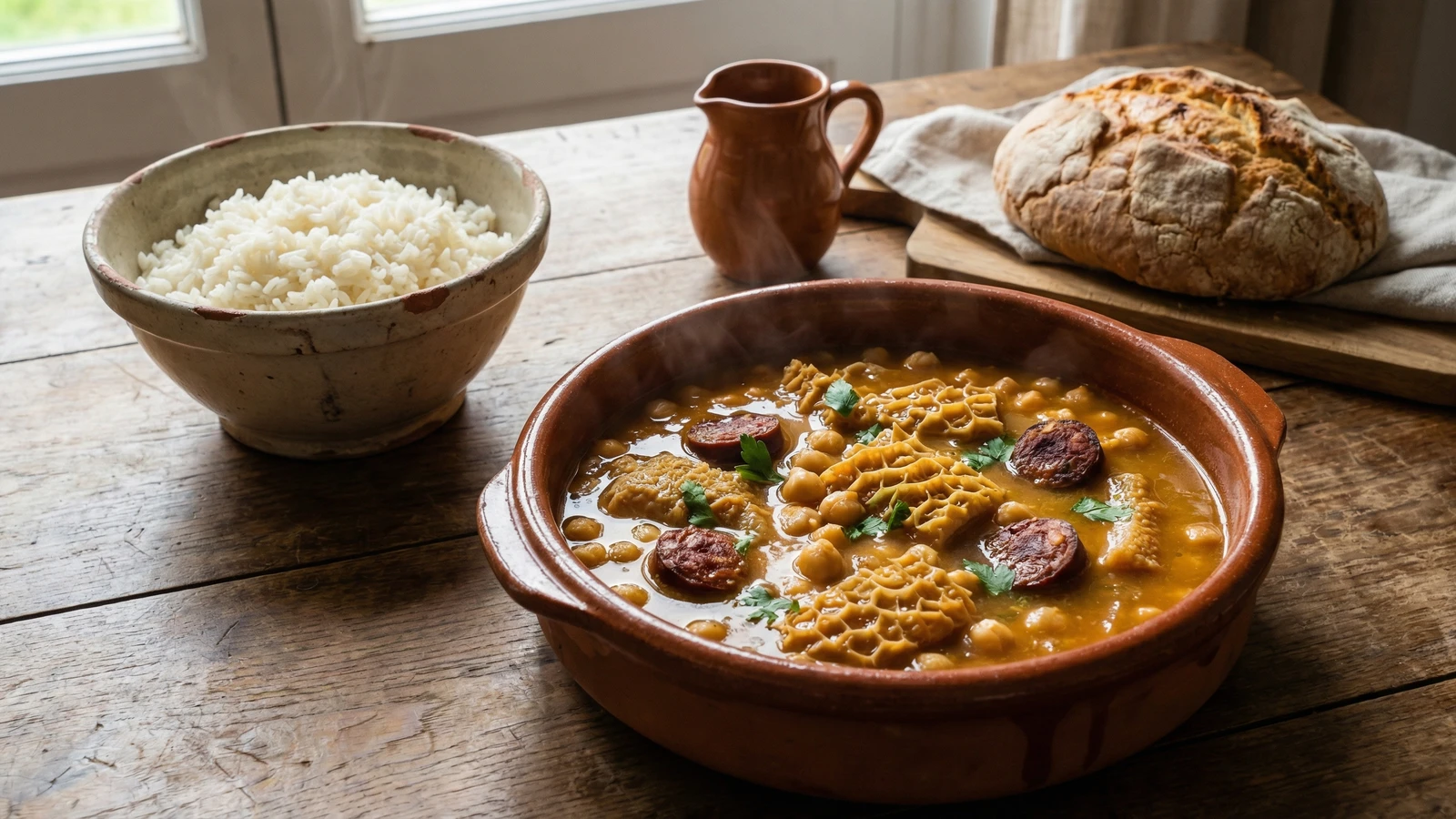
Dobrada com Grão
Created by
The dish that made Porto's people tripeiros: tripe simmered tender with chickpeas, chouriço, and presunto. Humble ingredients, patient cooking, a city's pride on a plate.
This is the dish that defines a city. Porto gave away its meat to feed Prince Henry's ships bound for Ceuta, and kept only the tripas for themselves. They've been called tripeiros ever since, and they wear that name with pride.
I didn't grow up eating dobrada. Avó Leonor was Alentejana, and tripe wasn't her tradition. But when I started documenting recipes from grandmothers across Portugal, I spent weeks in Porto learning from women who've been making this dish for sixty years. They taught me that dobrada isn't poor food pretending to be something else. It's poor food that became something else through patience and care.
The tripe needs time. Hours. You can't rush it. You blanch it, you simmer it, you wait. The chickpeas need soaking overnight. The chouriço and presunto add depth that builds slowly. And the cumin: that's the signature, the spice that tells you this is Porto and nowhere else.
At Mesa da Avó, I serve dobrada to people who've never tried tripe. They're nervous. They take a bite. Their whole understanding shifts. This is what happens when you cook humble ingredients with respect. The grandmothers of Porto knew this all along.
Dobrada earned Porto the nickname 'cidade dos tripeiros' (city of tripe eaters) following a legendary sacrifice in 1415. When Prince Henry the Navigator prepared his fleet to conquer Ceuta, Porto's citizens reportedly gave all their meat to provision the ships, keeping only the offal. Whether history or myth, the story shaped a culinary identity that persists six centuries later.
The technique, the tradition, and the story behind every dish.
Discover Culinary AdvisorIngredients
mixed beef tripe
Quantity
800g
cleaned, honeycomb and book tripe
dried chickpeas (grão)
Quantity
250g
soaked overnight
chouriço de carne
Quantity
200g
presunto or smoked ham hock
Quantity
150g
pig's ear (optional)
Quantity
1
cleaned
onions
Quantity
2 medium
chopped
garlic
Quantity
4 cloves
minced
carrots
Quantity
2 medium
sliced into rounds
bay leaves
Quantity
2
sweet paprika (colorau)
Quantity
1 tablespoon
ground cumin (cominho)
Quantity
1 teaspoon
extra virgin olive oil (azeite)
Quantity
1/4 cup
white wine
Quantity
1/4 cup
tomato paste
Quantity
2 tablespoons
salt
Quantity
to taste
black pepper
Quantity
to taste
freshly ground
fresh parsley
Quantity
for serving
chopped
white rice
Quantity
for serving
cooked
| Ingredient | Quantity |
|---|---|
| mixed beef tripecleaned, honeycomb and book tripe | 800g |
| dried chickpeas (grão)soaked overnight | 250g |
| chouriço de carne | 200g |
| presunto or smoked ham hock | 150g |
| pig's ear (optional)cleaned | 1 |
| onionschopped | 2 medium |
| garlicminced | 4 cloves |
| carrotssliced into rounds | 2 medium |
| bay leaves | 2 |
| sweet paprika (colorau) | 1 tablespoon |
| ground cumin (cominho) | 1 teaspoon |
| extra virgin olive oil (azeite) | 1/4 cup |
| white wine | 1/4 cup |
| tomato paste | 2 tablespoons |
| salt | to taste |
| black pepperfreshly ground | to taste |
| fresh parsleychopped | for serving |
| white ricecooked | for serving |
Equipment Needed
- •Large heavy-bottomed pot or Dutch oven (at least 6 liters)
- •Deep serving bowls
Instructions
- 1
Prepare and blanch the tripe
Rinse the tripe thoroughly under cold running water. Place it in a large pot, cover with cold water, add a generous pinch of salt, and bring to a boil. Let it boil for 10 minutes. Drain, rinse again under cold water, and cut into bite-sized pieces, about 3cm squares. This blanching removes impurities and any lingering smell. Don't skip it.
Buy your tripe from a trusted butcher who's already cleaned it. If you can still smell anything unpleasant after blanching, blanch it again. The final dish should smell only of spices and slow-cooked goodness. - 2
Prepare the pig's ear
If using the pig's ear, blanch it in the same way: cover with cold water, bring to a boil, cook for 10 minutes, then drain and rinse. Cut into strips. The ear adds a silky, gelatinous texture that the grandmothers of Porto insist upon. It's optional, but it's traditional.
- 3
Build the refogado
In a large heavy pot, warm the azeite over medium-low heat. Add the chopped onions and cook slowly, stirring occasionally, until soft and golden, about 15 minutes. Add the garlic and cook for another minute until fragrant. Stir in the tomato paste, paprika, and cumin. Let the spices bloom in the oil for a minute or two. The cumin is the heart of this dish. It should perfume the kitchen.
Cominho, cumin, is what makes dobrada taste like Porto. Without it, you've made a different dish entirely. Don't leave it out. - 4
Add the meats
Add the blanched tripe, pig's ear strips (if using), whole chouriço, and the presunto or ham hock to the pot. Pour in the white wine and let it sizzle for a moment. Add the bay leaves and enough water to cover everything by about 5cm. Bring to a gentle simmer.
- 5
Begin the long simmer
Reduce heat to low, cover the pot, and let it simmer gently for 2 hours. The tripe needs this time to become tender. Don't rush it. Check occasionally and add water if the level drops too much. The liquid should always cover the ingredients. This is when the magic happens, when time transforms tough offal into something silky.
A cozinha é memória. This dish takes time because it was born from scarcity, when cooks learned to coax tenderness from the toughest cuts through patience alone. - 6
Add chickpeas and carrots
Drain the soaked chickpeas and add them to the pot along with the sliced carrots. Continue simmering, covered, for another hour to 90 minutes, until both the tripe and chickpeas are completely tender. The chickpeas should be creamy, not chalky. The tripe should yield easily when pressed with a spoon.
- 7
Finish the stew
Remove the whole chouriço and presunto. Slice the chouriço into rounds and shred or chop the presunto. Return both to the pot. Taste the broth and adjust seasoning with salt and pepper. The stew should be thick and rich, not watery. If it's too thin, simmer uncovered for another 15 minutes.
- 8
Serve with rice
Ladle the dobrada into deep bowls, making sure each portion has plenty of tripe, chickpeas, and chouriço slices. Scatter fresh parsley over top. Serve with a mound of plain white rice on the side. The rice is essential. It soaks up the rich, cumin-scented broth. In Porto, this is how it's done.
Chef Tips
- •The tripe must be properly cleaned before you buy it. A good butcher does this. If you're unsure, blanch it twice. The finished dish should have no off-putting smell, only the warm aroma of cumin, paprika, and slow-cooked meat.
- •Use Portuguese chouriço de carne, not Spanish chorizo. They're different products. Spanish chorizo is drier and more intensely spiced. Portuguese chouriço is moister, smokier, and won't overpower the dish.
- •Some Porto families add white beans (feijão branco) alongside or instead of chickpeas. Both are traditional. I've met grandmothers who swear by one or the other. Neither is wrong.
- •Dobrada improves overnight. The flavors deepen as it sits. Make it a day ahead if you can, then reheat gently. Add a splash of water when reheating if it's thickened too much.
Advance Preparation
- •Chickpeas must soak overnight, at least 8 hours. No shortcut here.
- •The entire dish can (and should) be made a day ahead. Refrigerate overnight and reheat gently. The flavors will be deeper and more unified.
- •If preparing components separately, the tripe can be blanched and cut a day ahead and refrigerated.
Frequently Asked Questions
Nutrition Information
1 serving (about 500g)
Where cooking meets culture.
Culinary mentorship, cultural storytelling, and the editorial depth that makes cooking meaningful.
Explore Culinary Advisor