Culinary Advisor
A cooking platform built around craft, culture, and the stories behind what we eat.
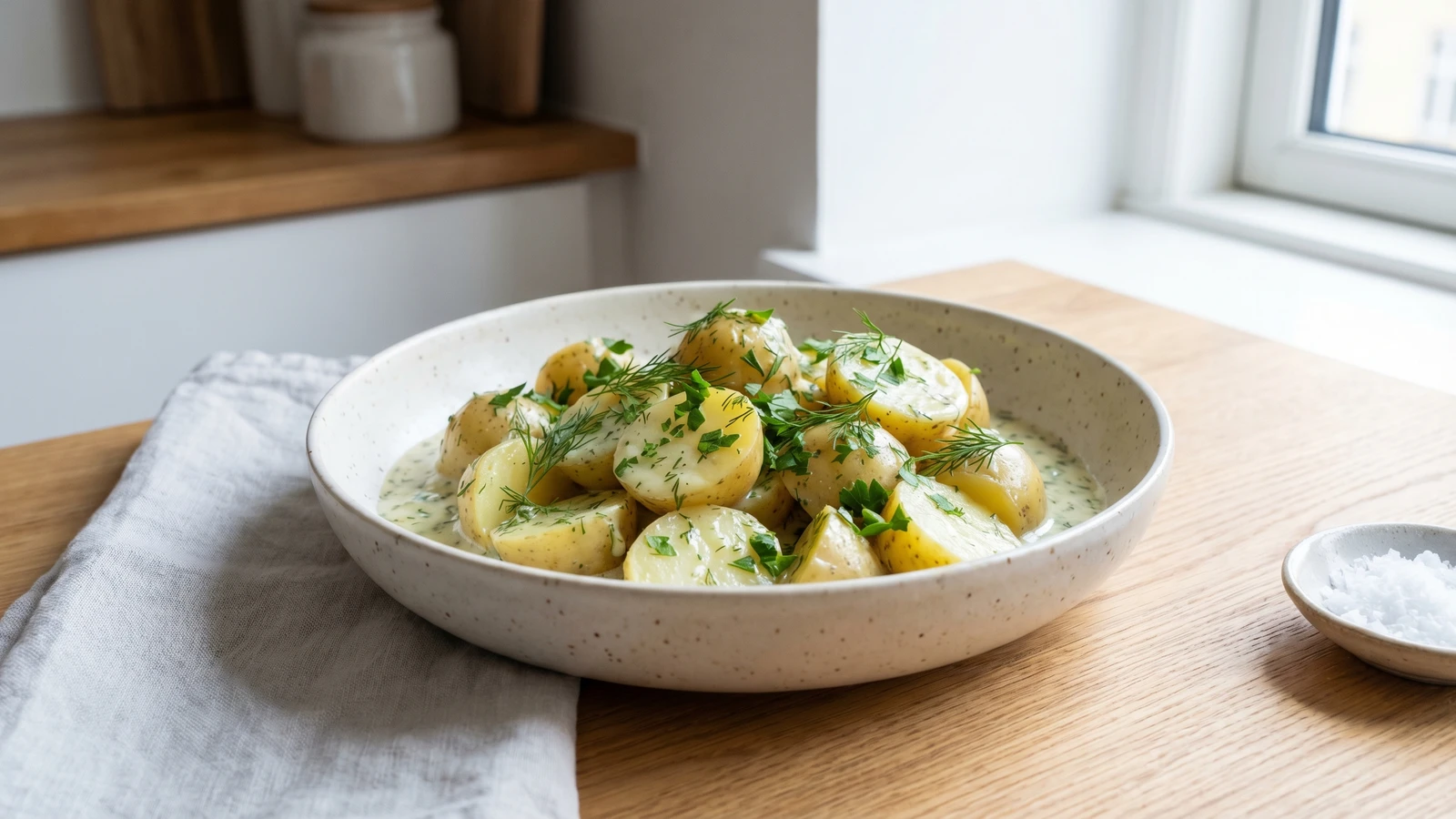
Dildstuvede Kartofler
Created by Chef Freja
Tender potatoes folded into a silky white sauce and finished with a generous handful of fresh dill, the side dish that has anchored Danish fish suppers for generations. Cooked with love and ready in under an hour.
The first new potatoes arrive in Denmark in early June, small and waxy and thin-skinned, still carrying the smell of the earth they came from. This is when dildstuvede kartofler moves from memory back into the kitchen. The season decides.
Stuvede kartofler, potatoes in a cream sauce, is one of the oldest ideas in the Danish home kitchen. It's a roux, milk, good butter, and potatoes cooked until tender, folded together into something quiet and deeply comforting. Add a fistful of fresh dill and it becomes dildstuvede kartofler, the side that belongs next to a piece of pan-fried fish on a Tuesday evening just as naturally as it belongs at a long summer lunch by the coast. This is not a complicated dish. It's the kind of cooking that rewards patience and care more than technique.
I want you to watch for two things. First, the sauce: pour the milk slowly into the roux and whisk without stopping. That's how you get it smooth and silky instead of lumpy and thick. Second, the dill. Add it at the very end, off the heat. Cooked dill turns grey and loses everything. Fresh dill stirred into warm sauce stays green and fragrant and fills the whole room. That's the moment the dish comes alive, and you'll know when it's right because you'll smell it before you taste it.
Stuvning, the Danish term for a flour-and-milk-based cream sauce, has roots in the frugal kitchens of 18th-century Denmark, where a roux stretched a small amount of butter and milk into a sauce that could dress a pot of potatoes into a full meal. Dildstuvede kartofler became inseparable from the coastal fish suppers of Sjaelland and the Danish islands, where fresh dill grew wild along the shorelines and new potatoes came from the sandy soil nearby. The dish appears in Froken Jensens Kogebog and other canonical Danish cookbooks of the early 20th century, always listed not as a recipe in its own right but as a natural accompaniment to fish, so fundamental that it barely needed explaining.
The technique, the tradition, and the story behind every dish.
Discover Culinary AdvisorIngredients
new potatoes or small waxy potatoes
Quantity
800g
scrubbed and halved or quartered
unsalted butter
Quantity
40g
plain flour
Quantity
3 tablespoons
whole milk
Quantity
500ml
warmed
single cream or extra whole milk
Quantity
100ml
fresh dill
Quantity
large bunch, about 4 tablespoons
fronds finely chopped
flat-leaf parsley
Quantity
small bunch, about 2 tablespoons
finely chopped
fine sea salt
Quantity
1 teaspoon, plus more to taste
white pepper
Quantity
to taste
nutmeg
Quantity
pinch
freshly grated
| Ingredient | Quantity |
|---|---|
| new potatoes or small waxy potatoesscrubbed and halved or quartered | 800g |
| unsalted butter | 40g |
| plain flour | 3 tablespoons |
| whole milkwarmed | 500ml |
| single cream or extra whole milk | 100ml |
| fresh dillfronds finely chopped | large bunch, about 4 tablespoons |
| flat-leaf parsleyfinely chopped | small bunch, about 2 tablespoons |
| fine sea salt | 1 teaspoon, plus more to taste |
| white pepper | to taste |
| nutmegfreshly grated | pinch |
Equipment Needed
- •Large pot for boiling the potatoes
- •Whisk or wooden spoon
- •Small saucepan for warming milk (optional)
Instructions
- 1
Cook the potatoes
Put the potatoes in a large pot, cover with cold water, and add a generous teaspoon of salt. You start in cold water because potatoes cook from the outside in. Hot water shocks the surface and gives you a crumbling edge around a hard center. Cold water lets the heat travel evenly through. Bring to a gentle boil and cook for fifteen to eighteen minutes, until a knife slides through the largest piece with no resistance at all. Drain and set aside. Don't let them sit in the water once they're done. Waterlogged potatoes dilute the sauce.
If you're using true new potatoes, the small ones that arrive in June, leave the skins on. They're thin and sweet and belong in the dish. Older potatoes can be peeled if you prefer, but waxy varieties hold their shape either way. - 2
Make the roux
Melt the butter in the same pot over medium-low heat. When it foams, add the flour all at once and stir with a wooden spoon or a small whisk. Cook the paste for about two minutes, stirring constantly. You want the raw flour taste to disappear, but the roux should stay pale, not golden. This isn't a brown sauce. The colour of the finished stuvning should be cream-white and clean.
If the roux starts to colour, pull the pot off the heat for a moment and keep stirring. You can always slow things down. You can't undo a browned roux in a white sauce. - 3
Build the sauce
Add the warm milk in a slow, steady stream, whisking constantly as you pour. Go slowly with the first third. This is where lumps form, when the milk hits the roux too fast and the flour seizes into clumps. Once the first third is incorporated and smooth, you can pour more freely. Add the cream and keep whisking. Let the sauce come to a gentle simmer and cook for five minutes, stirring often. It should thicken to the consistency of double cream, coating the back of a spoon in a smooth, even layer. Season with salt, white pepper, and a small grating of nutmeg.
Warm the milk before adding it. Cold milk hitting a hot roux is what causes lumps. If you forgot to warm it, pour even more slowly and whisk harder. If lumps do form, push the sauce through a fine sieve. No one will know. - 4
Add the potatoes
Slide the drained potatoes back into the sauce and fold them through gently with a spatula or large spoon. Don't stir aggressively. You want the potatoes to hold their shape inside the sauce, not break apart into mash. Let everything simmer together for three to four minutes so the potatoes absorb some of the sauce and the flavours marry. The sauce will thicken slightly around the potatoes. That's right. It should cling to them, not pool around them like soup.
- 5
Finish with dill and parsley
Take the pot off the heat. Stir in the chopped dill and parsley now, not during cooking. Heat destroys fresh dill in seconds. It goes grey, loses its fragrance, and tastes of nothing. Added at the end, off the heat, the dill stays green and bright and floods the sauce with that grassy, anise-edged flavour that is the whole point of the dish. Taste the sauce one last time. Adjust the salt. You'll know when it's right.
Be generous with the dill. This dish is named for it. The sauce should be visibly green-flecked, fragrant enough that you can smell it from across the kitchen. If you're wondering whether you've added enough, add a little more. - 6
Serve warm
Spoon the creamed potatoes into a warm serving bowl or straight onto plates alongside the fish. In Denmark this goes next to stegt rodspatte, pan-fried plaice, or beside poached torsk, cod, with a wedge of lemon and nothing else. The potatoes are the soft, creamy, herb-laced anchor that lets the fish be simple. Serve immediately while the dill is still vivid and the sauce is loose and silky.
Chef Tips
- •Use waxy potatoes, not floury ones. Floury potatoes break apart in the sauce and turn the whole thing into something closer to mash. Waxy potatoes hold their shape and give you that contrast of firm, tender potato inside a smooth sauce. New potatoes in season are best of all.
- •White pepper, not black. Black pepper leaves dark specks in the white sauce and tastes sharper than you want here. White pepper is quieter, warmer, and disappears into the sauce visually while doing its work. This is standard in Danish white sauces.
- •If you have leftover sauce and potatoes, they keep overnight in the fridge. Reheat gently with a splash of milk to loosen the sauce, which thickens as it cools. Stir in a little fresh dill again before serving. Yesterday's dill has faded.
- •A squeeze of lemon juice stirred in at the very end, just a few drops, brightens the sauce without making it taste of lemon. It lifts the dill and cuts through the richness. This is a trick from the old summer kitchens on Bornholm.
Advance Preparation
- •The potatoes can be boiled up to a day ahead and kept in the fridge. Bring them to room temperature before folding into the sauce so they don't cool it down.
- •The sauce is best made fresh, but the roux can be prepared in advance and kept covered. When ready, warm the roux gently and add the milk to build the sauce.
- •Do not add the dill until just before serving. There is no way around this. Dill that sits in a warm sauce loses its colour and its point.
Frequently Asked Questions
Nutrition Information
1 serving (about 280g)
Where cooking meets culture.
Culinary mentorship, cultural storytelling, and the editorial depth that makes cooking meaningful.
Explore Culinary Advisor