Culinary Advisor
A cooking platform built around craft, culture, and the stories behind what we eat.
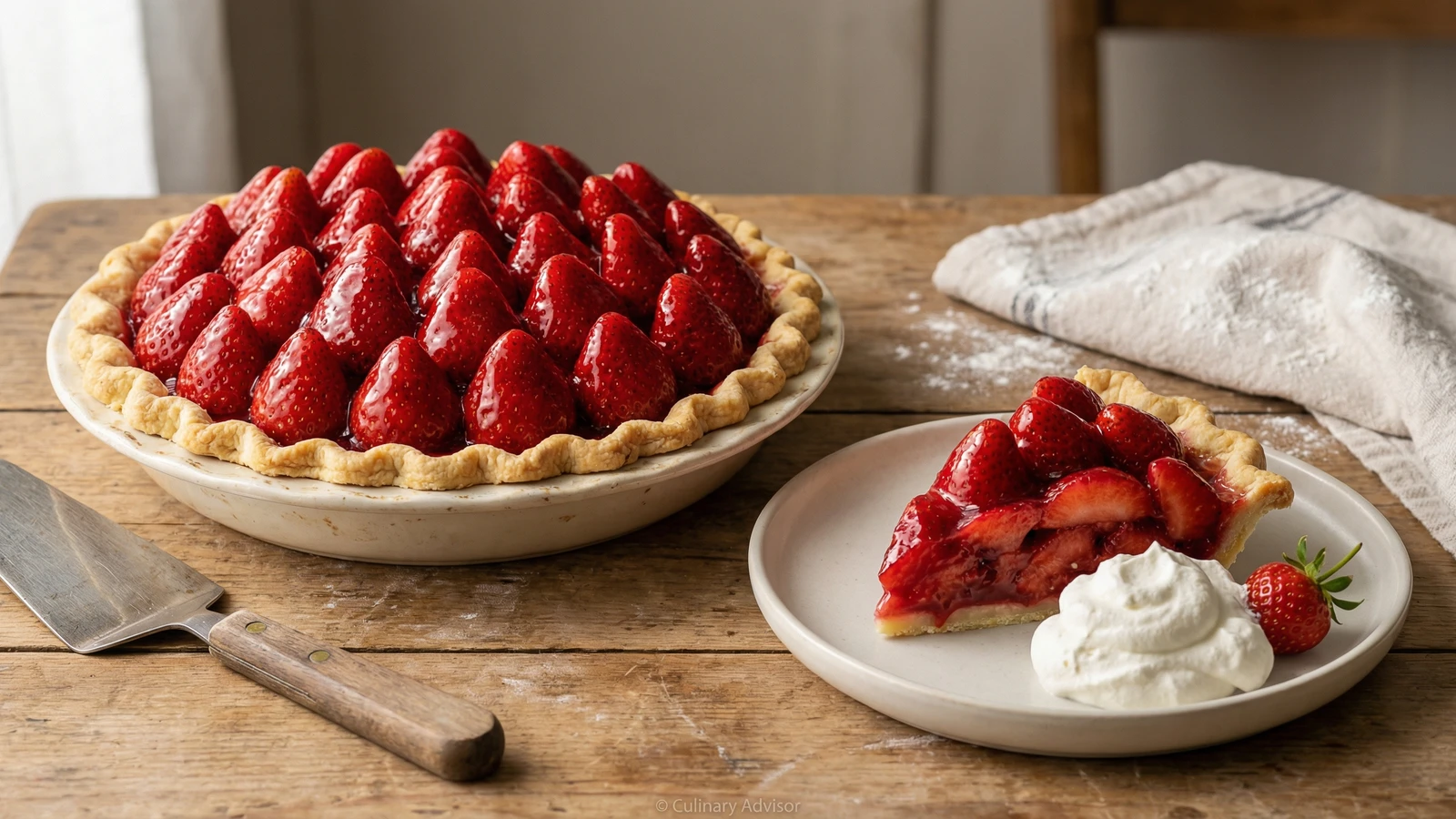
Delaware Strawberry Pie
A towering mound of peak-season strawberries glistening under a ruby glaze, nestled in a golden butter crust that shatters at first bite. This is how Delaware welcomes summer.
Every state claims a pie, but Delaware's strawberry pie carries the weight of geography and timing. The First State sits in that narrow band of Mid-Atlantic farmland where strawberries ripen in late May, right when Memorial Day picnics demand something spectacular. Farmers around Bridgeville and the surrounding Sussex County have been growing berries since before the Civil War, their sandy loam soil producing fruit so sweet it needs no embellishment.
This pie asks nothing of the oven except a blind-baked crust. The berries stay raw, piled high and proud, their fresh flavor preserved under a glaze made from their own kind. You cook down a portion of lesser berries to create that shimmering ruby coating, then fold in the prettiest specimens whole. The result is strawberry flavor in three dimensions: the bright snap of fresh fruit, the concentrated sweetness of the glaze, and the buttery shatter of honest pastry.
I first encountered this pie at a roadside stand outside Dover, where a woman whose grandmother had baked for the state fair sold slices from a screened porch. She insisted the berries must be local, picked that morning, still warm from the field. She was right. Shipped strawberries, those pale imposters bred for survival rather than flavor, will not do. This pie exists to honor the fruit. Use worthy fruit.
The technique, the tradition, and the story behind every dish.
Discover Culinary AdvisorIngredients
all-purpose flour
Quantity
1 1/4 cups (160g)
granulated sugar (for crust)
Quantity
1 tablespoon
fine sea salt (for crust)
Quantity
1/2 teaspoon
unsalted butter
Quantity
8 tablespoons (1 stick/113g)
cold, cut into 1/2-inch cubes
ice water
Quantity
3 to 4 tablespoons
fresh strawberries
Quantity
2 pounds
hulled
granulated sugar (for glaze)
Quantity
1 cup (200g)
cornstarch
Quantity
3 tablespoons
water
Quantity
1 cup
fresh lemon juice
Quantity
1 tablespoon
fine sea salt (for glaze)
Quantity
pinch
heavy cream
Quantity
1 cup
cold
powdered sugar
Quantity
2 tablespoons
pure vanilla extract
Quantity
1/2 teaspoon
| Ingredient | Quantity |
|---|---|
| all-purpose flour | 1 1/4 cups (160g) |
| granulated sugar (for crust) | 1 tablespoon |
| fine sea salt (for crust) | 1/2 teaspoon |
| unsalted buttercold, cut into 1/2-inch cubes | 8 tablespoons (1 stick/113g) |
| ice water | 3 to 4 tablespoons |
| fresh strawberrieshulled | 2 pounds |
| granulated sugar (for glaze) | 1 cup (200g) |
| cornstarch | 3 tablespoons |
| water | 1 cup |
| fresh lemon juice | 1 tablespoon |
| fine sea salt (for glaze) | pinch |
| heavy creamcold | 1 cup |
| powdered sugar | 2 tablespoons |
| pure vanilla extract | 1/2 teaspoon |
Equipment Needed
- •9-inch pie plate
- •Pie weights or dried beans
- •Fine-mesh strainer
- •Pastry brush
- •Rolling pin
Instructions
- 1
Make the pie dough
Whisk flour, sugar, and salt together in a large bowl. Add the cold butter cubes and work them into the flour using a pastry blender or your fingertips, pressing and smearing until the mixture resembles coarse meal with some pea-sized butter pieces remaining. These larger pieces create the flaky layers. Drizzle in three tablespoons ice water and stir with a fork until the dough just begins to clump. Squeeze a handful: if it holds together, you're done. If it crumbles, add the remaining tablespoon of water.
Cold butter is not a suggestion. If your kitchen runs warm, freeze the cubes for ten minutes before starting. Warm butter makes tough, dense pastry. - 2
Rest the dough
Turn the shaggy dough onto a clean surface and press it into a flat disk about one inch thick. Wrap tightly in plastic and refrigerate for at least one hour, or overnight. This rest hydrates the flour evenly and relaxes the gluten, preventing shrinkage during baking.
- 3
Roll and fit the crust
On a floured surface, roll the chilled dough into a circle about twelve inches across, rotating frequently and adding flour as needed to prevent sticking. Transfer to a nine-inch pie plate by folding the dough in quarters, positioning the point at the center, and unfolding. Press gently into the corners without stretching. Trim edges to a one-inch overhang, fold under, and crimp decoratively. Refrigerate thirty minutes.
Stretched dough remembers. It will shrink back during baking, leaving you with shallow walls. Let gravity do the work of settling the pastry into the pan. - 4
Blind bake the shell
Preheat oven to 400°F. Line the chilled crust with parchment paper and fill with pie weights or dried beans, pressing them into the corners. Bake twenty minutes until the edges look set. Remove parchment and weights carefully. Reduce oven to 375°F and continue baking until the bottom is golden brown and fully cooked, another ten to twelve minutes. Cool completely on a wire rack. The crust must be cold before filling.
- 5
Sort your berries
Examine your strawberries with a critical eye. Set aside the largest, most beautiful specimens for the top of the pie, about one and a half pounds worth. Choose berries of similar size for even presentation. The remaining half pound, including any misshapen or soft specimens, will become your glaze. Slice these glaze berries into rough pieces.
- 6
Cook the glaze
Combine the sliced berries and one cup water in a medium saucepan. Bring to a simmer over medium heat and cook until berries are completely soft and falling apart, about eight minutes. Press through a fine-mesh strainer into a bowl, extracting all the juice and pulp. Discard the solids. You should have about one cup of strawberry puree.
- 7
Thicken the glaze
Whisk cornstarch and sugar together in the same saucepan. Pour in the strained strawberry puree and whisk until smooth. Set over medium heat and cook, stirring constantly, until the mixture comes to a boil and turns thick and glossy, about four minutes. It should coat a spoon heavily. Remove from heat and stir in lemon juice and salt. Transfer to a bowl and let cool to room temperature, stirring occasionally to prevent a skin from forming.
The glaze will thicken further as it cools. If it sets up too firmly before you're ready, warm it gently over low heat with a splash of water. - 8
Assemble the pie
Arrange the reserved whole berries in the cooled crust, pointed ends up, packing them snugly in concentric circles. Start from the outside and work toward the center, fitting berries tightly so no crust shows through. Mound them higher in the center for that classic domed appearance. Spoon the cooled glaze over the berries, using a pastry brush or the back of a spoon to coat each one evenly. Work gently so you don't dislodge your arrangement.
- 9
Chill until set
Refrigerate the assembled pie for at least two hours, until the glaze is firmly set and the berries hold their position when the pie is tilted. This patience matters. A properly set pie slices cleanly; a rushed one collapses into a puddle.
- 10
Make the whipped cream
Just before serving, combine cold cream, powdered sugar, and vanilla in a chilled bowl. Beat with a whisk or electric mixer until soft peaks form, about two minutes by hand. Stop when the cream holds gentle mounds but still looks billowy. Overbeaten cream turns grainy and eventually becomes butter.
- 11
Serve with pride
Cut the pie with a thin sharp knife dipped in hot water between slices. Serve each wedge with a generous dollop of whipped cream alongside, never on top where it would obscure those beautiful berries. This pie is best eaten the day it's made, while the crust stays crisp and the berries still taste of the field.
Chef Tips
- •Seek out local strawberries at farmers' markets or pick-your-own farms during peak season. The berries should smell intensely of strawberry before you even get close. If they have no fragrance, they have no flavor.
- •For an even glossier finish, brush a thin layer of warm glaze over the berries, let it set for five minutes, then add a second coat. This builds depth of color and extra shine.
- •A graham cracker crust works as a substitution if time is short, but you sacrifice the textural contrast that makes this pie memorable. The crisp butter pastry against soft fruit is the whole point.
- •Store leftovers loosely covered in the refrigerator, but know that the crust softens within hours. A fresh strawberry pie is a same-day affair.
Advance Preparation
- •Pie dough can be made up to three days ahead and refrigerated, or frozen for one month. Thaw overnight in the refrigerator before rolling.
- •The crust can be blind baked one day ahead. Store at room temperature wrapped loosely in foil.
- •The glaze can be made several hours ahead and kept at room temperature. Rewarm gently if it becomes too thick to pour.
Frequently Asked Questions
Nutrition Information
1 serving (about 160g)
Where cooking meets culture.
Culinary mentorship, cultural storytelling, and the editorial depth that makes cooking meaningful.
Explore Culinary Advisor