Culinary Advisor
A cooking platform built around craft, culture, and the stories behind what we eat.
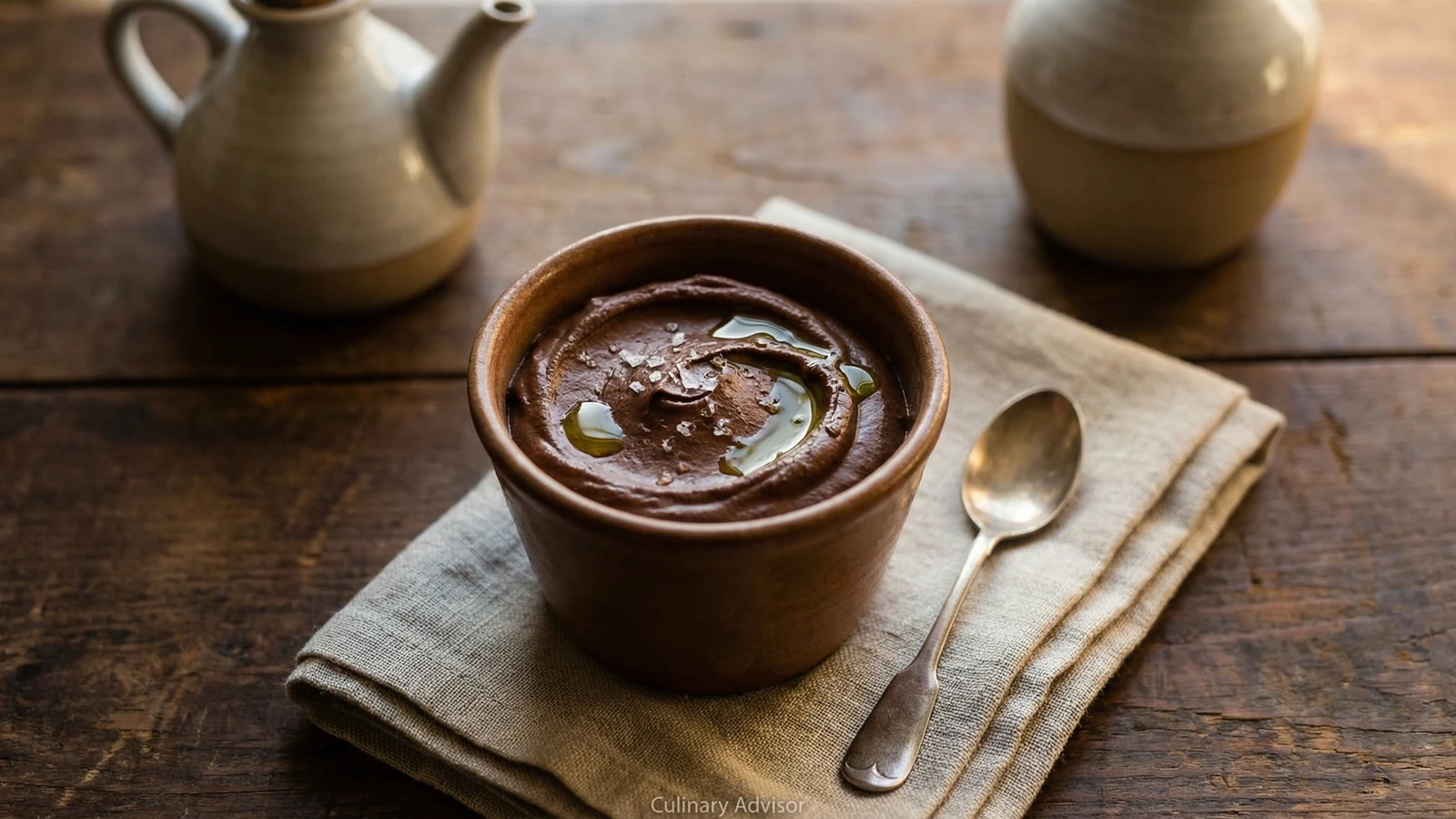
Dark Chocolate Mousse with Olive Oil and Sea Salt
Created by Chef Ally
A velvet-dark mousse that melts on the tongue, finished with a ribbon of grassy olive oil and crystals of fleur de sel. Three ingredients doing exactly what they were born to do.
Start with the chocolate. Not chocolate chips, not baking chocolate from a box on the bottom shelf. Find a bar of dark chocolate with a cocoa percentage between 60 and 70 percent, made by people who care about where the beans came from. Hold it to your nose. It should smell alive, complex, faintly bitter, and promising.
This mousse asks almost nothing of you except restraint. Melt the chocolate. Fold in cream that has been whipped just past soft peaks. Chill. That is all. The technique is minimal because the ingredients are not. When you pour good olive oil over the surface and scatter fleur de sel across the top, you are not adding flavor so much as completing a conversation that the chocolate started.
Every meal is a meaningful choice. The chocolate you choose supports a farmer in Ecuador or Ghana. The olive oil carries the sun of Provence or Andalusia or California. The salt remembers the sea. This is a dessert that tastes of its origins, and that is the whole point.
I have served this at dinner parties where guests fell silent after the first spoonful. Not because I am clever, but because the ingredients are honest. Let things taste of what they are.
The technique, the tradition, and the story behind every dish.
Discover Culinary AdvisorIngredients
high-quality dark chocolate (60-70% cacao)
Quantity
8 ounces (225g)
finely chopped
cold heavy cream
Quantity
2 cups (480ml)
divided
extra-virgin olive oil
Quantity
3 tablespoons (45ml)
for finishing
fleur de sel or flaky sea salt
Quantity
for finishing
granulated sugar (optional)
Quantity
1 tablespoon
| Ingredient | Quantity |
|---|---|
| high-quality dark chocolate (60-70% cacao)finely chopped | 8 ounces (225g) |
| cold heavy creamdivided | 2 cups (480ml) |
| extra-virgin olive oilfor finishing | 3 tablespoons (45ml) |
| fleur de sel or flaky sea salt | for finishing |
| granulated sugar (optional) | 1 tablespoon |
Equipment Needed
- •Heatproof mixing bowl
- •Small saucepan
- •Flexible silicone spatula
- •Balloon whisk or hand mixer
- •Six small serving cups, ramekins, or glasses (4-6 oz capacity)
Instructions
- 1
Chop the chocolate properly
Use a sharp knife to chop the chocolate into pieces no larger than a pea. Uniformity matters here. Uneven pieces melt at different rates and create lumps that no amount of stirring will fix. The finer your chop, the smoother your mousse. Place the chocolate in a heatproof bowl large enough to hold the finished mousse.
A serrated bread knife works beautifully for chopping chocolate. The teeth grip and shatter the bar rather than pushing it across the board. - 2
Warm the cream
Pour half a cup of the heavy cream into a small saucepan. Set it over medium heat and watch the edges. You want the cream just shy of simmering, when small bubbles form around the rim and steam rises but the surface stays calm. This takes two to three minutes. Remove from heat the moment you see those first bubbles.
- 3
Melt into silk
Pour the hot cream over the chopped chocolate. Let it sit undisturbed for two full minutes. The heat needs time to penetrate the chocolate. Then stir slowly from the center outward with a spatula, working in tight circles that gradually widen. The mixture will look broken at first, then suddenly come together into a glossy, dark ganache. If any bits remain unmelted, set the bowl over barely simmering water for thirty seconds, stirring constantly.
If the ganache seizes or looks grainy, add a tablespoon of warm cream and stir vigorously. The fat will re-emulsify the mixture. - 4
Cool to room temperature
Set the ganache aside to cool until it reaches room temperature, about twenty minutes. It should still flow when you tilt the bowl but feel cool when you touch the bottom. Folding cold cream into hot chocolate will cause the fat to seize. Patience here protects everything that follows.
- 5
Whip the remaining cream
Pour the remaining cream into a cold bowl. If using sugar, add it now. Whip with a balloon whisk or hand mixer until the cream holds soft peaks that droop gently when you lift the whisk. Stop before it becomes stiff. Overwhipped cream creates a mousse that feels dense and grainy rather than light. You can always whip more, but you cannot unwhip.
- 6
Fold with intention
Add one third of the whipped cream to the cooled ganache. Stir vigorously to lighten the base. This sacrificial portion loosens the chocolate so the remaining cream can be folded gently. Add the rest of the cream in two additions, folding with a spatula by cutting down through the center, sweeping along the bottom, and turning over. Rotate the bowl as you work. Fold only until no white streaks remain. Every extra fold deflates your mousse.
A flexible silicone spatula is essential. It hugs the bowl and incorporates every bit of chocolate clinging to the sides. - 7
Portion and chill
Divide the mousse among six small cups, ramekins, or glasses. Use a spoon to create gentle swirls on the surface rather than smoothing them flat. These imperfections catch the olive oil and salt beautifully. Cover with plastic wrap pressed lightly against the surface to prevent a skin from forming. Refrigerate for at least four hours, or overnight.
- 8
Finish at the table
Remove the mousses from the refrigerator ten minutes before serving. Cold numbs the tongue and mutes flavor. Drizzle each portion with about a teaspoon of your best olive oil, letting it pool in the swirls. Scatter a few crystals of fleur de sel over the top. The oil should be green and alive, the salt large enough to crunch. Serve immediately, while the contrast between cold mousse, grassy oil, and mineral salt still surprises.
Chef Tips
- •The chocolate is the whole point. Seek out single-origin bars from makers like Valrhona, Guittard, or Dandelion. Read the label. If it lists vanilla as a primary flavor, keep looking. The cocoa should speak for itself.
- •Your olive oil matters as much as your chocolate. Taste it first. It should have enough personality to announce itself against the richness: peppery, grassy, or faintly bitter. A bland oil disappears.
- •Fleur de sel is worth finding. Harvested by hand from the surface of salt ponds, it has a delicate crunch and complex mineral flavor that table salt cannot replicate. Maldon makes a fine alternative.
- •If you have a peppery Tuscan or spicy Californian olive oil, save it for this. The heat blooms beautifully against the dark chocolate.
- •This mousse keeps refrigerated for up to three days, but add the oil and salt only at serving. The salt dissolves and the oil sinks if left to sit.
Advance Preparation
- •The mousse can be made up to three days ahead and kept refrigerated. The flavor deepens as it rests.
- •Bring to cool room temperature for ten minutes before serving and finish with olive oil and salt at the last moment.
- •The mousse base (ganache) can be made earlier in the day and held at room temperature for up to four hours before folding in the cream.
Frequently Asked Questions
Nutrition Information
1 serving (about 125g)
Where cooking meets culture.
Culinary mentorship, cultural storytelling, and the editorial depth that makes cooking meaningful.
Explore Culinary Advisor