Culinary Advisor
A cooking platform built around craft, culture, and the stories behind what we eat.
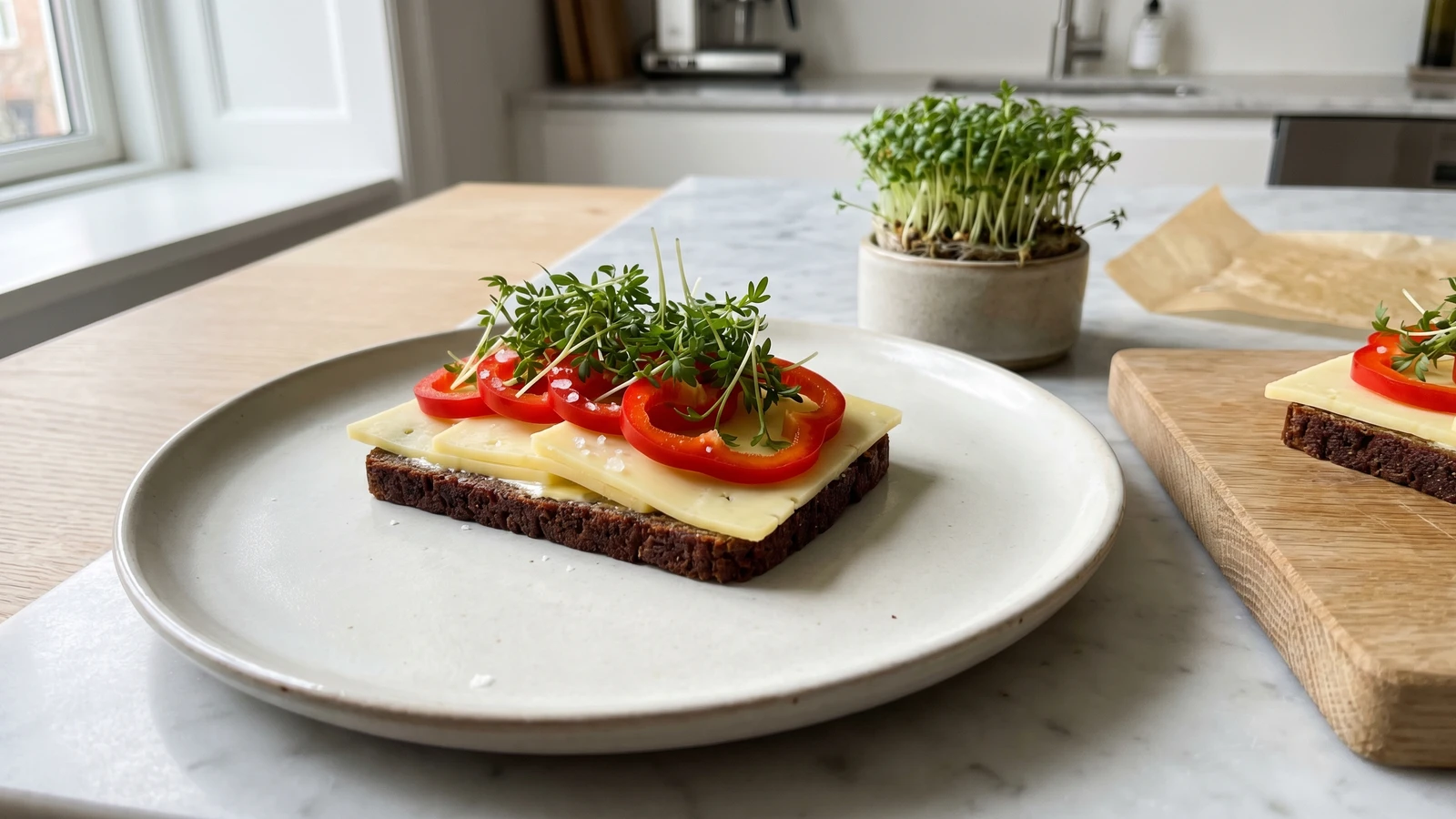
Danbomad med Peberfrugt og Karse
Created by Chef Freja
Thick-sliced Danbo on properly buttered rugbrod with sweet pepper rings and a crown of garden cress. The cheese smorrebrod that lives in every Danish lunchbox, from the first day of school to the last day at the office.
Some mornings the kitchen is quiet and the day hasn't started yet. You stand at the counter with a loaf of rugbrod and a block of Danbo and you make the same sandwich you've made a hundred times. That's not monotony. That's the madpakke, the packed lunch that follows every Dane from school desk to office, and this is its most familiar form.
Danbomad med peberfrugt og karse is what happens when the simplest ingredients are treated with respect. Good rugbrod, real butter, Danbo sliced thick enough to actually taste, sweet pepper rings for crunch and brightness, and a generous handful of cress snipped from the box on the windowsill. There's no cooking here. There's assembly, and assembly done well is its own kind of craft.
The only thing I'll ask you to watch is the butter. It goes on the bread in a proper layer, not scraped thin the way you might butter toast in a hurry. The butter is structural in smorrebrod. It seals the surface of the rye against moisture from above, and it carries the flavor of everything that sits on it. Get that right, and the rest falls into place. You'll know when it's right because the bread looks glossy and covered, with no dark patches showing through.
Danbo cheese was officially standardized as a named Danish variety in 1952, though mild semi-firm cow's milk cheeses of this type had been produced on Danish farms for decades before. It became Denmark's most-produced cheese, outpacing even the better-known Havarti, precisely because of its role in the daily madpakke. The tradition of the packed lunch itself is so deeply embedded in Danish culture that the word madpakke needs no explanation to any Dane, and Danbo on rugbrod is its cornerstone, the sandwich that schoolchildren recognize before they can spell it.
The technique, the tradition, and the story behind every dish.
Discover Culinary AdvisorIngredients
dark rugbrod
Quantity
4 thick slices
unsalted butter
Quantity
40g
softened to room temperature
Danbo cheese
Quantity
200g
sliced about 4mm thick
red or yellow bell pepper
Quantity
1
cored, sliced into rings
garden cress
Quantity
1 punnet
flaky sea salt (optional)
Quantity
to finish
| Ingredient | Quantity |
|---|---|
| dark rugbrod | 4 thick slices |
| unsalted buttersoftened to room temperature | 40g |
| Danbo cheesesliced about 4mm thick | 200g |
| red or yellow bell peppercored, sliced into rings | 1 |
| garden cress | 1 punnet |
| flaky sea salt (optional) | to finish |
Equipment Needed
- •Sharp serrated knife for the rugbrod
- •Kitchen scissors for the cress
- •Cheese slicer or sharp knife
Instructions
- 1
Prepare the pepper
Slice the bell pepper crosswise into rings about 3mm thick. Remove the seeds and the white pith from each ring. You want clean circles, not ragged strips. Rings lie flat on the cheese and give every bite both crunch and sweetness. Strips slide off. The shape matters here because smorrebrod is eaten with a knife and fork, and each piece you cut should hold together.
Red pepper is sweeter, yellow is brighter. Both work. Green is too bitter for this sandwich. Choose by what looks good at the market. - 2
Butter the rugbrod
Spread a generous, even layer of softened butter across each slice of rugbrod, going right to the edges. This is not the moment to be restrained. The butter does three things: it seals the porous surface of the rye so the bread doesn't go dry or soggy, it carries the mild flavor of the Danbo, and it gives the whole piece a richness that holds everything together. If the butter is cold and tears the bread, wait. Five more minutes at room temperature will save you.
Good butter matters. Danish dairy butter, if you can find it, has a clean, sweet cream flavor that suits Danbo perfectly. If not, use the best unsalted butter you have. - 3
Layer the cheese
Lay the Danbo slices across the buttered rugbrod in a single, overlapping layer. Cover the bread fully so every bite has cheese. Slice the Danbo at about 4mm thick. Thinner than that and the cheese disappears into the bread. Thicker and it overwhelms the other flavours. What you want is enough presence that the Danbo registers on your tongue, mild and slightly elastic, with that gentle tang that makes it Danbo and not just any cheese.
- 4
Add pepper and cress
Arrange two or three pepper rings across each piece, slightly overlapping. Then take your cress and snip a generous amount directly onto the sandwich, letting it fall where it falls. Cress is not a garnish here. It's an ingredient. The peppery bite of the cress is what lifts this sandwich from plain to alive. Don't be shy with it. A thin scatter looks polite but tastes like nothing. You want a crown, not a whisper.
Snip the cress with scissors rather than pulling it. Pulling bruises the stems and they go limp. Clean cuts keep the cress standing upright, which is what you want. - 5
Finish and serve
If you like, scatter a few flakes of sea salt over the top. The salt brightens the sweetness of the pepper and sharpens the cress. Serve immediately on a plate with a knife and fork, or wrap in parchment paper for the madpakke. If you're packing it, leave the cress off and carry it separately in a small container. Add it just before you eat. Cress wilts against wet surfaces, and you want it fresh and defiant, not flat.
Chef Tips
- •Danbo comes in several ages. For smorrebrod, use the young, mild variety marked 'Danbo 20+' or '30+'. Aged Danbo is firmer and sharper, better on a cheese board than on a lunchbox sandwich.
- •Grow your own cress on the windowsill. It takes four days from seed to harvest, needs nothing but a damp paper towel and daylight, and gives you something alive and sharp whenever you need it. Every Danish kitchen I've cooked in has had a box of cress growing somewhere near the sink.
- •If you can't find rugbrod, a dense whole-grain rye bread is the closest substitute. But it won't be the same. Rugbrod has a particular density and tang from the sourdough that holds everything else up. It's worth seeking out.
- •This sandwich travels well. Wrapped tightly in parchment with the cress packed separately, it holds for hours. That's why it's the madpakke standard. It was designed for the day, not just the moment.
Advance Preparation
- •The pepper rings can be sliced the night before and kept in a sealed container in the fridge. They stay crisp overnight without any trouble.
- •Assemble the sandwich in the morning without the cress. Wrap tightly in parchment or beeswax wrap. Pack the cress separately and add it just before eating to keep it fresh and upright.
Frequently Asked Questions
Nutrition Information
1 serving (about 165g)
Where cooking meets culture.
Culinary mentorship, cultural storytelling, and the editorial depth that makes cooking meaningful.
Explore Culinary Advisor