Culinary Advisor
A cooking platform built around craft, culture, and the stories behind what we eat.
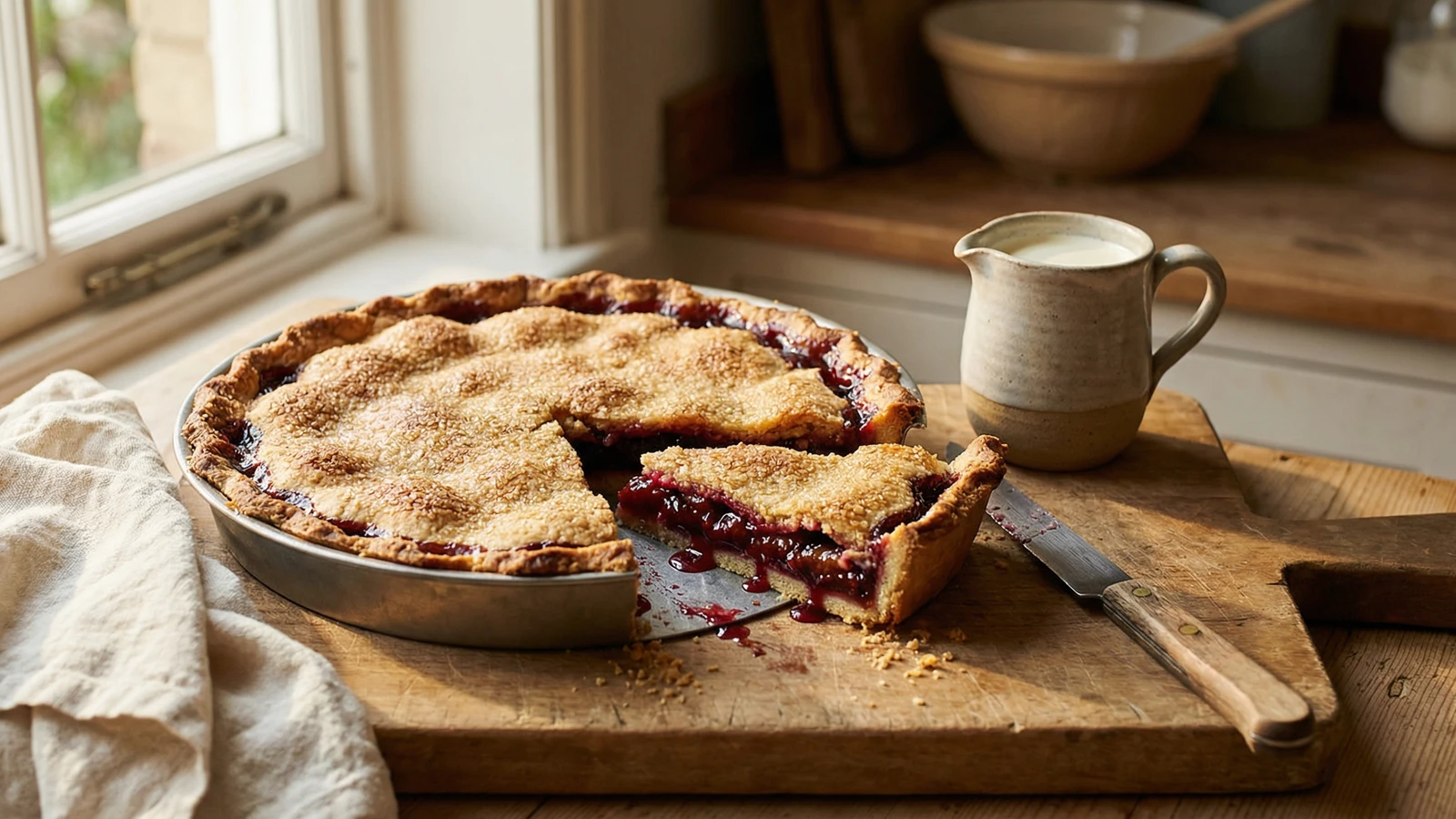
Damson Tart
Created by Chef Thomas
A late September tart of small purple damsons in buttery shortcrust, their sharpness softened by sugar and slow heat, served warm with cold cream pooling alongside.
Damsons arrive when the evenings have started to draw in and the kitchen wants the oven on again. They're small, oval, the colour of a bruise, and so tart on their own that you'd never want to eat one raw. But put them in a tart case with sugar and a hot oven and they become something else entirely: dark, glossy, almost winey, the kind of fruit that makes you understand why people used to walk miles along hedgerows to fill a basket.
The name comes from Damascus, which is a long way from a damp lane in late September, but the fruit has been British for so long it might as well be native. They turn up in farmers' markets for a few short weeks, and if you're lucky you know someone with a tree who has more than they can use. Take the offer. Damsons don't keep, and they're worth the small inconvenience of stones.
This is a tart that asks very little. Shortcrust pastry, fruit, sugar, a hot oven. The damsons do most of the work themselves, collapsing into a deep purple jam that stains the pastry and pools at the edges. A handful of ground almonds in the base soaks up the worst of the juices and stops things going soggy. Otherwise, you stay out of the way.
I wrote it down in the notebook one autumn, after a long walk and a bag of foraged damsons that took an hour to pick over. "Damson tart. Sunday. Cream. Worth it." That's all the recipe really needs.
The technique, the tradition, and the story behind every dish.
Discover Culinary AdvisorIngredients
plain flour
Quantity
200g
plus extra for dusting
cold unsalted butter
Quantity
100g
cubed
icing sugar
Quantity
50g
large egg yolk
Quantity
1
cold water
Quantity
2-3 tablespoons
fine sea salt
Quantity
pinch
ripe damsons
Quantity
700g
washed, stones left in
golden caster sugar
Quantity
150g
ground almonds
Quantity
1 tablespoon
cornflour
Quantity
1 teaspoon
lemon
Quantity
half
zested
demerara sugar
Quantity
1 tablespoon
for the top
double cream or thick yoghurt (optional)
Quantity
to serve
| Ingredient | Quantity |
|---|---|
| plain flourplus extra for dusting | 200g |
| cold unsalted buttercubed | 100g |
| icing sugar | 50g |
| large egg yolk | 1 |
| cold water | 2-3 tablespoons |
| fine sea salt | pinch |
| ripe damsonswashed, stones left in | 700g |
| golden caster sugar | 150g |
| ground almonds | 1 tablespoon |
| cornflour | 1 teaspoon |
| lemonzested | half |
| demerara sugarfor the top | 1 tablespoon |
| double cream or thick yoghurt (optional) | to serve |
Equipment Needed
- •23cm tart tin with removable base
- •Rolling pin
- •Baking parchment and baking beans
- •Mixing bowls
Instructions
- 1
Make the pastry
Tip the flour, icing sugar, and salt into a bowl. Add the cold butter and rub it in with your fingertips until the mixture looks like coarse breadcrumbs with a few larger flecks of butter still showing. Don't be too thorough. Those flecks of butter are what make the pastry short. Add the egg yolk and a tablespoon of cold water, then bring it together with a knife, adding the rest of the water only if you need it. The dough should hold together when pressed but not feel sticky. Flatten into a disc, wrap, and chill for at least thirty minutes.
Cold hands, cold butter, cold water. Pastry forgives almost anything except warmth. If your kitchen is hot, put the bowl in the fridge for ten minutes before you start. - 2
Prepare the damsons
Tip the damsons into a bowl and look them over. Pick out any leaves or stalks. You can leave the stones in or take them out, and there are arguments for both. Stones in is faster and the fruit holds its shape better, but everyone at the table needs to know. Stones out is more work and the fruit collapses a bit, but it's friendlier to eat. I usually leave them in. Toss the damsons with the caster sugar, ground almonds, cornflour, and lemon zest. Let them sit for ten minutes. The sugar will start to draw out the juices.
- 3
Roll and line the tin
Heat the oven to 190C/170C fan. Roll the chilled pastry out on a lightly floured surface to about three millimetres thick, turning it a quarter turn every few rolls so it doesn't stick. Lift it carefully into a 23cm tart tin with a removable base, pressing it gently into the corners. Trim the edges, leaving a small overhang to allow for shrinkage. Prick the base lightly with a fork and chill for another ten minutes. This second chill matters.
- 4
Blind bake the case
Line the chilled pastry with baking parchment and fill with baking beans or dried pulses. Bake for fifteen minutes, then lift out the parchment and beans and bake for another five minutes until the base looks dry and pale gold. This stops the pastry going soggy when the wet fruit goes in. Trim the overhang now while the pastry is still warm and cooperative.
If you don't have baking beans, dried lentils or rice work just as well. Keep them in a jar marked 'pastry' and reuse them forever. Mine have been around longer than some of my saucepans. - 5
Fill and bake
Tip the damsons and all their juices into the warm tart case, spreading them out so the fruit sits in a single generous layer. Scatter the demerara sugar over the top. Bake for twenty-five to thirty minutes, until the pastry edges are deep gold and the damsons have collapsed into a glossy, bubbling, dark purple mess. The juices should be thick and slightly syrupy, not watery. Trust your nose. When the kitchen smells like hot fruit and butter, you're nearly there.
- 6
Cool and serve
Let the tart cool in the tin for at least twenty minutes. The juices need time to set, and a hot damson straight from the oven will take the roof of your mouth off. Serve warm rather than hot, with cold double cream poured from a jug, or thick yoghurt if that's what you've got. Don't forget to warn anyone eating about the stones.
Chef Tips
- •Damsons have a short season, three or four weeks in late summer and early autumn at the most. If you can't find them, this works with greengages, small purple plums, or even halved Victoria plums, though the flavour will be sweeter and less wild. Don't try it with supermarket plums in March. Wait.
- •Leaving the stones in is traditional and easier, but you must tell people. A bitten damson stone is a memorable kind of pain. If you're feeding children or anyone who'd rather not pick stones out at the table, take the time to halve and stone the fruit before you start.
- •The ground almonds are not optional. They sit between the pastry and the fruit and absorb the juices that would otherwise turn the base to mush. A tablespoon of semolina or fine breadcrumbs does the same job if you don't have almonds.
- •Damsons make the best jam in the world, and any leftover fruit is worth simmering down with sugar for a jar to keep. A spoonful of damson jam on toast in February is one of the few things that makes winter feel less long.
Advance Preparation
- •The pastry can be made up to two days ahead and kept wrapped in the fridge, or frozen for up to two months. Let it soften slightly before rolling.
- •The tart is best eaten on the day it's baked, while the pastry is still crisp. It will keep for a day or two in a cool place, though the base will soften.
- •If you have a glut of damsons, stew them with sugar and freeze in tubs. A ready-made filling for tarts, crumbles, and ice cream all winter.
Frequently Asked Questions
Nutrition Information
1 serving (about 155g)
Where cooking meets culture.
Culinary mentorship, cultural storytelling, and the editorial depth that makes cooking meaningful.
Explore Culinary Advisor