Culinary Advisor
A cooking platform built around craft, culture, and the stories behind what we eat.
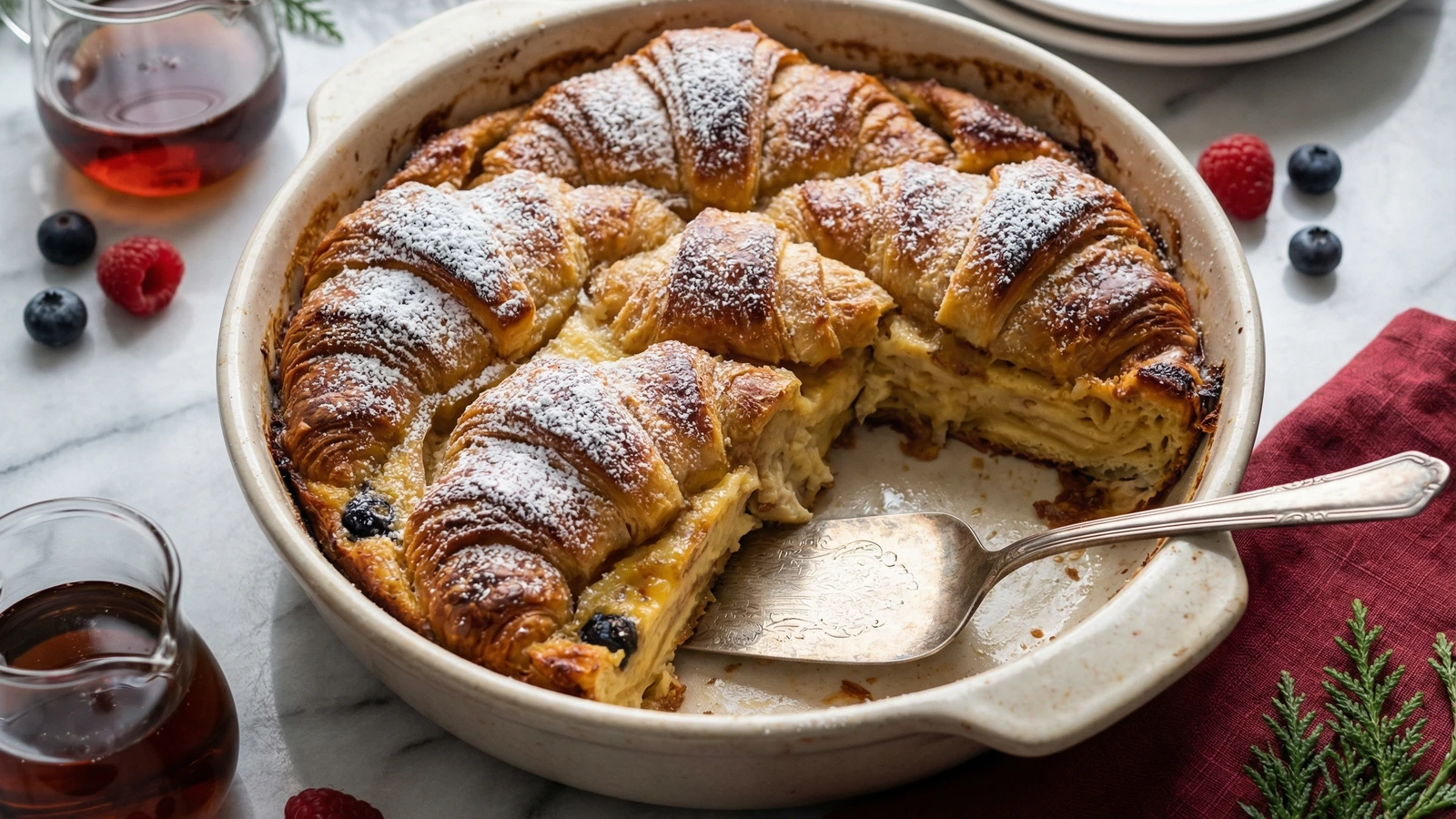
Croissant French Toast Bake
Created by
Flaky croissants transformed into a custardy, caramelized breakfast casserole that assembles in minutes the night before and bakes to golden perfection while you open presents.
French toast began as a rescue mission. Cooks across centuries have soaked stale bread in eggs and milk to transform yesterday's loaf into something worth waking up for. The French call it pain perdu, lost bread, though nothing is lost here. Everything is gained.
Using croissants changes the equation entirely. All that laminated butter, those dozens of flaky layers, absorb custard like a sponge while maintaining just enough structure to hold their shape. The tops caramelize into something approaching dessert while the centers stay impossibly tender. This is not health food. This is Christmas morning.
I've made this dish for gatherings of four and gatherings of forty. The beauty lies in its forgiveness. Assemble it the night before while you're still awake enough to measure. Slide it into the oven when you stumble downstairs. By the time coffee is poured and stockings are emptied, breakfast announces itself with the smell of vanilla and browned butter. No standing at the stove. No short-order cooking. Just one beautiful pan emerging golden and puffed, ready to feed everyone you love.
The technique, the tradition, and the story behind every dish.
Discover Culinary AdvisorIngredients
large croissants (day-old preferred)
Quantity
8
torn into 2-inch pieces
large eggs
Quantity
8
whole milk
Quantity
2 cups
heavy cream
Quantity
1 cup
granulated sugar
Quantity
3/4 cup
pure vanilla extract
Quantity
2 tablespoons
ground cinnamon
Quantity
1 teaspoon
nutmeg
Quantity
1/2 teaspoon
freshly grated
fine sea salt
Quantity
1/2 teaspoon
unsalted butter
Quantity
4 tablespoons
melted, plus more for dish
light brown sugar
Quantity
1/4 cup
packed
confectioners' sugar
Quantity
for dusting
pure maple syrup
Quantity
for serving
fresh berries (optional)
Quantity
for serving
| Ingredient | Quantity |
|---|---|
| large croissants (day-old preferred)torn into 2-inch pieces | 8 |
| large eggs | 8 |
| whole milk | 2 cups |
| heavy cream | 1 cup |
| granulated sugar | 3/4 cup |
| pure vanilla extract | 2 tablespoons |
| ground cinnamon | 1 teaspoon |
| nutmegfreshly grated | 1/2 teaspoon |
| fine sea salt | 1/2 teaspoon |
| unsalted buttermelted, plus more for dish | 4 tablespoons |
| light brown sugarpacked | 1/4 cup |
| confectioners' sugar | for dusting |
| pure maple syrup | for serving |
| fresh berries (optional) | for serving |
Equipment Needed
- •9x13-inch ceramic or glass baking dish
- •Large mixing bowl
- •Whisk
- •Fine-mesh strainer for dusting sugar
Instructions
- 1
Prepare baking dish
Generously butter a 9x13-inch baking dish, making sure to coat the corners where custard likes to stick. If your croissants are fresh, tear them into pieces and spread on a sheet pan for an hour to dry slightly. Day-old croissants can go straight into the dish. Scatter the torn croissant pieces evenly, letting them tumble naturally rather than pressing them flat. You want air pockets for the custard to penetrate.
A ceramic or glass dish works beautifully here and goes straight from refrigerator to oven without thermal shock concerns. - 2
Build the custard
Crack the eggs into a large bowl and whisk until the whites and yolks become one uniform color. Add the milk, cream, granulated sugar, vanilla, cinnamon, nutmeg, and salt. Whisk vigorously until the sugar dissolves and the mixture looks smooth and slightly frothy. Taste it. The custard should be noticeably sweet and aromatic with vanilla. If it tastes flat, add another splash of vanilla. This is the soul of your dish.
Real vanilla extract makes a difference you can taste. Save the imitation for recipes where it disappears into other flavors. - 3
Soak the croissants
Pour the custard slowly and evenly over the croissant pieces, making sure to saturate all corners of the dish. Use a spatula to gently press the croissants into the liquid without crushing them. The tops should peek above the custard like islands. Drizzle the melted butter over everything, then sprinkle the brown sugar across the surface. This creates the caramelized crust that makes people reach for seconds.
- 4
Refrigerate overnight
Cover the dish tightly with plastic wrap, pressing it gently onto the surface to prevent a skin from forming on exposed custard. Refrigerate for at least 4 hours, though overnight is ideal. During this time, the croissant layers absorb custard fully while maintaining enough structure to hold their shape during baking. This is the make-ahead magic that transforms Christmas morning from chaos to calm.
The casserole can be assembled up to 24 hours ahead. Beyond that, the croissants become too saturated and lose their textural contrast. - 5
Bring to room temperature
Remove the casserole from the refrigerator 30 minutes before baking. Preheat your oven to 350°F. A cold dish in a hot oven bakes unevenly, leaving you with a custardy center and burnt edges. That half hour of tempering makes the difference between acceptable and exceptional.
- 6
Bake until golden
Remove the plastic wrap and bake uncovered for 40 to 45 minutes. The casserole is ready when the top turns deep golden brown, the edges pull slightly away from the dish, and the center no longer jiggles like liquid when you shake the pan. A knife inserted into the center should come out clean or with just a few moist crumbs clinging to it. The smell will tell you too: butter, vanilla, and caramelized sugar announcing themselves throughout the house.
- 7
Rest and serve
Let the casserole rest for 10 minutes before serving. This allows the custard to set fully and makes cutting clean portions possible. Dust generously with confectioners' sugar through a fine-mesh strainer, creating that snow-dusted look that belongs on a Christmas table. Serve warm with maple syrup on the side and fresh berries scattered across the top for color and brightness.
Chef Tips
- •Seek out croissants from a proper bakery if you can. The ones made with real butter have a richness that supermarket versions simply cannot match. If bakery croissants aren't available, look for brands that list butter rather than margarine in their ingredients.
- •For larger gatherings, this recipe doubles beautifully. Use two 9x13-inch dishes rather than one massive pan, which bakes more evenly and allows you to stagger serving times if your crowd eats in waves.
- •Leftover portions reheat surprisingly well. Cover with foil and warm in a 300°F oven for 15 minutes. The texture softens slightly but the flavor remains intact.
- •Add 1/2 cup of chocolate chips scattered between the croissant layers for a version that will make children (and honest adults) very happy. Fold in fresh blueberries for a summer variation that works beautifully for brunch gatherings.
- •The maple syrup matters. Grade A dark amber or Grade B have the robust flavor that stands up to all this butter and vanilla. Light amber syrups get lost.
Advance Preparation
- •Assemble the entire casserole up to 24 hours ahead and refrigerate covered. The overnight soak is not just convenient but actually improves the final texture.
- •Croissants can be torn and dried on a sheet pan up to 2 days ahead, stored in an airtight container at room temperature.
- •The custard mixture can be whisked together and refrigerated separately for up to 24 hours, then poured over croissants when ready to assemble.
- •Baked leftovers keep refrigerated for 3 days. Reheat individual portions in a 300°F oven covered with foil.
Frequently Asked Questions
Nutrition Information
1 serving (about 550g)
Where cooking meets culture.
Culinary mentorship, cultural storytelling, and the editorial depth that makes cooking meaningful.
Explore Culinary Advisor