Culinary Advisor
A cooking platform built around craft, culture, and the stories behind what we eat.
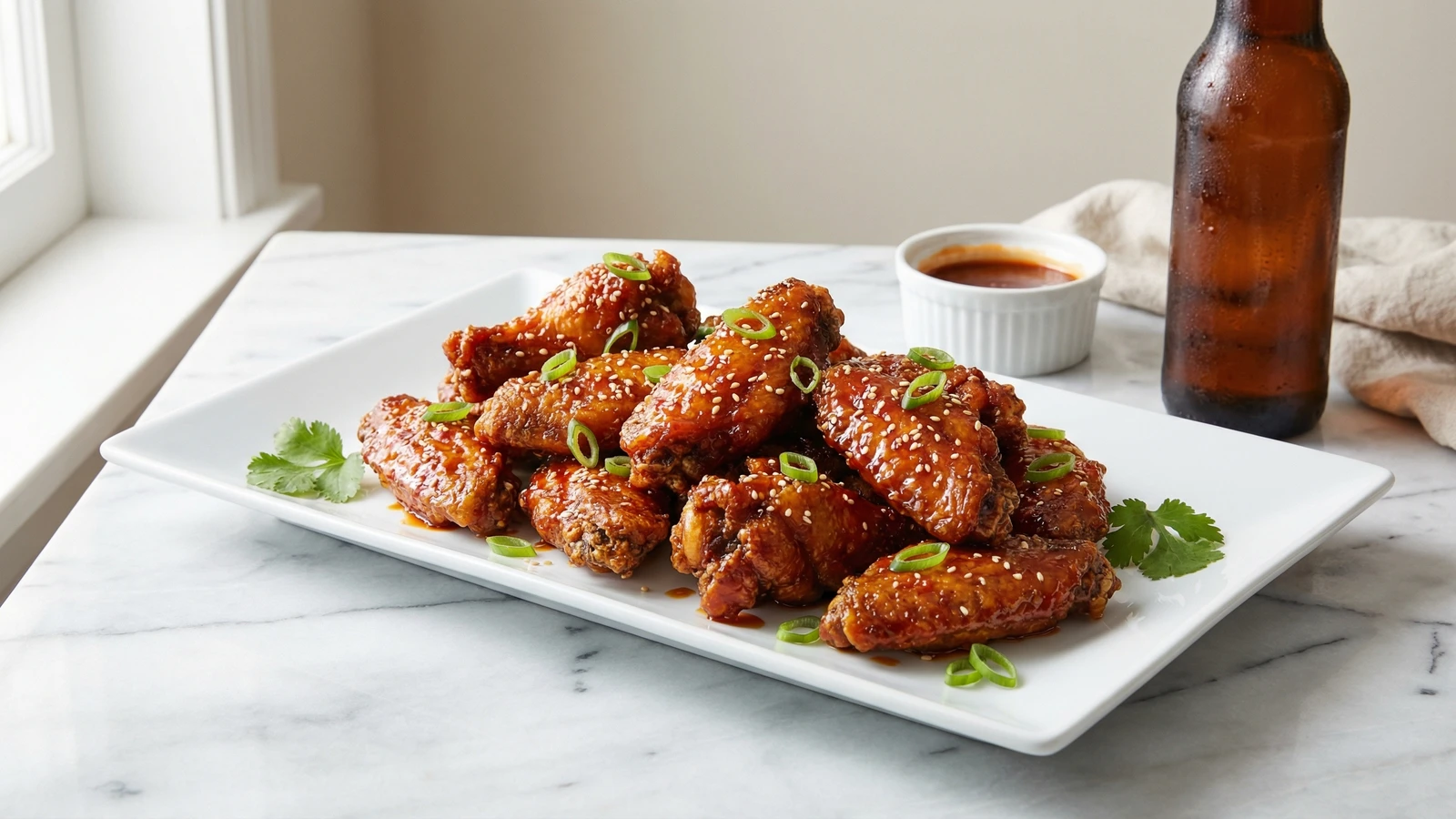
Crispy Korean Gochujang Honey Wings
Created by
Shatteringly crisp double-fried wings lacquered in a sticky-sweet gochujang and honey glaze that balances fierce Korean heat with golden sweetness. This is the wing that launched a thousand cravings.
Korean fried chicken conquered America not through subtlety but through superior technique. The double-fry method produces a crust so crisp it shatters between your teeth, yet somehow stays that way even after being drenched in sauce. This is engineering as much as cooking.
Gochujang is the secret weapon here. This fermented Korean red pepper paste brings heat, certainly, but also a deep, funky sweetness that no combination of American pantry staples can replicate. Mixed with honey and soy, it becomes a glaze so compelling you'll find yourself licking the bowl. Don't pretend otherwise.
I've served these wings to football crowds and dinner party guests alike. The technique scales beautifully, the sauce holds for days, and the results inspire the kind of devotion usually reserved for grandmothers' recipes. Master the double-fry and you'll never go back to soggy, one-dip wings again.
The math is simple: plan for eight to ten wings per person for appetizers, double that if wings are the main event. Your guests will eat more than they think. They always do.
The technique, the tradition, and the story behind every dish.
Discover Culinary AdvisorIngredients
chicken wings
Quantity
2 1/2 pounds
separated into flats and drumettes
cornstarch
Quantity
1 cup
all-purpose flour
Quantity
1/2 cup
baking powder
Quantity
1 teaspoon
kosher salt
Quantity
1 teaspoon
black pepper
Quantity
1/2 teaspoon
garlic powder
Quantity
1/2 teaspoon
neutral oil for frying
Quantity
about 2 quarts
peanut or vegetable
gochujang
Quantity
1/4 cup
honey
Quantity
3 tablespoons
soy sauce
Quantity
2 tablespoons
rice vinegar
Quantity
1 tablespoon
toasted sesame oil
Quantity
1 tablespoon
garlic
Quantity
3 cloves
minced
fresh ginger
Quantity
1 teaspoon
freshly grated
scallions
Quantity
2
thinly sliced
toasted sesame seeds
Quantity
1 tablespoon
fresh cilantro leaves (optional)
Quantity
for garnish
| Ingredient | Quantity |
|---|---|
| chicken wingsseparated into flats and drumettes | 2 1/2 pounds |
| cornstarch | 1 cup |
| all-purpose flour | 1/2 cup |
| baking powder | 1 teaspoon |
| kosher salt | 1 teaspoon |
| black pepper | 1/2 teaspoon |
| garlic powder | 1/2 teaspoon |
| neutral oil for fryingpeanut or vegetable | about 2 quarts |
| gochujang | 1/4 cup |
| honey | 3 tablespoons |
| soy sauce | 2 tablespoons |
| rice vinegar | 1 tablespoon |
| toasted sesame oil | 1 tablespoon |
| garlicminced | 3 cloves |
| fresh gingerfreshly grated | 1 teaspoon |
| scallionsthinly sliced | 2 |
| toasted sesame seeds | 1 tablespoon |
| fresh cilantro leaves (optional) | for garnish |
Equipment Needed
- •Dutch oven or heavy pot (5-quart minimum)
- •Deep-fry or instant-read thermometer
- •Wire cooling rack
- •Rimmed sheet pans
- •Spider strainer or slotted spoon
- •Large mixing bowl for tossing
Instructions
- 1
Dry the wings thoroughly
Pat the wing pieces aggressively dry with paper towels. This is not optional. Moisture is the enemy of crispness. The drier your wings going into the coating, the more shattering the crust coming out. Spread them on a sheet pan lined with paper towels and refrigerate uncovered for thirty minutes, or up to overnight, to dry the skin further.
Wings dried overnight in the refrigerator develop the crispiest skin. The cold air pulls moisture from the surface like a gentle dehydrator. - 2
Build the coating
Whisk together the cornstarch, flour, baking powder, salt, pepper, and garlic powder in a large bowl. The high cornstarch ratio is deliberate. It creates that distinctively thin, glass-like Korean fried chicken crust rather than the thick batter of American-style wings. The baking powder adds lift and extra crunch.
- 3
Make the glaze
Combine the gochujang, honey, soy sauce, rice vinegar, sesame oil, garlic, and ginger in a small saucepan. Warm over medium-low heat, stirring until smooth and slightly loosened, about three minutes. The glaze should coat a spoon but still flow freely. Set aside. It will thicken as it cools.
Taste the glaze now and adjust. More honey tames heat; more gochujang amplifies it. This is your wing, your crowd, your call. - 4
First fry: cook through
Heat oil in a Dutch oven or deep heavy pot to 325°F. Use a thermometer. Guessing is how people ruin wings. Toss the dried wings in the coating mixture, shaking off excess. Working in batches of eight to ten pieces to avoid crowding, fry until the coating is set and pale golden, about eight to ten minutes. The meat should be cooked through but the exterior won't yet be deeply browned. Transfer to a wire rack set over a sheet pan.
Crowding drops oil temperature dramatically, leading to greasy, soggy wings. Better to fry more batches than fewer. - 5
Rest between fries
Let the first-fried wings rest at room temperature for at least ten minutes, up to thirty. This rest is the secret to Korean fried chicken. The residual heat continues cooking the interior while the exterior cools and the coating sets. The second fry will be faster and more effective because of this pause.
- 6
Second fry: shatter and crisp
Increase oil temperature to 375°F. Fry the wings again in batches until deeply golden brown and audibly crackling, three to four minutes. The coating will have transformed into something almost architectural: thin, bronzed, impossibly crisp. Listen for the sound to change from bubbling to a higher-pitched crackle. That's your signal.
The second fry happens fast. Stay vigilant. Wings go from perfect to burnt in sixty seconds at this temperature. - 7
Glaze and toss
Transfer hot wings to a large bowl. Rewarm the glaze briefly if it has thickened too much, then pour about three quarters of it over the wings. Toss vigorously to coat every surface, using tongs or two large spoons. Add remaining glaze if needed. The coating should be visible but not dripping, a lacquered finish rather than a puddle.
- 8
Garnish and serve immediately
Pile the glazed wings onto a serving platter. Scatter with sliced scallions, sesame seeds, and cilantro leaves. Serve within five minutes of glazing. The crust will hold its crispness for perhaps fifteen minutes before the glaze begins to soften it. These wings do not wait politely. Neither should your guests.
Chef Tips
- •Gochujang is a fermented Korean red pepper paste found in most grocery stores' Asian sections. It brings moderate heat, subtle sweetness, and a funky depth no substitution truly matches. If you cannot find it, combine two tablespoons sriracha with one tablespoon white miso and one tablespoon brown sugar. It won't be the same, but it will be good.
- •For scaling: this recipe serves four to six as an appetizer. For a party of twelve, double everything and fry in more batches, keeping finished wings warm in a 200°F oven on a wire rack. The glaze can be tripled in a single pot without issue.
- •Save your frying oil. Once cooled, strain through cheesecloth into a clean jar. Refrigerated, it keeps for months and improves with use, adding flavor to future batches.
- •For maximum crispness, serve the wings unglazed with sauce on the side for dipping. Purists may scoff, but practicality has its place at a long party.
Advance Preparation
- •The glaze can be made up to five days ahead and refrigerated. Rewarm gently before using.
- •Wings can be first-fried up to four hours ahead. Hold at room temperature, then complete the second fry just before serving.
- •For day-before preparation: complete the first fry, cool wings completely, and refrigerate uncovered. Bring to room temperature for thirty minutes before the second fry. Add one minute to the second fry time.
- •Separated wing pieces can be seasoned and refrigerated overnight before coating. The salt helps dry the skin further.
Frequently Asked Questions
Nutrition Information
1 serving (about 180g)
Where cooking meets culture.
Culinary mentorship, cultural storytelling, and the editorial depth that makes cooking meaningful.
Explore Culinary Advisor