Culinary Advisor
A cooking platform built around craft, culture, and the stories behind what we eat.
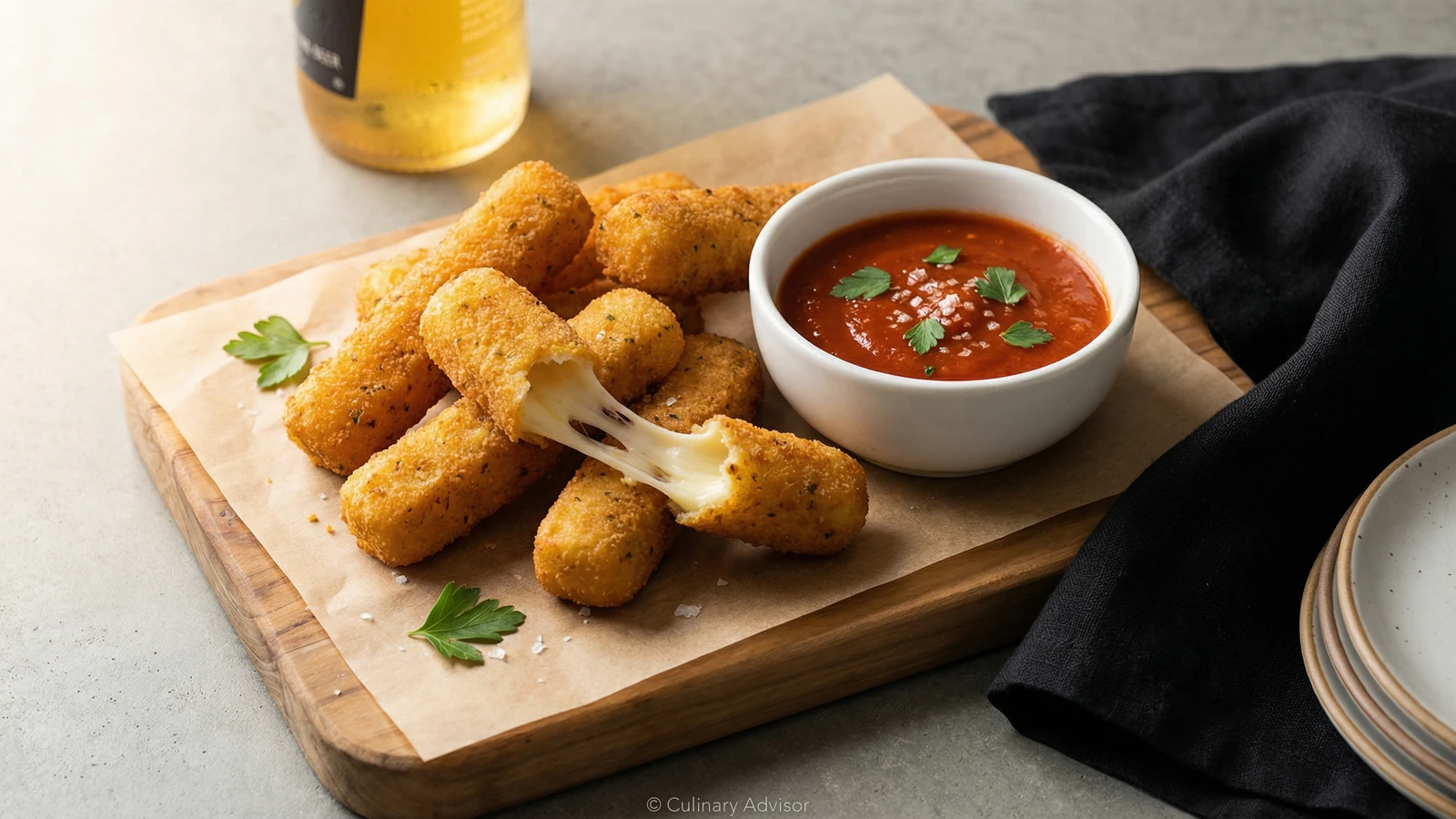
Crispy Fried Mozzarella Sticks
Created by
Double-breaded mozzarella sticks fried to shattering, golden perfection, pulling apart to reveal stretchy, molten cheese. The appetizer that launched a thousand game days, made properly in your own kitchen.
The mozzarella stick is Italian-American genius in its purest form. Someone, likely in a New York or New Jersey kitchen sometime in the 1970s, looked at the breading technique used for veal cutlets and asked: what if we wrapped cheese in that armor and dropped it in hot oil? The answer changed bar food forever.
I've watched home cooks fail at this dish more times than I care to count. The coating slides off. The cheese leaks out. The outside burns while the inside stays cold. Every failure traces back to one of two mistakes: using fresh mozzarella instead of low-moisture, or skipping the freezer. Both problems have the same root cause, which is impatience.
Low-moisture mozzarella behaves predictably in hot oil. Fresh mozzarella contains enough water to create steam explosions. The freezer gives you time, those precious ninety seconds where the coating can crisp before the cheese turns liquid. Master these two principles and you'll produce mozzarella sticks that shame any restaurant version.
This recipe doubles the breading and doubles the satisfaction. The technique takes twenty minutes of active work, then the freezer does the rest. Make them days ahead if you like. They'll wait patiently until you're ready to fry.
The technique, the tradition, and the story behind every dish.
Discover Culinary AdvisorIngredients
low-moisture mozzarella cheese
Quantity
1 1/2 pounds
block form
all-purpose flour
Quantity
1 cup
garlic powder
Quantity
1 teaspoon
kosher salt
Quantity
1 teaspoon, divided
black pepper
Quantity
1/2 teaspoon
freshly ground
large eggs
Quantity
3
whole milk
Quantity
2 tablespoons
panko breadcrumbs
Quantity
2 cups
Italian-style breadcrumbs
Quantity
1 cup
dried oregano
Quantity
1 teaspoon
dried basil
Quantity
1/2 teaspoon
crushed red pepper flakes
Quantity
1/4 teaspoon
Parmesan cheese
Quantity
1/4 cup
freshly grated
vegetable or peanut oil
Quantity
about 2 quarts
for frying
marinara sauce
Quantity
for serving
warmed
| Ingredient | Quantity |
|---|---|
| low-moisture mozzarella cheeseblock form | 1 1/2 pounds |
| all-purpose flour | 1 cup |
| garlic powder | 1 teaspoon |
| kosher salt | 1 teaspoon, divided |
| black pepperfreshly ground | 1/2 teaspoon |
| large eggs | 3 |
| whole milk | 2 tablespoons |
| panko breadcrumbs | 2 cups |
| Italian-style breadcrumbs | 1 cup |
| dried oregano | 1 teaspoon |
| dried basil | 1/2 teaspoon |
| crushed red pepper flakes | 1/4 teaspoon |
| Parmesan cheesefreshly grated | 1/4 cup |
| vegetable or peanut oilfor frying | about 2 quarts |
| marinara saucewarmed | for serving |
Equipment Needed
- •Heavy-bottomed pot or Dutch oven (at least 5-quart capacity)
- •Deep-fry or candy thermometer
- •Spider strainer or large slotted spoon
- •Wire cooling rack
- •Rimmed baking sheets
Instructions
- 1
Cut the cheese properly
Slice the mozzarella block into sticks approximately 4 inches long and 3/4 inch thick. Uniformity matters here because it determines cooking time. Sticks that are too thin will leak cheese before the coating crisps. Too thick and the center stays cold while the outside burns. Aim for the thickness of your index finger.
Low-moisture mozzarella is non-negotiable. Fresh mozzarella contains too much water and will explode in hot oil, leaving you with hollow shells and a dangerous mess. - 2
Build your breading station
Set up three shallow dishes in a row. In the first, whisk together the flour, garlic powder, half a teaspoon of salt, and the black pepper. In the second, beat the eggs with the milk until completely smooth. In the third, combine both breadcrumbs, oregano, basil, red pepper flakes, Parmesan, and remaining salt. This assembly line approach keeps one hand dry and one hand wet, preventing the dreaded breading glove that forms when you don't pay attention.
- 3
Apply the first coating
Working with three or four sticks at a time, dredge each piece thoroughly in the seasoned flour, shaking off excess. Transfer to the egg mixture, turning to coat completely. Let excess drip off for a full two seconds. Roll in the breadcrumb mixture, pressing firmly so crumbs adhere to every surface. Place coated sticks on a parchment-lined baking sheet in a single layer.
- 4
Double bread for insurance
Here is where amateurs fail and you will succeed. Take each breaded stick and repeat the entire process: egg wash, then breadcrumbs again, pressing firmly. This double layer creates the substantial, shatteringly crisp armor that prevents cheese from escaping during frying. It also provides more surface area for that golden crunch. Every stick gets two coats. No exceptions.
If your egg mixture gets clumpy with breadcrumbs, strain it or mix a fresh batch. Clumps create weak spots in your coating. - 5
Freeze until solid
Transfer the baking sheet to your freezer. The sticks must freeze completely solid, at least two hours and preferably overnight. This step is critical. Frozen cheese takes longer to melt, giving the coating time to turn golden and crisp before the interior turns to lava. Skip freezing and you'll have breadcrumb shells filled with nothing but regret.
- 6
Heat the oil correctly
Pour oil into a heavy-bottomed pot or Dutch oven to a depth of at least three inches. Attach a deep-fry thermometer and heat over medium-high until the oil reaches 350°F. This temperature is precise for a reason: too cool and the coating absorbs oil, becoming greasy; too hot and the outside burns before the cheese softens. Maintain this temperature throughout frying by adjusting your burner between batches.
Peanut oil has a high smoke point and neutral flavor. Vegetable oil works fine. Save your olive oil for another purpose. - 7
Fry in small batches
Working with four to six sticks at a time (directly from freezer to oil, no thawing), carefully lower them into the hot oil using a spider strainer or slotted spoon. Fry for 90 seconds to 2 minutes, turning once halfway through, until the coating turns deep golden brown and the edges show tiny bubbles where cheese tries to escape. The sound will shift from aggressive sizzling to a gentler, steadier bubbling as moisture escapes.
Crowding drops oil temperature dramatically. Patience with batch size means crispier results. - 8
Drain and serve immediately
Transfer fried sticks to a wire rack set over a baking sheet. A wire rack keeps bottoms crisp; paper towels make them soggy. Season immediately with a light sprinkle of flaky salt while the oil still clings. Rest for 60 seconds before serving. Any longer and the cheese begins to resolidify. Serve with warm marinara for dipping, and watch them disappear.
Chef Tips
- •Block mozzarella from the deli counter often has better texture than pre-shredded bags. Ask for a 1.5-pound piece and cut it yourself. You'll taste the difference.
- •The panko and Italian breadcrumb combination creates two textures: panko provides airy crunch while Italian crumbs fill gaps and add herbal flavor. Neither alone achieves the same effect.
- •Keep finished batches warm in a 200°F oven while you fry the rest. Spread them on a wire rack to maintain crispness.
- •For a crowd, set up a dedicated frying station away from guests. The oil stays hot, you stay focused, and nobody gets splattered.
- •Leftover marinara from a jar is fine. Leftover homemade marinara is better. Either way, warm it gently so the cold sauce doesn't shock the hot cheese.
Advance Preparation
- •Breaded, frozen mozzarella sticks keep in freezer bags for up to one month. Fry directly from frozen without thawing.
- •Set up the breading station and cut cheese up to one day ahead. Store cheese sticks covered in the refrigerator until ready to bread.
- •For party timing, bread and freeze sticks three days to one week ahead. Fry in batches as guests arrive for maximum freshness.
- •Used frying oil can be strained through cheesecloth and reused twice more for fried appetizers. Store cooled oil in a sealed container away from light.
Frequently Asked Questions
Nutrition Information
1 mozzarella stick (about 115g)
Where cooking meets culture.
Culinary mentorship, cultural storytelling, and the editorial depth that makes cooking meaningful.
Explore Culinary Advisor