Culinary Advisor
A cooking platform built around craft, culture, and the stories behind what we eat.
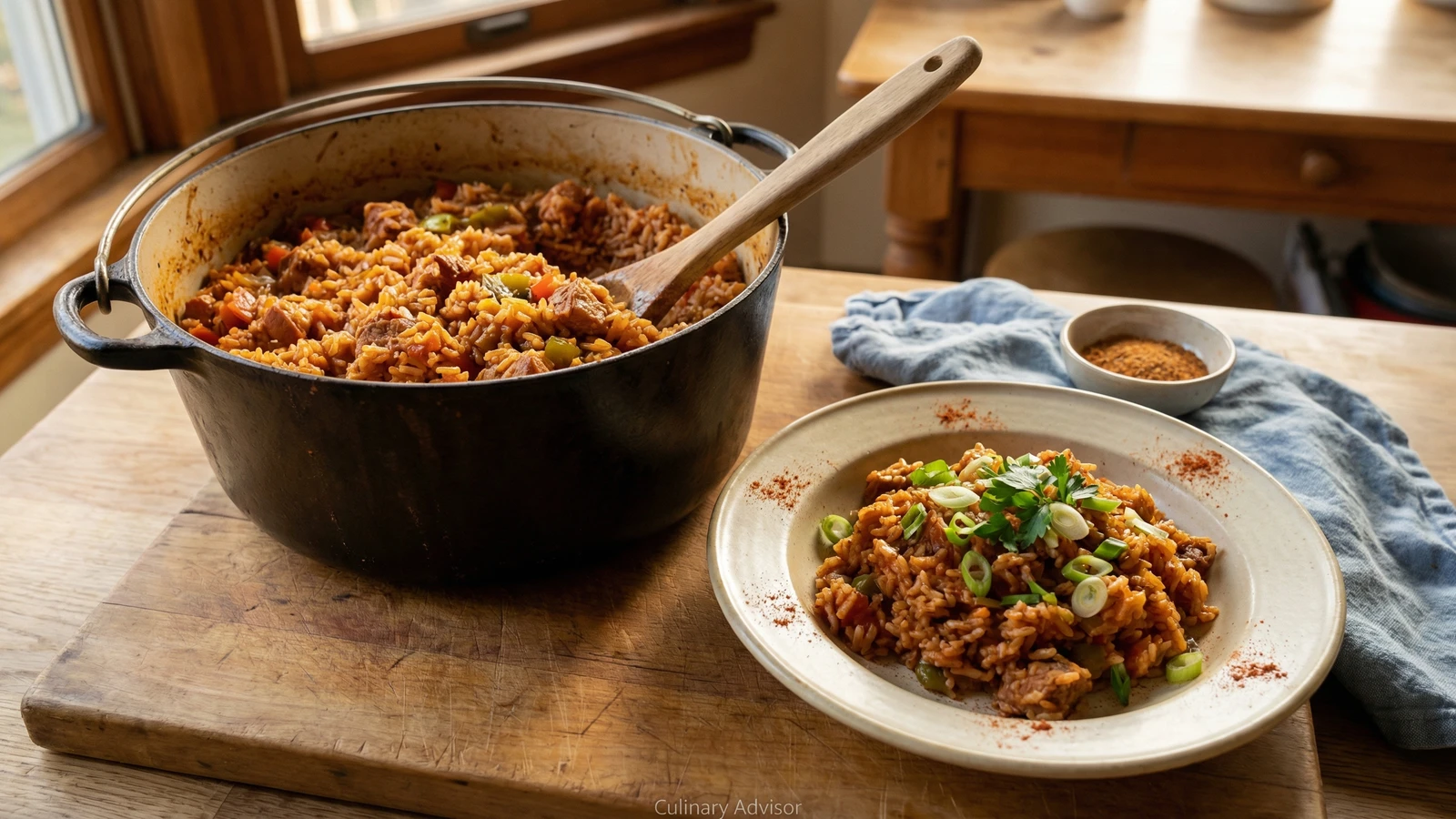
Creole Jambalaya Rice
Created by Chef Remy
Tomato-kissed rice slow-simmered with the holy trinity and bold Creole spices, the kind of side dish that steals the show from whatever you put beside it.
This rice tells you everything you need to know about the difference between Cajun and Creole cooking. Cajun jambalaya gets its color from browned meat and a dark roux. Creole jambalaya? It's red. Tomatoes give it that beautiful brick color and a sweetness that balances the heat from the seasonings. My grandmother Evangeline called it 'city jambalaya' because it came up from New Orleans while her brown jambalaya came from the country parishes.
At Lagniappe, we serve this rice under blackened redfish, beside grilled Gulf shrimp, next to smothered pork chops. It works with everything because the flavor is complete on its own. The holy trinity gets soft and sweet in the butter. The tomatoes break down and coat every grain. The rice absorbs the stock and all those seasonings until each forkful tastes like Louisiana.
The technique here matters. You toast the rice in the fat before adding liquid. That's how you get separate, fluffy grains instead of mush. And you don't stir it once the lid goes on. Let the steam do the work. Trust the process. I've taught this to hundreds of home cooks, and the ones who listen end up with rice that rivals any restaurant in the Quarter.
The technique, the tradition, and the story behind every dish.
Discover Culinary AdvisorIngredients
unsalted butter
Quantity
2 tablespoons
vegetable oil
Quantity
1 tablespoon
yellow onion
Quantity
1 medium
diced
celery stalks
Quantity
2
diced
green bell pepper
Quantity
1 medium
diced
garlic
Quantity
4 cloves
minced
long-grain white rice
Quantity
1 1/2 cups
diced tomatoes
Quantity
1 can (14.5 ounces)
with juices
chicken stock
Quantity
2 cups
warmed
Creole seasoning
Quantity
2 teaspoons, plus more to taste
smoked paprika
Quantity
1 teaspoon
dried thyme
Quantity
1/2 teaspoon
cayenne pepper
Quantity
1/4 teaspoon, or to taste
bay leaves
Quantity
2
kosher salt
Quantity
1 teaspoon
black pepper
Quantity
1/2 teaspoon
freshly ground
green onions
Quantity
3
sliced thin
fresh parsley
Quantity
2 tablespoons
chopped
| Ingredient | Quantity |
|---|---|
| unsalted butter | 2 tablespoons |
| vegetable oil | 1 tablespoon |
| yellow oniondiced | 1 medium |
| celery stalksdiced | 2 |
| green bell pepperdiced | 1 medium |
| garlicminced | 4 cloves |
| long-grain white rice | 1 1/2 cups |
| diced tomatoeswith juices | 1 can (14.5 ounces) |
| chicken stockwarmed | 2 cups |
| Creole seasoning | 2 teaspoons, plus more to taste |
| smoked paprika | 1 teaspoon |
| dried thyme | 1/2 teaspoon |
| cayenne pepper | 1/4 teaspoon, or to taste |
| bay leaves | 2 |
| kosher salt | 1 teaspoon |
| black pepperfreshly ground | 1/2 teaspoon |
| green onionssliced thin | 3 |
| fresh parsleychopped | 2 tablespoons |
Equipment Needed
- •Heavy-bottomed pot or Dutch oven with tight-fitting lid
- •Wooden spoon
- •Fork for fluffing
Instructions
- 1
Build the flavor base
Melt the butter with the oil in a heavy-bottomed pot or Dutch oven over medium heat. When the butter foams and subsides, add the onion, celery, and bell pepper. This is your holy trinity, the foundation of Louisiana cooking. Cook, stirring occasionally, until the vegetables soften and the onion turns translucent, about 6 to 8 minutes. You want them tender and sweet, not browned.
The combination of butter and oil gives you flavor from the butter and a higher smoke point from the oil. That's how we do it at Lagniappe. - 2
Add garlic and seasonings
Push the vegetables to the sides of the pot and add the garlic to the center. Let it sizzle for about 30 seconds until fragrant. Now add the Creole seasoning, smoked paprika, thyme, and cayenne. Stir everything together and cook for another minute. You're blooming those spices in the fat, waking them up. The kitchen should smell like Louisiana right about now.
- 3
Toast the rice
Add the rice to the pot and stir to coat every grain with the seasoned fat and vegetables. Toast the rice for 2 to 3 minutes, stirring constantly. You'll see the grains turn from bright white to slightly translucent at the edges. This step is how you get fluffy, separate grains instead of sticky mush. Listen for a gentle crackling sound as the rice toasts.
Don't skip the toasting. Every grain needs that coating of fat. That's the bayou way. - 4
Add tomatoes and liquid
Pour in the diced tomatoes with all their juices. Stir well, scraping up any fond from the bottom of the pot. Add the warmed chicken stock, bay leaves, salt, and black pepper. Stir once more to distribute everything evenly. Bring the liquid to a boil over medium-high heat.
- 5
Simmer covered
Once boiling, reduce heat to low, cover with a tight-fitting lid, and let it simmer undisturbed for 18 to 20 minutes. Do not lift that lid. Do not stir. The steam trapped inside is doing the work, and every time you peek, you're letting it escape. Trust the process.
If your lid doesn't seal tight, lay a piece of foil over the pot before putting the lid on. A proper seal makes perfect rice. - 6
Rest and fluff
After 18 to 20 minutes, remove the pot from heat but keep the lid on. Let it rest for 5 minutes. This allows the moisture to redistribute and the grains to firm up. Then remove the lid, discard the bay leaves, and fluff the rice gently with a fork. The grains should be separate, tender, and stained a beautiful brick red from the tomatoes.
- 7
Finish and taste
Fold in the sliced green onions and chopped parsley. Now taste. Taste, taste, taste. Adjust the salt if needed. Add more cayenne if you want more heat. The rice should be boldly seasoned but balanced. Serve hot alongside your favorite Gulf proteins or pile it high and eat it straight from the pot. I won't judge.
Chef Tips
- •Use long-grain rice, not medium or short grain. Jasmine works beautifully here. The longer grains stay separate and fluffy instead of clumping together.
- •Warm your stock before adding it. Cold liquid shocks the rice and can lead to uneven cooking. Keep it simmering in a small pot while you build the base.
- •Make your own Creole seasoning if you can: paprika, garlic powder, onion powder, cayenne, black pepper, white pepper, dried oregano, and dried thyme. Store-bought works fine, but homemade is how my grandmother did it.
- •This rice reheats beautifully. Add a splash of stock, cover, and warm over low heat. It might be even better the next day after the flavors marry overnight.
Advance Preparation
- •The holy trinity can be diced up to 2 days ahead and stored refrigerated in a sealed container. This makes weeknight cooking fast.
- •Cooked rice keeps refrigerated for up to 4 days. Reheat with a splash of stock over low heat, covered, stirring occasionally.
- •For meal prep, portion into containers and freeze for up to 2 months. Thaw overnight in the refrigerator before reheating.
Frequently Asked Questions
Nutrition Information
1 serving (about 250g)
Where cooking meets culture.
Culinary mentorship, cultural storytelling, and the editorial depth that makes cooking meaningful.
Explore Culinary Advisor