Culinary Advisor
A cooking platform built around craft, culture, and the stories behind what we eat.
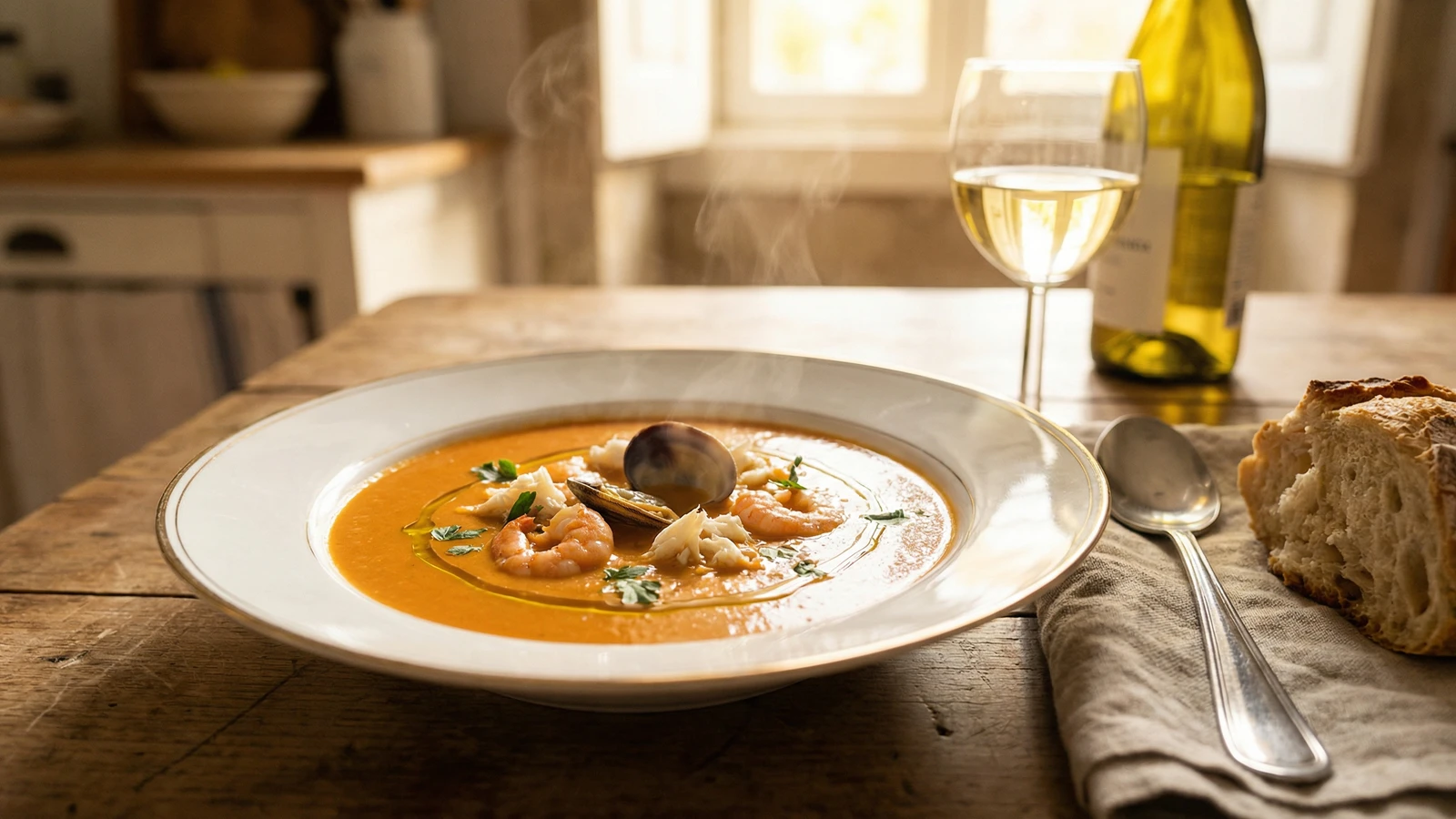
Creme de Marisco
Created by
The silken shellfish soup of Portuguese celebrations, where shrimp, crab, and clams become velvet, the shells surrender their secrets, and cream brings everything to luxury. This is what we serve when it matters.
In Lisbon's old restaurants, the ones with linen tablecloths and waiters who've been there forty years, creme de marisco arrives in a silver tureen. Steam rises. The room goes quiet. Someone's grandmother is smiling.
I didn't grow up with this dish. Avó Leonor was Alentejana, far from the coast, and her soups were bread and garlic, not shellfish and cream. But when I started documenting recipes from grandmothers across Portugal, I found creme de marisco everywhere along the coast. From Setúbal to Cascais to Porto, from humble tascas to proper restaurants, each cook guarding their version like a state secret.
The secret isn't secret at all. It's the shells. Roast them until they're deep coral and fragrant with the sea. Simmer them until they've given everything. Then strain and press and extract. The shells are the soul. Without this step, you have cream soup with seafood in it. With it, you have something that tastes like the entire Atlantic concentrated into a bowl.
This is restaurant food that belongs in home kitchens. It takes time, yes. It takes attention. But every grandmother I've watched make it has said the same thing: "Isto não se apressa." This cannot be rushed. They're right. The result is worth every minute. Serve it when you want to say "you matter" without speaking. At Mesa da Avó, this is our New Year's Eve soup. It's what we serve when the year ends and the table is full of people we love.
Creme de marisco emerged from Portugal's bisque tradition, influenced by French technique but made distinctly Portuguese with local shellfish and the characteristic refogado base. The dish rose to prominence in Lisbon's restaurants during the mid-20th century, becoming synonymous with special occasions and family celebrations. Coastal regions from Cascais to Setúbal each claim their own definitive version, debating the proper ratio of shrimp to crab to clam.
The technique, the tradition, and the story behind every dish.
Discover Culinary AdvisorIngredients
shell-on shrimp (camarão)
Quantity
500g
medium size
crab (sapateira)
Quantity
250g
cooked, meat picked, shells reserved
clams (amêijoas)
Quantity
500g
scrubbed
extra virgin olive oil (azeite)
Quantity
1/3 cup
onions
Quantity
2 medium
diced
leek
Quantity
1 large
white and light green parts, sliced
garlic
Quantity
3 cloves
minced
ripe tomatoes
Quantity
2
roughly chopped
tomato paste
Quantity
1 tablespoon
dry white wine
Quantity
1/2 cup
brandy or aguardente
Quantity
2 tablespoons
bay leaf
Quantity
1
fresh thyme
Quantity
3 sprigs
piri-piri or cayenne
Quantity
1/4 teaspoon
fish stock or water
Quantity
8 cups
heavy cream (natas)
Quantity
1/2 cup
butter
Quantity
2 tablespoons
flat-leaf parsley
Quantity
for garnish
finely chopped
sea salt
Quantity
to taste
white pepper
Quantity
to taste
| Ingredient | Quantity |
|---|---|
| shell-on shrimp (camarão)medium size | 500g |
| crab (sapateira)cooked, meat picked, shells reserved | 250g |
| clams (amêijoas)scrubbed | 500g |
| extra virgin olive oil (azeite) | 1/3 cup |
| onionsdiced | 2 medium |
| leekwhite and light green parts, sliced | 1 large |
| garlicminced | 3 cloves |
| ripe tomatoesroughly chopped | 2 |
| tomato paste | 1 tablespoon |
| dry white wine | 1/2 cup |
| brandy or aguardente | 2 tablespoons |
| bay leaf | 1 |
| fresh thyme | 3 sprigs |
| piri-piri or cayenne | 1/4 teaspoon |
| fish stock or water | 8 cups |
| heavy cream (natas) | 1/2 cup |
| butter | 2 tablespoons |
| flat-leaf parsleyfinely chopped | for garnish |
| sea salt | to taste |
| white pepper | to taste |
Equipment Needed
- •Large heavy-bottomed pot (6-liter)
- •Fine-mesh sieve
- •Immersion blender or regular blender
- •Wooden spoon for pressing shells
Instructions
- 1
Prepare the shellfish
Peel the shrimp, keeping the shells and heads. Set the shrimp meat aside in the refrigerator. Steam the clams in a covered pot with a splash of wine until they open, about 4 minutes. Remove the meat from most clams, leaving a few in shell for garnish. Strain and reserve the clam liquor. You now have three treasures: shrimp shells, clam liquor, and crab shells. These are the soul of your bisque.
- 2
Build the shell stock
In a large heavy pot, heat half the azeite over medium-high heat. Add all the shells (shrimp, crab) and cook, pressing them with a wooden spoon, until they turn deep coral and smell intensely of the sea, about 8 minutes. Pour in the fish stock and reserved clam liquor. Add the bay leaf and thyme. Bring to a simmer and cook for 30 minutes. The liquid should reduce by about a quarter and turn a beautiful sunset orange. Strain through a fine sieve, pressing hard on the shells to extract every drop of flavor. Discard the shells.
Don't skip roasting the shells. This is where restaurant flavor comes from. A creme de marisco without proper shell stock is just cream soup with seafood floating in it. - 3
Make the refogado
Wipe out the pot. Add the remaining azeite over medium-low heat. Add the onions and leek. Cook slowly, stirring occasionally, until completely soft and golden, about 15 minutes. Não tenhas pressa. Add the garlic and cook one minute more until fragrant. Add the tomatoes and tomato paste. Cook until the tomatoes break down and the mixture becomes jammy, another 10 minutes. This refogado is your foundation.
Avó Leonor always said the refogado tells you when it's ready. When the oil starts to separate and pool around the edges, when the tomato loses its raw smell and turns sweet, that's the moment. - 4
Add wine and brandy
Increase heat to medium-high. Pour in the white wine and brandy. Let it bubble fiercely for 2 minutes, scraping up any fond from the bottom of the pot. The alcohol should cook off, leaving behind depth and a hint of warmth. You'll know it's ready when the sharp smell softens.
- 5
Simmer and blend
Pour in the strained shell stock. Add the piri-piri. Bring to a gentle simmer and cook for 20 minutes to marry the flavors. Remove from heat and let cool slightly. Using an immersion blender (or working in batches with a regular blender), puree until completely smooth. Pass through a fine sieve for velvet texture. This step separates home cooking from restaurant quality. Yes, it's extra work. Yes, it matters.
- 6
Finish with cream and shellfish
Return the strained soup to the pot over medium-low heat. Stir in the cream and butter. Season carefully with salt and white pepper. Add the reserved shrimp and cook gently until just pink and curled, about 3 minutes. Add the clam meat and picked crab. Warm through for one minute. Taste again. The sea should sing, brightened by tomato, warmed by brandy, made luxurious by cream.
White pepper is traditional here. Black pepper would leave specks in your velvet soup. We're not being precious; we're being Portuguese. - 7
Serve with ceremony
Ladle into warmed bowls. Distribute the shellfish evenly. Place a reserved clam in its shell in each bowl. Scatter parsley over top. Drizzle with your best azeite if you like. Serve immediately with crusty bread for dipping. This is celebration food. It deserves a moment of appreciation before the first spoonful.
Chef Tips
- •Save shrimp shells in your freezer for weeks before making this. The more shells, the deeper the flavor. This is a dish that rewards planning.
- •If you can find sapateira (spider crab), use it. The flavor is sweeter and more complex than other crabs. If not, any good crab will work.
- •The final strain through a fine sieve is not optional. Tiny shell fragments and tomato seeds have no place in velvet soup. Taste the difference between strained and unstrained, and you'll never skip this step again.
- •Reheat gently if you must, but know that the shellfish will tighten. Better to make the base ahead and add the seafood just before serving.
Advance Preparation
- •The shell stock can be made up to 2 days ahead and refrigerated. The flavor deepens as it rests.
- •The soup base (through straining) can be made a day ahead. Refrigerate and reheat gently before adding cream and seafood.
- •The final dish with seafood added must be served immediately. The shellfish overcooks quickly and cannot be reheated.
Frequently Asked Questions
Nutrition Information
1 serving (about 400g)
Where cooking meets culture.
Culinary mentorship, cultural storytelling, and the editorial depth that makes cooking meaningful.
Explore Culinary Advisor