Culinary Advisor
A cooking platform built around craft, culture, and the stories behind what we eat.
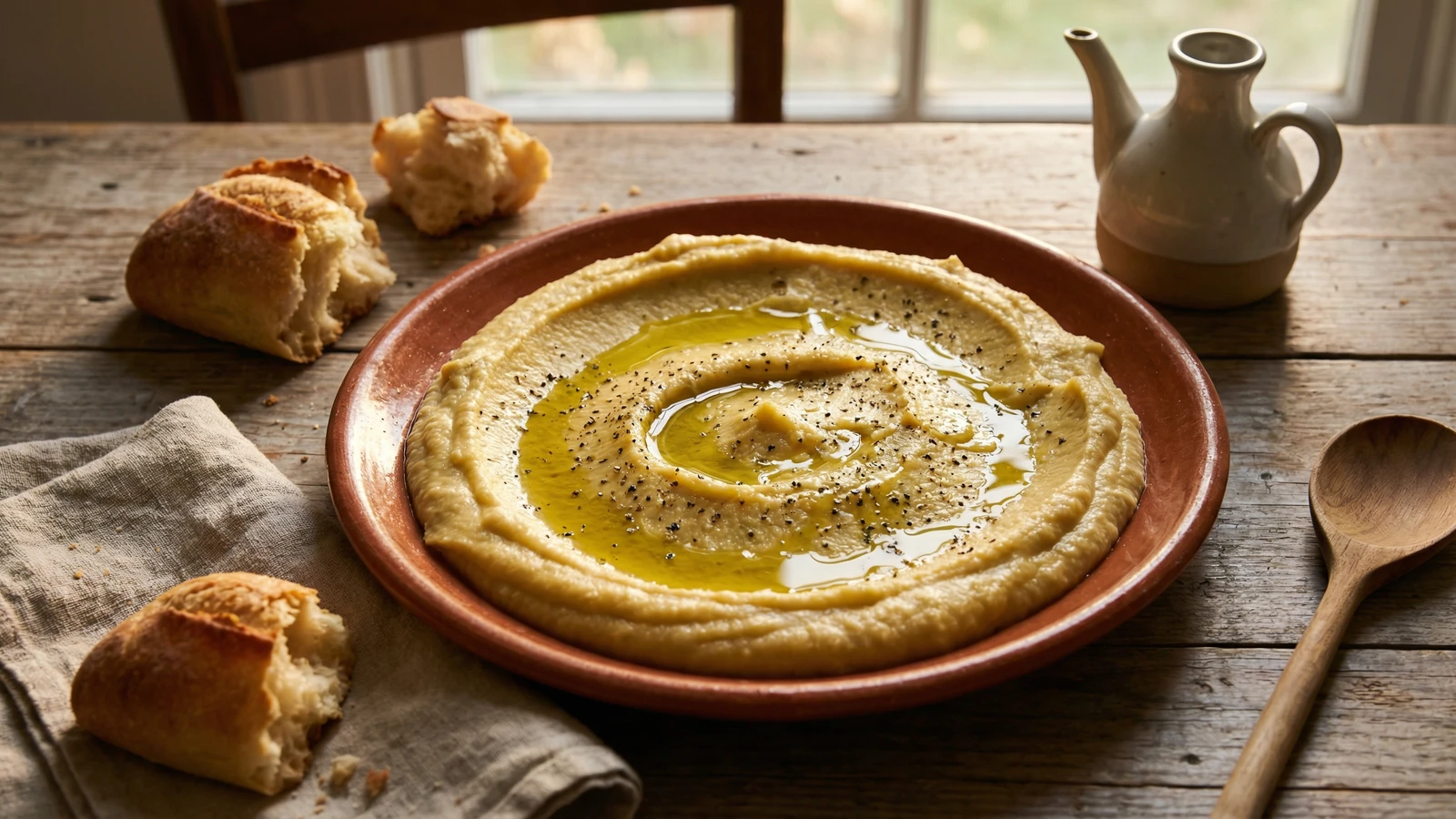
Crema di Fave alla Pugliese
Created by Chef Graziella
The ancient puree of Puglia, where dried fava beans become velvet through slow cooking and generous olive oil. Peasant food that proves poverty creates genius.
This is what Italian food actually is. Not restaurant cooking with its cream sauces and excess. This is a pot of dried beans, an onion, some water, and your best olive oil. It fed families in Puglia for centuries before anyone thought to call it cuisine.
The dried fava bean was the protein of the poor. Contadini in the sun-scorched heel of Italy's boot grew them, dried them, stored them, and cooked them into this simple puree all winter long. They served it with whatever bitter greens grew wild in the fields: chicory, dandelion, the leaves of the turnip. The combination of creamy beans and sharp greens was nutritionally complete. It kept people alive.
What you keep out matters as much as what you put in. There is no garlic here. No herbs beyond one bay leaf. No vegetable soffritto. The flavor is the bean itself, transformed by slow cooking and elevated by the olive oil of Puglia, which is among the finest in Italy. If you use inferior oil, you will taste it. If you rush the cooking, the beans will be grainy. Simple does not mean easy.
Fava beans sustained Mediterranean civilizations long before Rome. In Puglia, the dish called fave e foglie (beans and greens) appears in records dating to the 16th century, though the preparation is almost certainly older. The region's poverty made dried legumes essential; its abundant olive groves provided the fat that made them rich.
The technique, the tradition, and the story behind every dish.
Discover Culinary AdvisorIngredients
dried split fava beans
Quantity
1 pound
yellow onion
Quantity
1 small
peeled and halved
bay leaf
Quantity
1
cold water
Quantity
8 cups
kosher salt
Quantity
to taste
extra virgin olive oil
Quantity
1/2 cup, plus more for drizzling
black pepper
Quantity
to taste
freshly ground
| Ingredient | Quantity |
|---|---|
| dried split fava beans | 1 pound |
| yellow onionpeeled and halved | 1 small |
| bay leaf | 1 |
| cold water | 8 cups |
| kosher salt | to taste |
| extra virgin olive oil | 1/2 cup, plus more for drizzling |
| black pepperfreshly ground | to taste |
Equipment Needed
- •Heavy 4-quart pot or Dutch oven
- •Wooden spoon or sturdy whisk
- •Fine-mesh strainer for rinsing beans
Instructions
- 1
Prepare the beans
Rinse the dried split fava beans under cold running water, picking through them to remove any small stones or debris. Split fava beans, already skinned, require no soaking. If using whole dried favas with skins, you must soak them overnight and slip off the skins before cooking. This extra step matters. The skins turn the puree grayish and give it a bitter edge.
Look for fave secche sgusciate at Italian grocers or Middle Eastern markets, where they are sometimes labeled as split broad beans. The skinless variety saves you an hour of tedious work. - 2
Cook the beans
Place the beans in a heavy pot with the onion halves and bay leaf. Add the cold water. Bring to a gentle simmer over medium heat, then reduce to the lowest possible flame. Cook uncovered, stirring occasionally to prevent sticking, until the beans have completely fallen apart and absorbed most of the water. This takes between one hour and one hour and thirty minutes. The beans should be so soft they collapse when pressed against the side of the pot.
- 3
Watch the pot
As the beans cook and the water reduces, you must stir more frequently. The bottom scorches easily once the mixture thickens. Add small amounts of hot water if the beans absorb all the liquid before becoming completely tender. The consistency should be that of loose mashed potatoes. Not soup, not paste.
- 4
Finish the puree
Remove and discard the onion halves and bay leaf. Working while the beans are still hot, beat them vigorously with a wooden spoon or whisk until smooth. Add half a cup of olive oil in a thin stream, beating continuously as you would for mayonnaise. The oil should be absorbed completely, leaving the puree silky and rich. Season with salt. The amount depends on your beans and your taste. Start with one teaspoon and adjust.
- 5
Serve properly
Spoon the warm puree onto individual plates or a serving platter, spreading it into a shallow layer. Create a small well in the center. Drizzle generously with your finest olive oil. The oil should pool in the well and run in rivulets across the surface. Finish with freshly ground black pepper. Serve warm, not hot, with bitter greens alongside if you have them.
Chef Tips
- •Seek out Puglian olive oil if you can find it. The region produces more olive oil than any other in Italy, and the robust, peppery varieties are made for this dish. The oil is not a condiment here. It is an ingredient.
- •Pair this with sautéed bitter greens for the authentic experience. Blanch chicory, dandelion greens, or broccoli rabe until tender, then sauté briefly in olive oil with a whisper of garlic. Serve them alongside the puree, never mixed in.
- •The puree thickens as it cools. Add warm water when reheating. Stir in another drizzle of olive oil before serving to restore the silky texture.
- •Do not attempt this with canned fava beans. They are too watery and have none of the earthy depth that dried beans develop. This is a dish that requires the patience of dried legume cookery.
Advance Preparation
- •The puree keeps refrigerated for up to four days. Reheat gently with a splash of water, stirring constantly, then finish with fresh olive oil before serving.
- •The puree does not freeze well. The texture becomes grainy upon thawing.
Frequently Asked Questions
Nutrition Information
1 serving (about 260g)
Where cooking meets culture.
Culinary mentorship, cultural storytelling, and the editorial depth that makes cooking meaningful.
Explore Culinary Advisor