Culinary Advisor
A cooking platform built around craft, culture, and the stories behind what we eat.
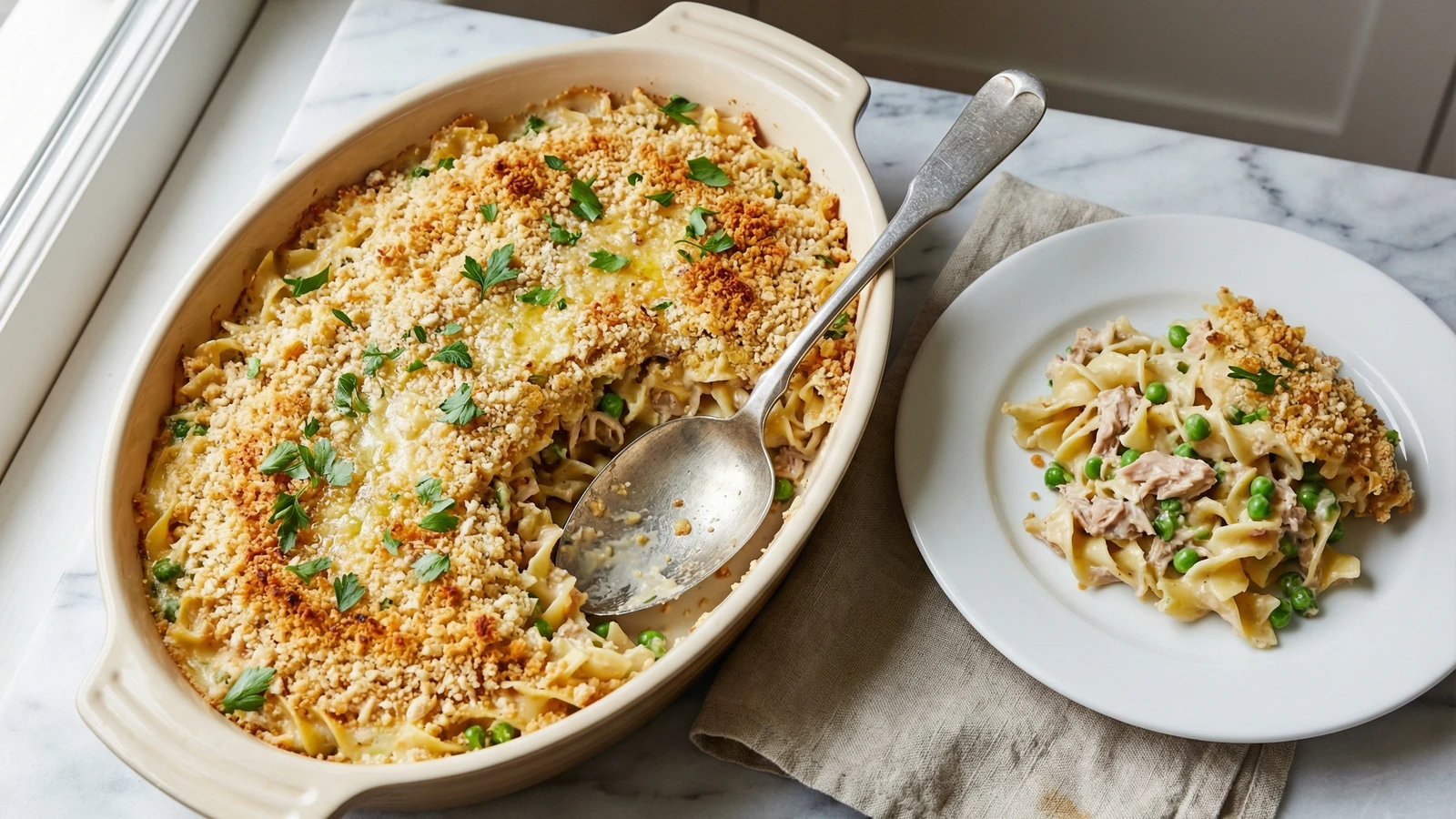
Creamy Tuna Noodle Casserole
Created by
Wide egg noodles cloaked in a from-scratch mushroom cream sauce with chunks of tuna and sweet peas, finished with a shatteringly crisp buttered cracker crust. This is midcentury American comfort food done right.
The tuna noodle casserole has been unfairly maligned by food writers who never tasted a good one. They remember the versions assembled from canned soup and soggy crackers, dishes born of convenience rather than care. Those deserve their bad reputation. This one does not.
The casserole emerged in American kitchens during the 1940s and 1950s when canned tuna became a pantry staple and thrifty cooks needed to stretch protein across growing families. It was working-class ingenuity. A single can of fish, transformed through starch and cream into something that could feed six. The dish persisted because it works. Because it tastes good. Because children ask for it again.
What separates a memorable tuna casserole from a forgettable one lives in the sauce. Skip the canned soup. Make a proper béchamel, enrich it with sautéed mushrooms and sharp cheddar, and you'll understand why this dish became an American institution. The noodles should be wide and eggy. The peas should be frozen, never canned. The cracker topping needs enough butter to turn golden and crisp in the oven's heat.
I've served this to guests who arrived expecting something sophisticated and left asking for the recipe. Good food is good food. The casserole doesn't care whether you're feeding a Tuesday night family or a Saturday dinner party. It delivers either way.
The technique, the tradition, and the story behind every dish.
Discover Culinary AdvisorIngredients
wide egg noodles
Quantity
12 ounces
solid white albacore tuna
Quantity
2 cans (5 ounces each)
drained
frozen peas
Quantity
1 cup
cremini mushrooms
Quantity
8 ounces
sliced
yellow onion
Quantity
1 medium
diced
celery
Quantity
2 stalks
diced
garlic
Quantity
3 cloves
minced
unsalted butter
Quantity
5 tablespoons
divided
all-purpose flour
Quantity
1/4 cup
whole milk
Quantity
2 1/2 cups
heavy cream
Quantity
1/2 cup
sharp cheddar cheese
Quantity
1 1/2 cups
shredded
Dijon mustard
Quantity
2 teaspoons
Worcestershire sauce
Quantity
1 teaspoon
freshly ground black pepper
Quantity
1/2 teaspoon
cayenne pepper
Quantity
1/4 teaspoon
kosher salt
Quantity
to taste
butter crackers
Quantity
1 1/2 cups
coarsely crushed
fresh parsley (optional)
Quantity
2 tablespoons
chopped
| Ingredient | Quantity |
|---|---|
| wide egg noodles | 12 ounces |
| solid white albacore tunadrained | 2 cans (5 ounces each) |
| frozen peas | 1 cup |
| cremini mushroomssliced | 8 ounces |
| yellow oniondiced | 1 medium |
| celerydiced | 2 stalks |
| garlicminced | 3 cloves |
| unsalted butterdivided | 5 tablespoons |
| all-purpose flour | 1/4 cup |
| whole milk | 2 1/2 cups |
| heavy cream | 1/2 cup |
| sharp cheddar cheeseshredded | 1 1/2 cups |
| Dijon mustard | 2 teaspoons |
| Worcestershire sauce | 1 teaspoon |
| freshly ground black pepper | 1/2 teaspoon |
| cayenne pepper | 1/4 teaspoon |
| kosher salt | to taste |
| butter crackerscoarsely crushed | 1 1/2 cups |
| fresh parsley (optional)chopped | 2 tablespoons |
Equipment Needed
- •9x13-inch baking dish
- •Large Dutch oven or deep skillet
- •Large pot for boiling noodles
- •Whisk
- •Box grater for cheese
Instructions
- 1
Prepare the oven and dish
Position a rack in the center of your oven and heat to 375°F. Butter a 9x13-inch baking dish generously. Set it near your work area. You'll be moving quickly once the sauce comes together, so have everything within reach.
A ceramic or glass dish retains heat better and keeps the casserole warm longer at the table. - 2
Cook the noodles
Bring a large pot of generously salted water to a rolling boil. Cook the egg noodles for two minutes less than the package directs. They should be pliable but still firm in the center. They'll finish cooking in the oven. Drain thoroughly and toss with a small pat of butter to prevent sticking. Spread them in a single layer if possible. Clumped noodles mean uneven sauce distribution.
- 3
Sauté the aromatics
Melt 3 tablespoons of butter in a large Dutch oven or deep skillet over medium heat. When it foams, add the onion and celery. Cook, stirring occasionally, until softened and translucent, about 5 minutes. Add the sliced mushrooms and a pinch of salt. The mushrooms will release their liquid first, then begin to brown as the moisture evaporates. This takes 6 to 8 minutes. Don't rush it. Add the garlic in the final minute, stirring constantly so it doesn't scorch. You want fragrance, not bitterness.
- 4
Build the sauce
Sprinkle the flour over the vegetables and stir continuously for 2 minutes. The flour needs to cook out its raw taste. You'll see it coat everything in a pale film. Slowly pour in the milk while whisking. Go gradually. Too fast and you'll get lumps. Once the milk is incorporated, add the cream. Bring the mixture to a gentle simmer, stirring often. The sauce will thicken noticeably after 4 to 5 minutes. It should coat the back of a spoon and leave a clean trail when you draw your finger through it.
If lumps form despite your efforts, strain the sauce through a fine mesh sieve before continuing. No one will know. - 5
Season and add cheese
Remove the pot from the heat. Stir in the cheddar cheese in two additions, allowing each to melt before adding more. Add the Dijon mustard, Worcestershire sauce, black pepper, and cayenne. Taste now. The sauce should be savory, slightly sharp from the cheese, with a whisper of heat at the finish. Add salt as needed. Remember that the tuna and crackers will contribute salt, so hold back slightly.
- 6
Combine the casserole
Break the drained tuna into large chunks with a fork. You want pieces, not shreds. Fold the tuna and frozen peas into the sauce gently. Add the cooked noodles and stir until everything is evenly coated. The sauce should cling to every strand. Transfer the mixture to your prepared baking dish and spread it evenly with a spatula. Don't pack it down. You want some texture on the surface.
- 7
Make the cracker topping
Melt the remaining 2 tablespoons of butter in a small saucepan or microwave. Place the crushed crackers in a bowl and drizzle the melted butter over them, tossing with a fork until every crumb is coated. They should look slightly darker and feel greasy to the touch. Scatter the buttered crackers evenly over the casserole, pressing gently so they adhere to the surface.
- 8
Bake until golden
Slide the casserole onto the center rack. Bake for 25 to 30 minutes, until the topping is deeply golden and the sauce bubbles actively around the edges. The kitchen will smell like comfort itself. If the crackers brown too quickly, tent loosely with foil for the final 10 minutes. Let the casserole rest for 5 minutes before serving. This allows the sauce to set slightly and prevents scalded tongues.
For extra crispness on top, run the finished casserole under the broiler for 60 seconds, watching constantly. - 9
Serve generously
Scatter the fresh parsley over the top if you're feeling festive. Scoop generous portions with a large serving spoon, making sure each plate gets plenty of that crackling crust along with the creamy noodles beneath. This is not the time for restraint. Serve immediately while everything is still bubbling and fragrant.
Chef Tips
- •Seek out solid white albacore packed in olive oil for superior flavor and texture. The bargain chunk light tuna turns to mush in a casserole. This is not the place to economize.
- •Frozen peas are non-negotiable. Canned peas are gray, mushy, and taste like the inside of a can. Frozen peas, added straight from the freezer, will thaw in the hot sauce and retain their pop.
- •The cracker brand matters less than the butter. Use whatever butter crackers you prefer, but make sure you coat them generously. Dry crackers turn leathery in the oven. Buttered crackers turn golden and shatter when you break through them.
- •A squeeze of fresh lemon juice over each serving brightens the dish considerably. The acid cuts through the richness and reminds your palate to pay attention.
- •For a Midwestern variation, stir in a cup of cooked chopped bacon with the tuna. The smokiness transforms the dish entirely.
Advance Preparation
- •The complete casserole can be assembled, covered tightly with plastic wrap, and refrigerated for up to 24 hours before baking. Add 10 to 15 minutes to the baking time if cooking from cold.
- •The mushroom cream sauce can be made up to 2 days ahead and refrigerated separately. Reheat gently, adding a splash of milk to restore consistency before combining with the noodles.
- •Leftover casserole reheats beautifully. Cover with foil and warm at 325°F for 20 minutes, then uncover for the final 5 minutes to re-crisp the topping. Alternatively, portion into individual dishes for faster reheating.
- •Freeze unbaked casserole for up to 2 months. Thaw overnight in the refrigerator before baking as directed.
Frequently Asked Questions
Nutrition Information
1 serving (about 112g)
Where cooking meets culture.
Culinary mentorship, cultural storytelling, and the editorial depth that makes cooking meaningful.
Explore Culinary Advisor