Culinary Advisor
A cooking platform built around craft, culture, and the stories behind what we eat.
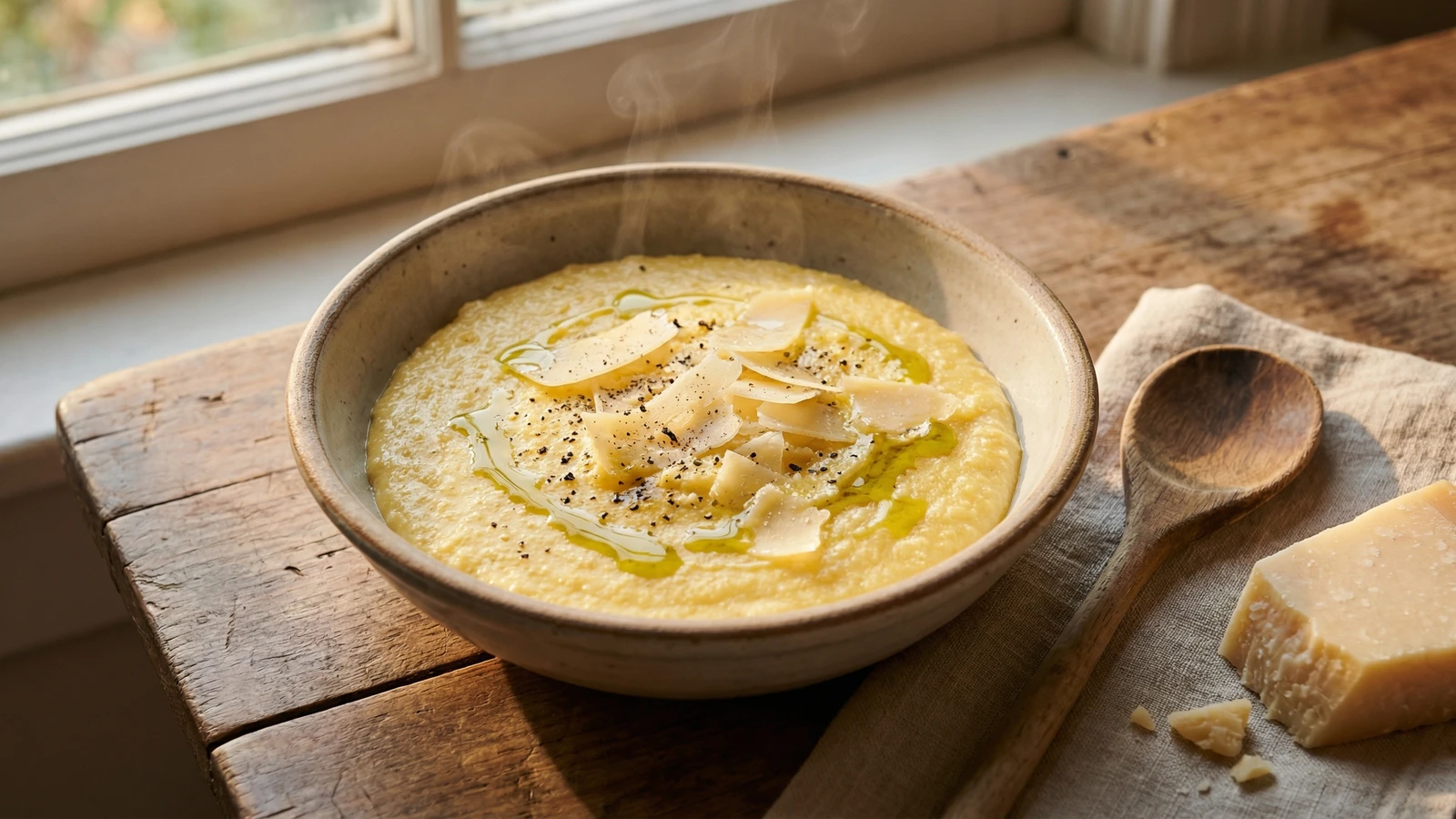
Creamy Polenta
Created by Chef Ally
Stone-ground cornmeal cooked low and slow until it becomes silk, then finished with cold butter and aged Parmesan. The kind of simple dish that asks for your full attention and rewards every minute of stirring.
Stone-ground cornmeal is not the same as the fine yellow powder in most grocery stores. Find a mill that grinds whole dried corn slowly, on stones, keeping the germ intact. This is where the flavor lives. The germ carries oils that turn rancid quickly, which is why industrial processors remove it entirely. What they gain in shelf life, they lose in taste. Real cornmeal smells like corn. It should remind you of a field in late summer.
Polenta asks for your attention, not your intervention. You bring salted water to a boil, rain in the cornmeal, then stir. And stir. And stir some more. Forty minutes feels long until you taste what patience produces. The grains swell and soften, releasing their starch into a porridge that coats the back of a spoon like velvet. Getting out of the way means letting time do the work.
Every meal is a meaningful choice. Seeking out stone-ground corn from a regional mill keeps that mill turning. The farmers growing heirloom corn varieties depend on people who understand that flavor has a source. Your polenta will be better for it. So will the food system that brought it to your kitchen.
The technique, the tradition, and the story behind every dish.
Discover Culinary AdvisorIngredients
stone-ground cornmeal
Quantity
1 cup (170g)
water
Quantity
4 cups
fine sea salt
Quantity
1 teaspoon
unsalted butter
Quantity
3 tablespoons
cold and cubed
aged Parmesan
Quantity
1/2 cup (50g), plus more for serving
finely grated
black pepper
Quantity
to taste
freshly cracked
good olive oil (optional)
Quantity
for drizzling
| Ingredient | Quantity |
|---|---|
| stone-ground cornmeal | 1 cup (170g) |
| water | 4 cups |
| fine sea salt | 1 teaspoon |
| unsalted buttercold and cubed | 3 tablespoons |
| aged Parmesanfinely grated | 1/2 cup (50g), plus more for serving |
| black pepperfreshly cracked | to taste |
| good olive oil (optional) | for drizzling |
Equipment Needed
- •Heavy-bottomed pot (3 to 4 quart)
- •Whisk
- •Wooden spoon or sturdy silicone spatula
Instructions
- 1
Bring water to a boil
Pour the water into a heavy-bottomed pot and bring it to a rolling boil over high heat. Add the salt now. Salting the water seasons the grain from within as it absorbs liquid. This is your only chance to build flavor into the core of each granule.
A heavy pot matters here. Thin metal creates hot spots that scorch the polenta before it can cook through. - 2
Add cornmeal slowly
Reduce heat to medium. Take a handful of cornmeal and let it fall through your fingers into the water in a thin, steady stream while whisking constantly with your other hand. This is the moment that determines texture. Rush it and you will have lumps. Let the grains rain down slowly, whisking all the while, until every bit has been incorporated.
Some cooks pour the cornmeal from a measuring cup while whisking. Use whichever method gives you control. The goal is a slow, steady stream. - 3
Reduce heat and stir
Once all the cornmeal is in, reduce the heat to low. The surface should barely bubble, like a mud pot in Yellowstone. Switch from your whisk to a wooden spoon or sturdy spatula. Stir every few minutes, scraping the bottom and sides of the pot to prevent sticking.
- 4
Cook with patience
Continue cooking and stirring for 40 to 45 minutes. The polenta will thicken gradually, then seem to plateau, then suddenly transform. You are waiting for the moment when it pulls away from the sides of the pot in a mass and tastes fully cooked, with no gritty resistance against your teeth. Stone-ground corn takes longer than instant. This is the point.
If the polenta becomes too thick before it tastes done, add warm water a splash at a time. The grain needs liquid to finish softening. - 5
Finish with butter and cheese
Remove the pot from heat. Stir in the cold butter cubes, letting each one melt into the polenta before adding more. Then fold in the grated Parmesan. The residual heat will melt the cheese into silky threads. Taste. Adjust salt if needed. Add black pepper. The polenta should coat your spoon like cream and slide slowly back into the pot.
- 6
Serve immediately
Spoon the polenta into warmed bowls. If you like, drizzle with good olive oil and scatter a few more shavings of Parmesan over the top. Polenta waits for no one. It begins to set the moment it leaves the heat. Bring it to the table while it still has that alive, flowing quality.
Chef Tips
- •Look for stone-ground cornmeal at farmers markets or order directly from regional mills. Anson Mills, Bob's Red Mill, and many smaller operations grind corn with care. The bag should feel slightly coarse, not powdery.
- •Store stone-ground cornmeal in the refrigerator or freezer. The oils in the germ go rancid at room temperature within weeks. Industrial cornmeal lasts forever precisely because those oils have been stripped away.
- •Serve creamy polenta under braised meats, roasted mushrooms, or a simple poached egg with greens. It is a canvas for whatever the season offers.
- •Leftover polenta firms up beautifully. Pour it into an oiled pan, let it set overnight, then slice and grill or pan-fry until golden. Two dishes from one pot of corn.
Advance Preparation
- •Polenta can be made several hours ahead and kept warm in a double boiler, stirring occasionally and adding splashes of warm water to maintain consistency.
- •To reheat fully cooled polenta, warm it gently over low heat with additional water or stock, stirring until it returns to a creamy consistency. It will never be quite as silky as fresh, but it will still be good.
Frequently Asked Questions
Nutrition Information
1 serving (about 200g)
Where cooking meets culture.
Culinary mentorship, cultural storytelling, and the editorial depth that makes cooking meaningful.
Explore Culinary Advisor