Culinary Advisor
A cooking platform built around craft, culture, and the stories behind what we eat.
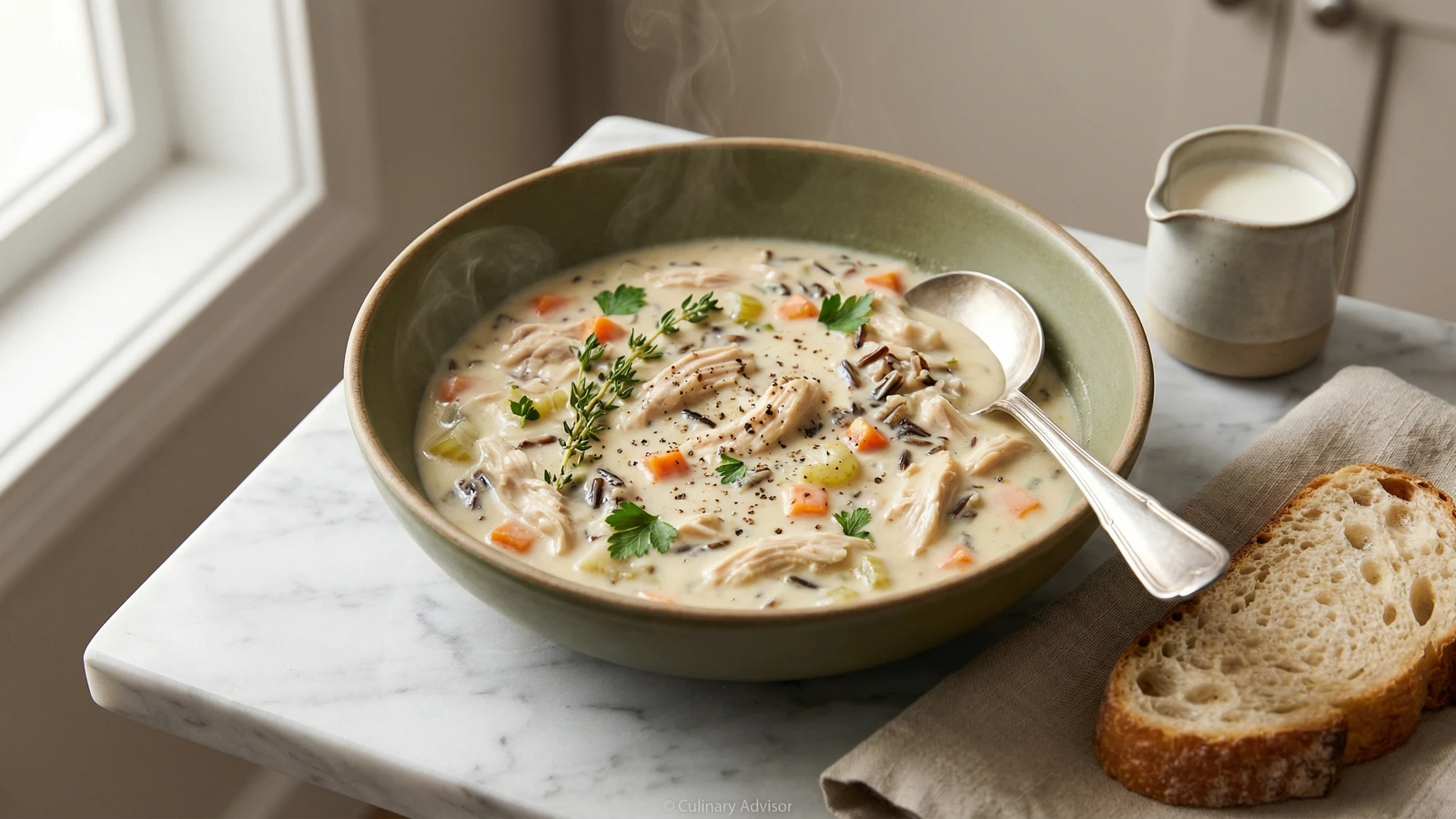
Creamy Chicken Wild Rice Soup
Created by
Minnesota's gift to American comfort food: shredded chicken and chewy wild rice swimming in a velvety cream broth scented with sage and thyme, the kind of soup that makes you grateful for cold weather.
Wild rice is not rice at all. It's an aquatic grass native to the Great Lakes region, harvested by Ojibwe people for centuries before Europeans arrived. When you make this soup, you're cooking with an ingredient that predates the nation itself.
Minnesota adopted this soup as its own sometime in the last century, and for good reason. The nutty, almost smoky flavor of wild rice stands up to cream without getting lost. The grains burst when cooked, revealing a tender interior while maintaining pleasant chew. Paired with poached chicken and honest aromatics, it becomes something greater than the sum of its parts.
I've served this soup at holiday gatherings for decades. It sits comfortably alongside roasted turkey or glazed ham. It makes a meal on its own with crusty bread. It reheats beautifully, which means you can make it days ahead while the rest of your holiday cooking swirls around you. The base only improves with time, the flavors deepening as they mingle in your refrigerator.
The technique here matters. Poaching the chicken in the stock enriches both. Cooking the wild rice separately protects its texture. Building a proper roux gives the soup body that cream alone cannot provide. These are not difficult steps. They simply require the kind of attention that transforms good soup into great soup.
The technique, the tradition, and the story behind every dish.
Discover Culinary AdvisorIngredients
bone-in, skin-on chicken thighs
Quantity
1 1/2 pounds
chicken stock
Quantity
8 cups
homemade or low-sodium
wild rice
Quantity
1 cup
rinsed
unsalted butter
Quantity
4 tablespoons
yellow onion
Quantity
1 large
diced
celery stalks
Quantity
4
diced
carrots
Quantity
3 medium
peeled and diced
garlic
Quantity
4 cloves
minced
all-purpose flour
Quantity
1/3 cup
fresh thyme leaves
Quantity
1 teaspoon
fresh sage
Quantity
1 teaspoon
minced
bay leaf
Quantity
1
heavy cream
Quantity
1 cup
dry sherry (optional)
Quantity
1/2 cup
fresh parsley
Quantity
2 tablespoons
chopped
kosher salt
Quantity
to taste
black pepper
Quantity
to taste
freshly cracked
| Ingredient | Quantity |
|---|---|
| bone-in, skin-on chicken thighs | 1 1/2 pounds |
| chicken stockhomemade or low-sodium | 8 cups |
| wild ricerinsed | 1 cup |
| unsalted butter | 4 tablespoons |
| yellow oniondiced | 1 large |
| celery stalksdiced | 4 |
| carrotspeeled and diced | 3 medium |
| garlicminced | 4 cloves |
| all-purpose flour | 1/3 cup |
| fresh thyme leaves | 1 teaspoon |
| fresh sageminced | 1 teaspoon |
| bay leaf | 1 |
| heavy cream | 1 cup |
| dry sherry (optional) | 1/2 cup |
| fresh parsleychopped | 2 tablespoons |
| kosher salt | to taste |
| black pepperfreshly cracked | to taste |
Equipment Needed
- •Large Dutch oven or heavy-bottomed pot (6-quart minimum)
- •Medium saucepan for wild rice
- •Wooden spoon
- •Instant-read thermometer
Instructions
- 1
Poach the chicken
Place chicken thighs in a large Dutch oven and cover with the stock. Set over medium heat and bring to a gentle simmer. You want lazy bubbles, not a rolling boil. Poach for 25 to 30 minutes until the meat reaches 165°F and pulls easily from the bone. The kitchen will start to smell like Sunday at your grandmother's house.
Bone-in thighs are non-negotiable here. The bones and skin release collagen and fat that give the soup its silky body. Boneless breasts will leave you with thin, forgettable broth. - 2
Cook the wild rice
While the chicken poaches, bring a separate pot of salted water to a boil. Add the rinsed wild rice and cook for 40 to 50 minutes until the grains have burst open, revealing their pale interior, and are tender but still chewy. Drain and set aside. Wild rice cooked separately maintains its texture and won't turn to mush in the soup.
True wild rice is hand-harvested from lakes in Minnesota and Wisconsin. It costs more but tastes like something. The paddy-grown California variety is acceptable but lacks the earthy depth of the genuine article. - 3
Shred the chicken
Transfer poached chicken to a cutting board. When cool enough to handle, remove and discard skin. Pull meat from bones in generous, irregular shreds. Don't mince it into tiny pieces. You want substantial bites of chicken in every spoonful. Reserve the poaching liquid; this is now enriched stock.
- 4
Build the aromatic base
Wipe out the Dutch oven and set it over medium heat. Add butter and let it foam. Add onion, celery, and carrots with a generous pinch of salt. Cook, stirring occasionally, for 8 to 10 minutes until vegetables soften and the onions turn translucent. Add garlic and cook until fragrant, about one minute. The vegetables should glisten, never brown.
- 5
Create the roux
Sprinkle flour over the vegetables and stir constantly for two minutes. The flour must cook or your soup will taste like library paste. You're looking for a blonde roux that smells faintly nutty, not raw. This is the foundation of your soup's body.
A wooden spoon works better than a whisk here. You want to scrape the bottom of the pot and coat the vegetables evenly without aerating the mixture. - 6
Add liquid gradually
If using sherry, add it now and stir vigorously as it sizzles and reduces by half, about one minute. Begin adding the reserved poaching stock one cup at a time, stirring constantly after each addition until smooth before adding more. This gradual incorporation prevents lumps. Once all stock is added, bring to a simmer.
- 7
Simmer with herbs
Add thyme, sage, and bay leaf. Reduce heat to low and simmer uncovered for 20 minutes, stirring occasionally. The soup will thicken slightly and the flavors will marry. Taste and adjust salt. The broth should taste full and savory, ready to welcome the cream.
- 8
Finish with cream and components
Remove bay leaf. Stir in heavy cream and return to a gentle simmer. Do not boil once cream is added or it may break. Fold in the shredded chicken and cooked wild rice. Simmer just until everything is heated through, about five minutes. The soup should coat a spoon but still flow freely when ladled.
- 9
Season and serve
Taste once more and adjust seasoning with salt and pepper. The soup should taste rich but balanced, the cream supporting rather than dominating. Stir in fresh parsley. Ladle into warm bowls and serve immediately. A bowl of this soup on a cold night is reason enough to be grateful for winter.
Warm your serving bowls in a low oven for ten minutes before ladling. Cold bowls steal heat from hot soup.
Chef Tips
- •For the deepest flavor, make your own chicken stock. Roast a chicken carcass with onion, celery, and carrot at 400°F until golden, then simmer in water for four hours. Strain and reduce by one third. This concentrated stock transforms the soup.
- •The sherry is optional but not really optional. That half cup adds a subtle complexity that makes people ask your secret. Use dry sherry, not cream sherry, and never cooking sherry from the supermarket shelf.
- •True wild rice from Minnesota or Wisconsin lakes has incomparable flavor. It's worth seeking out for special occasions. Paddy-grown wild rice works for everyday cooking but lacks the character of the hand-harvested variety.
- •If the soup thickens too much after refrigeration, thin it with additional stock rather than water. Water dilutes flavor; stock maintains it.
- •A small grating of fresh nutmeg, added with the cream, brings subtle warmth that complements the sage beautifully. Use a light hand.
Advance Preparation
- •The soup base without cream, chicken, and rice can be made up to three days ahead and refrigerated. The flavors will deepen beautifully.
- •For best results, add cream, chicken, and rice when reheating to serve. This keeps the wild rice from getting mushy and the cream from separating.
- •The soup freezes well for up to three months without the cream. Freeze the base flat in freezer bags. Thaw overnight in the refrigerator, then reheat gently, adding cream and pre-cooked rice before serving.
- •Cooked wild rice keeps refrigerated for five days or frozen for six months. Make extra and store it for quick assembly.
Frequently Asked Questions
Nutrition Information
1 serving (about 290g)
Where cooking meets culture.
Culinary mentorship, cultural storytelling, and the editorial depth that makes cooking meaningful.
Explore Culinary Advisor