Culinary Advisor
A cooking platform built around craft, culture, and the stories behind what we eat.
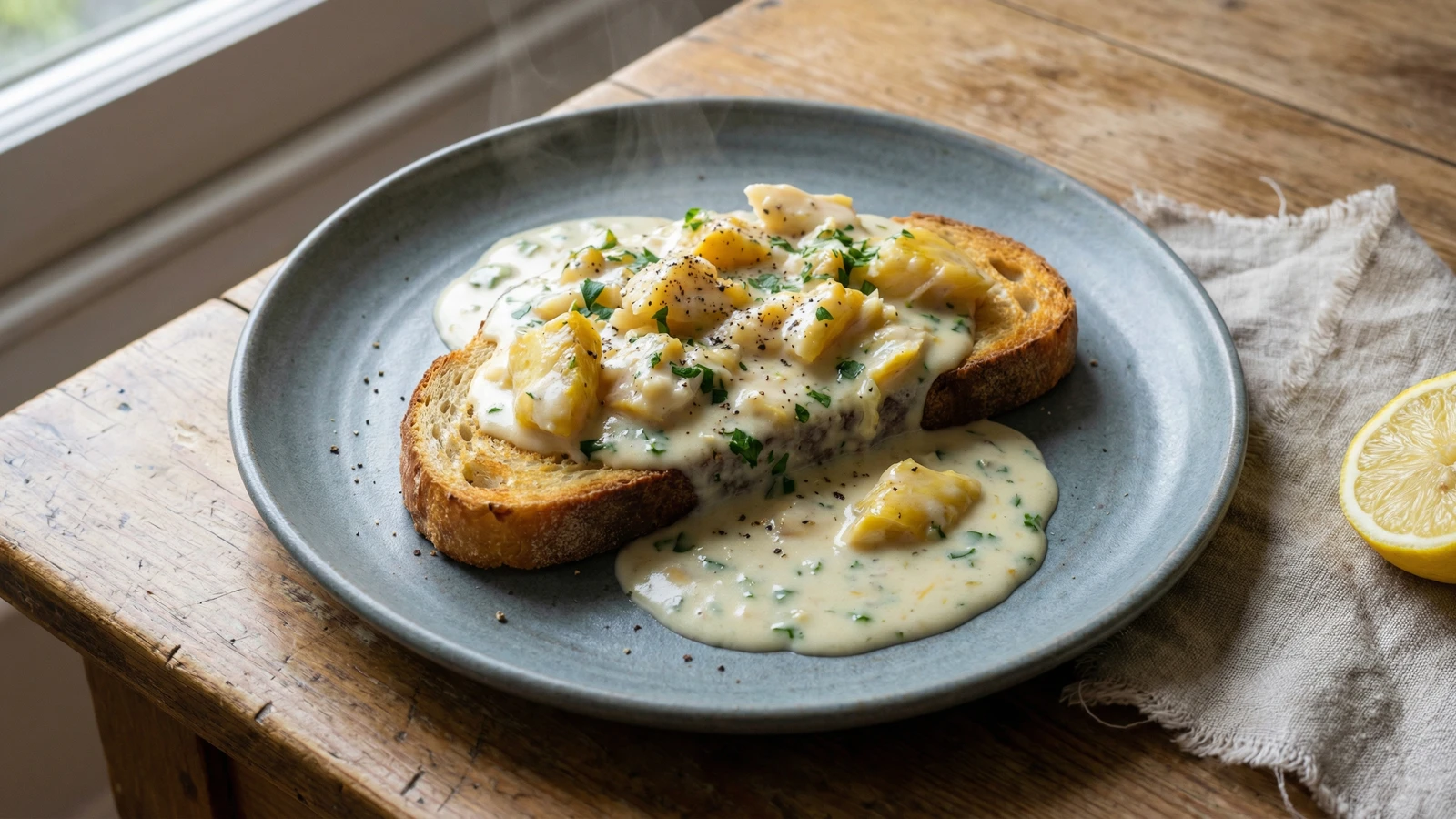
Creamed Smoked Haddock on Toast
Created by Chef Thomas
Flaked smoked haddock folded into a light, savoury cream sauce and spooned over thick toast, the kind of supper that turns a dark January evening into something worth coming home to.
January. The kitchen window black by five o'clock. Something on the radio you're half listening to. This is the kind of evening that asks for creamed haddock on toast.
It's not a complicated thing. You poach a piece of smoked haddock in milk, flake it, make a simple sauce from the poaching liquid, and spoon the whole lot over a piece of toast that can take the weight. Twenty minutes, start to finish. But it fills the kitchen with a smell that is warm and smoky and quietly generous, the kind that makes someone wander in from the other room and ask what you're making.
The trick, if there is one, is the poaching milk. It takes on the smoke and salt of the fish as it simmers, and when you use it to build the sauce, you're folding all that flavour back in. Nothing wasted. The cream at the end is just a whisper, enough to round the edges without making it heavy. A squeeze of lemon. Some parsley. Good toast. We're only making dinner.
I wrote it down in the notebook years ago: haddock, cream, toast, Tuesday. It comes back every winter when the evenings close in and I want something that feels like care without fuss. Right food, right evening.
The technique, the tradition, and the story behind every dish.
Discover Culinary AdvisorIngredients
undyed smoked haddock fillet
Quantity
300g
whole milk
Quantity
250ml
bay leaf
Quantity
1
black peppercorns
Quantity
a few
unsalted butter
Quantity
20g
plain flour
Quantity
1 tablespoon
double cream
Quantity
2 tablespoons
flat-leaf parsley
Quantity
small handful
roughly chopped
lemon juice
Quantity
a squeeze
black pepper
Quantity
to taste
good bread
Quantity
2 thick slices
| Ingredient | Quantity |
|---|---|
| undyed smoked haddock fillet | 300g |
| whole milk | 250ml |
| bay leaf | 1 |
| black peppercorns | a few |
| unsalted butter | 20g |
| plain flour | 1 tablespoon |
| double cream | 2 tablespoons |
| flat-leaf parsleyroughly chopped | small handful |
| lemon juice | a squeeze |
| black pepper | to taste |
| good bread | 2 thick slices |
Equipment Needed
- •Wide, shallow pan for poaching
- •Small saucepan for the sauce
- •Fork for flaking the fish
Instructions
- 1
Poach the haddock
Lay the haddock in a wide pan, skin side down, and pour over the milk. Drop in the bay leaf and peppercorns. Set it over a gentle heat and bring the milk to a bare simmer. Not a boil. You want the surface to tremble, nothing more. Let it poach for six or seven minutes until the fish is just cooked through and flakes easily when you press it with a fork. Lift the fish out onto a plate and keep the milk. Every drop of that poaching liquid is flavour you've already earned.
Look for undyed smoked haddock, the pale, straw-gold sort, not the electric yellow. The dyed kind tastes the same but looks like it belongs in a different conversation entirely. - 2
Flake the fish
When the haddock is cool enough to handle, peel away the skin and break the flesh into large, rough flakes. Don't be too careful about it. You want some pieces chunky enough to find with a fork, not a fine paste. Run your fingers through the flakes and pick out any bones. Set aside.
- 3
Make the cream sauce
Melt the butter in a small saucepan over a medium heat. When it foams, stir in the flour and cook for a minute, stirring constantly, until the raw smell disappears and the paste smells biscuity and warm. Pour in the strained poaching milk a little at a time, stirring as you go. The first few additions will seize and thicken. Keep stirring and keep adding. Once all the milk is in, let the sauce simmer gently for three or four minutes until it coats the back of a spoon without dripping straight off. Stir in the cream.
The sauce wants to be loose enough to spoon, not thick like wallpaper paste. If it tightens too much, add a splash more milk. You're looking for something that flows slowly when you tilt the pan. - 4
Bring it together
Fold the flaked haddock gently into the sauce. Let it warm through for a minute or two, no more. Stir in most of the parsley and a squeeze of lemon, just enough to cut through the richness. Taste it. The fish is already salty from the smoke, so you're unlikely to need more salt. A few grinds of black pepper, though.
- 5
Toast and serve
Toast the bread properly. Not the pale, half-hearted sort. You want it golden and firm enough to hold what's coming without collapsing. Place each slice on a warm plate and spoon the creamed haddock over the top, letting the sauce run down and pool around the edges. Scatter the remaining parsley over it. Eat it straight away. This is not a dish that waits.
Chef Tips
- •The bread matters as much as the fish. A thick slice from a proper loaf, sourdough or a good farmhouse white, toasted until it has some backbone. Thin sliced bread turns to mush under the sauce and you lose the contrast that makes this dish work.
- •Don't salt the sauce until you've tasted it. Smoked haddock carries enough salt on its own, and the poaching milk concentrates it further. Season with lemon and pepper instead. The lemon does more than salt ever could here, lifting the richness without you quite knowing why.
- •If you have a spring onion or two going soft in the fridge, slice them finely and stir them through the sauce with the parsley. They add a quiet sharpness that suits the smoky fish. Not essential, but a good addition if they're there.
- •A poached egg on top turns this into something more substantial. Let the yolk break into the cream sauce. It's not traditional, but tradition isn't the point. Supper is.
Advance Preparation
- •The haddock can be poached and flaked earlier in the day, kept covered in the fridge. The poaching milk should be saved and refrigerated alongside it. Make the sauce and bring everything together just before serving.
- •This is not a dish that reheats well. The toast softens, the sauce thickens. Make it fresh and eat it immediately.
Frequently Asked Questions
Nutrition Information
1 serving (about 310g)
Where cooking meets culture.
Culinary mentorship, cultural storytelling, and the editorial depth that makes cooking meaningful.
Explore Culinary Advisor