Culinary Advisor
A cooking platform built around craft, culture, and the stories behind what we eat.
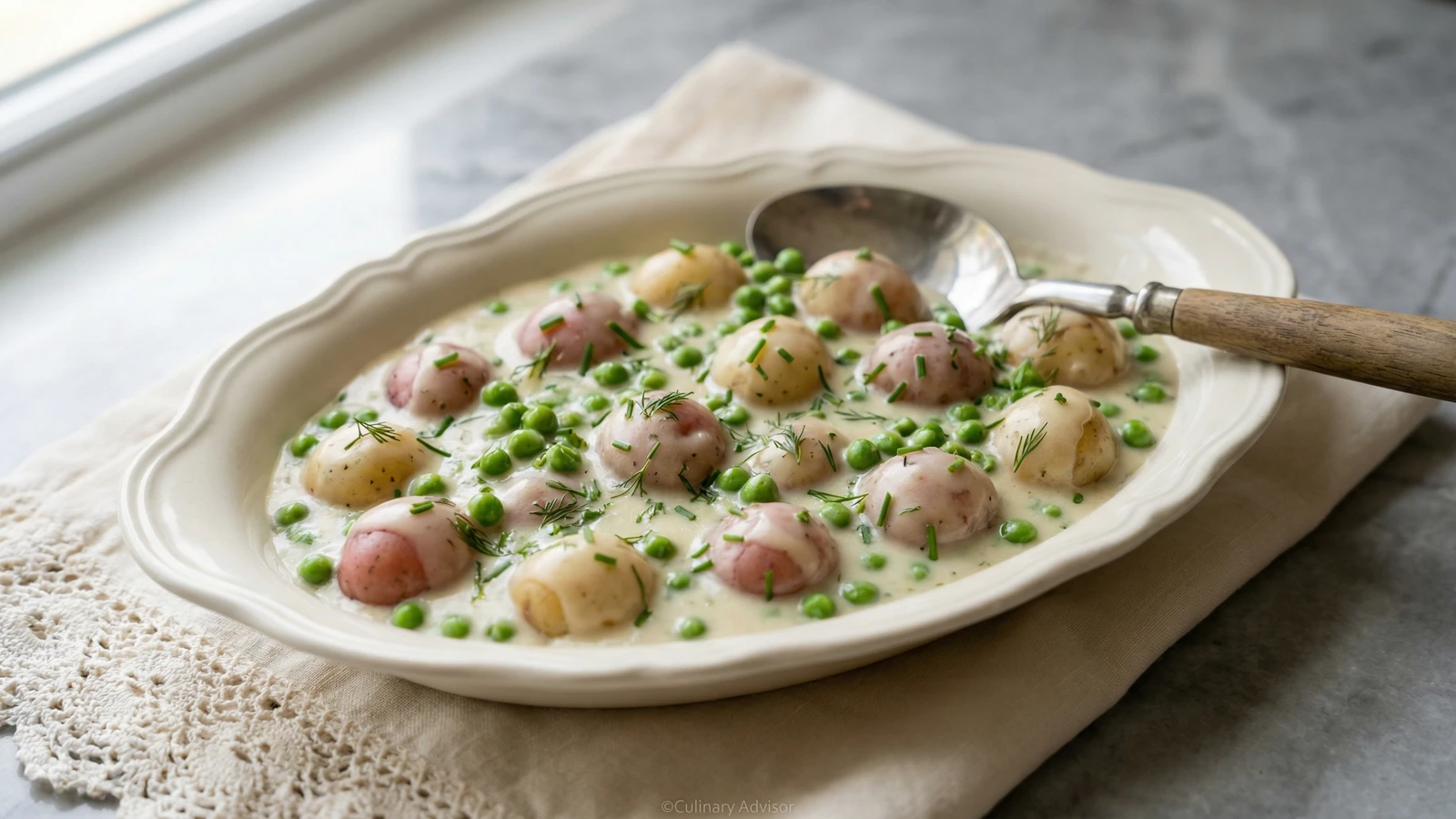
Creamed Peas and Potatoes
Created by
A humble Iowa farmhouse classic that belongs on every spring table: tender new potatoes and sweet peas cloaked in a satiny cream sauce, the kind of honest side dish that makes people ask for the recipe.
This dish appears on tables across the Midwest every spring, as reliable as the thaw itself. Farm wives have been making it for generations, timing it to the first new potatoes from the garden and the brief window when peas are sweet enough to eat raw from the pod. It is simple food, unpretentious, and absolutely worthy of your attention.
The cream sauce here is light, almost delicate. This is not the heavy white paste that smothers so many American vegetables. You want a sauce that clings and coats, that lets the sweetness of the peas and the earthy tenderness of the potatoes speak for themselves. The flour is minimal, just enough to give the sauce body without turning it gluey.
I learned this dish from a woman in Cedar Rapids who brought it to every church supper for forty years. She told me the secret was patience: cook the potatoes until they yield completely to a fork, never rush the sauce, and always finish with a bit more butter than you think proper. She was right about all of it.
The technique, the tradition, and the story behind every dish.
Discover Culinary AdvisorIngredients
small new potatoes
Quantity
1 1/2 pounds
about 1 1/2 inches in diameter, halved if larger
peas
Quantity
2 cups
fresh or frozen
unsalted butter
Quantity
3 tablespoons
divided
all-purpose flour
Quantity
2 tablespoons
whole milk
Quantity
1 1/2 cups
warmed
heavy cream
Quantity
1/2 cup
kosher salt
Quantity
1 teaspoon, plus more for potato water
white pepper
Quantity
1/2 teaspoon
freshly ground
nutmeg
Quantity
1/4 teaspoon
freshly grated
fresh chives
Quantity
2 tablespoons
finely snipped
fresh dill (optional)
Quantity
1 tablespoon
chopped
| Ingredient | Quantity |
|---|---|
| small new potatoesabout 1 1/2 inches in diameter, halved if larger | 1 1/2 pounds |
| peasfresh or frozen | 2 cups |
| unsalted butterdivided | 3 tablespoons |
| all-purpose flour | 2 tablespoons |
| whole milkwarmed | 1 1/2 cups |
| heavy cream | 1/2 cup |
| kosher salt | 1 teaspoon, plus more for potato water |
| white pepperfreshly ground | 1/2 teaspoon |
| nutmegfreshly grated | 1/4 teaspoon |
| fresh chivesfinely snipped | 2 tablespoons |
| fresh dill (optional)chopped | 1 tablespoon |
Equipment Needed
- •Large pot for boiling potatoes
- •Heavy-bottomed saucepan or small Dutch oven
- •Whisk
- •Rubber spatula
- •Warmed serving bowl
Instructions
- 1
Cook the potatoes
Place potatoes in a large pot and cover with cold water by two inches. Add salt generously, about a tablespoon per quart. The water should taste like the sea. Bring to a boil over high heat, then reduce to a steady simmer. Cook until the potatoes yield completely when pierced with a paring knife, fifteen to twenty minutes depending on size. They should offer no resistance whatsoever.
Starting in cold water allows the potatoes to cook evenly from edge to center. Hot water shocks the exterior and leaves the core firm. - 2
Prepare the peas
If using frozen peas, no thawing is necessary. They'll warm through in the sauce. If blessed with fresh peas, add them to the potato water during the last two minutes of cooking. Fresh peas need only the briefest kiss of heat to turn tender. Drain potatoes and peas together, reserving half a cup of the starchy cooking water.
- 3
Build the cream sauce
In a large, heavy saucepan or Dutch oven, melt two tablespoons of butter over medium heat. When it foams and the foam subsides, add the flour. Whisk constantly for one full minute. The mixture will look sandy and smell faintly of pie crust. This is your roux, and that minute of cooking removes the raw flour taste that ruins so many cream sauces.
White pepper is traditional here because it disappears into the sauce. Black pepper works but leaves visible specks. - 4
Add the milk gradually
Pour in the warm milk in a slow, steady stream, whisking constantly. The sauce will seize up and look like paste initially. Keep whisking. As you add more milk, it will smooth out into a silky liquid. Add the heavy cream and continue whisking until the sauce just begins to simmer and thickens enough to coat the back of a spoon, about three to four minutes.
- 5
Season the sauce
Remove the pan from heat. Whisk in the salt, white pepper, and nutmeg. The nutmeg should be subtle, a background note that makes people wonder what your secret is. Taste the sauce now. It should be well-seasoned, slightly more assertive than you think necessary, because the potatoes and peas will absorb and mellow the flavors.
- 6
Combine and finish
Add the drained potatoes and peas to the cream sauce. Fold gently with a rubber spatula, taking care not to break the potatoes. If the sauce seems too thick, add a splash of the reserved potato water to loosen it. Cut the remaining tablespoon of butter into small pieces and stir it in. This final butter enriches the sauce and adds gloss.
- 7
Serve immediately
Transfer to a warmed serving bowl and scatter the chives and dill over the top. The dish should look creamy but not gluey, the vegetables visible through a satiny coating rather than buried under paste. Serve promptly. Like all cream sauces, this one thickens as it sits.
If the dish must wait, keep it warm over very low heat and add a splash of milk just before serving to restore the sauce's flow.
Chef Tips
- •Seek out the smallest new potatoes you can find, no larger than a golf ball. Larger potatoes should be halved or quartered so everything cooks evenly and each bite contains both potato and peas.
- •Frozen peas are often superior to fresh unless you're picking them yourself. Commercial fresh peas have been off the vine too long and their sugars have converted to starch. Good frozen peas are processed within hours of harvest.
- •A warmed serving bowl makes a real difference. Run it under hot water or place it in a low oven while you cook. Cold ceramic will cool your sauce rapidly and thicken it past the point of elegance.
- •This dish pairs beautifully with baked ham, roast lamb, or simple roasted chicken. It belongs at Easter dinner but deserves more appearances throughout the year.
Advance Preparation
- •Potatoes can be boiled up to a day ahead, drained, and refrigerated. Bring to room temperature before combining with warm sauce.
- •The cream sauce base can be made several hours ahead and kept warm over a double boiler, whisking occasionally. Add a splash of milk before combining with vegetables.
- •The complete dish can be made two hours ahead and held in a 200°F oven, loosely covered. Stir in a tablespoon of milk before serving to restore the sauce consistency.
- •For potlucks, transport in a slow cooker set to warm. The gentle heat keeps everything at proper temperature without breaking the sauce.
Frequently Asked Questions
Nutrition Information
1 serving (about 295g)
Where cooking meets culture.
Culinary mentorship, cultural storytelling, and the editorial depth that makes cooking meaningful.
Explore Culinary Advisor