Culinary Advisor
A cooking platform built around craft, culture, and the stories behind what we eat.
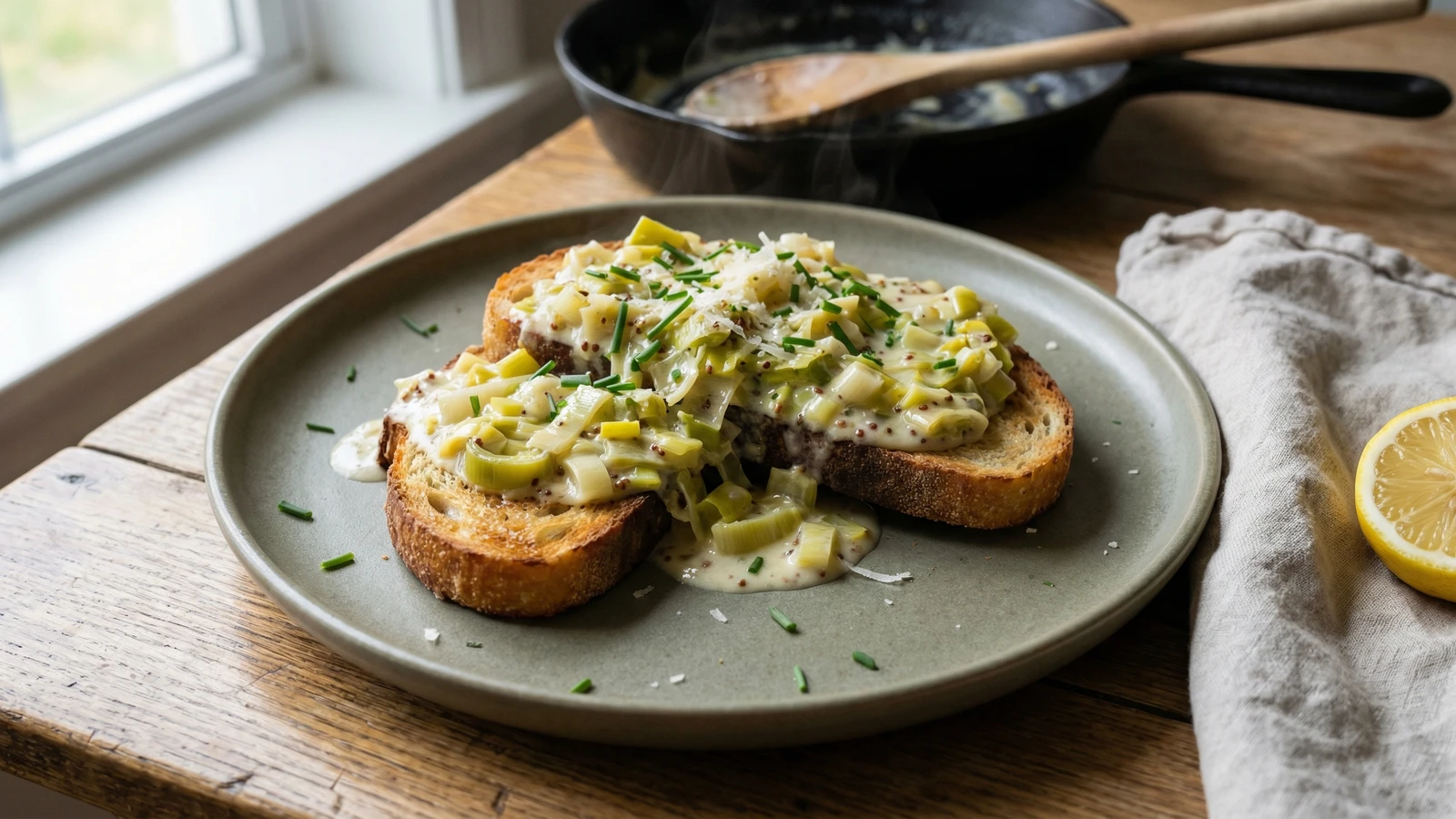
Creamed Leeks on Toast
Created by Chef Thomas
Leeks softened slowly in butter, folded into cream with mustard and nutmeg, and piled onto thick toast. An October supper that needs nothing else and asks very little of you.
October rain on the window, the kitchen warm, and a pan of leeks collapsing quietly in butter. There are evenings when this is exactly the right thing to eat. Nothing ambitious. Nothing that requires a list or a plan. Just leeks and cream and toast.
I brought three fat leeks home from the market on Saturday. They sat on the counter for two days, which is fine. Leeks are patient things, good-natured. They wait until you're ready. When I finally got to them, the butter was already in the pan, and the whole thing took less than half an hour from start to plate. We're only making dinner.
The mustard is important but invisible. It sits behind the cream and gives the leeks a quiet warmth that you can't identify but would miss. A grating of nutmeg. A squeeze of lemon at the end, which is the difference between something rich and something heavy. The toast needs to be thick and properly done, with enough structure to carry the cream without surrendering.
I wrote it down in the notebook: leeks, cream, toast, Tuesday, rain. Some meals are just the right food on the right evening, and this is one of them.
The technique, the tradition, and the story behind every dish.
Discover Culinary AdvisorIngredients
leeks
Quantity
3 medium
trimmed and sliced into thick rounds
unsalted butter
Quantity
30g
garlic
Quantity
1 clove
finely sliced
double cream
Quantity
150ml
Dijon mustard
Quantity
1 teaspoon
lemon juice
Quantity
a squeeze
fine sea salt
Quantity
to taste
black pepper
Quantity
to taste
nutmeg
Quantity
a few gratings
freshly grated
sourdough or good white bread
Quantity
2 thick slices
chives (optional)
Quantity
a few
snipped
Parmesan or hard cheese (optional)
Quantity
a little
finely grated
| Ingredient | Quantity |
|---|---|
| leekstrimmed and sliced into thick rounds | 3 medium |
| unsalted butter | 30g |
| garlicfinely sliced | 1 clove |
| double cream | 150ml |
| Dijon mustard | 1 teaspoon |
| lemon juice | a squeeze |
| fine sea salt | to taste |
| black pepper | to taste |
| nutmegfreshly grated | a few gratings |
| sourdough or good white bread | 2 thick slices |
| chives (optional)snipped | a few |
| Parmesan or hard cheese (optional)finely grated | a little |
Equipment Needed
- •Wide, heavy-bottomed frying pan or sauté pan with a lid
- •Wooden spoon
- •Microplane or fine grater for the nutmeg
Instructions
- 1
Wash and prepare leeks
Slice the leeks into rounds about the thickness of a pound coin. Drop them into a bowl of cold water and swish them about. The grit sinks. The leeks float. Lift them out and let them drain in a colander. Don't skip this. A mouthful of grit in something this gentle ruins everything.
Use the white and the pale green parts. The dark green tops are tough here, but save them for stock if you keep a bag in the freezer. - 2
Soften leeks in butter
Melt the butter in a wide pan over a low heat. When it foams, add the leeks and a good pinch of salt. Stir them through the butter so they're coated, then turn the heat down as far as it will go. Put a lid on. Leave them alone for ten to twelve minutes, stirring once or twice. You want them completely soft, almost silky, with no colour at all. If they start to brown, the heat is too high. Patience is the only technique here.
- 3
Add garlic and cream
Add the sliced garlic and stir it through for a minute until it smells sweet, not sharp. Pour in the cream and stir in the mustard. Let it come to a gentle simmer. The cream will thicken around the leeks in three or four minutes, coating them in something rich and quietly savoury. It should cling to a spoon but still move. If it gets too thick, a splash of water loosens it without thinning the flavour.
- 4
Season and finish
Grate in a little nutmeg. Not much. Two or three passes on the grater. Add a squeeze of lemon juice, which lifts the whole thing and stops the cream from feeling heavy. Season with salt and pepper. Taste it. The mustard should be there in the background, warm rather than sharp. If you can't quite taste it, you've got the balance right.
The lemon matters more than you'd think. Without it, the cream sits flat. With it, the leeks brighten and the whole bowl comes into focus. - 5
Toast and assemble
Toast the bread properly. Not pale and warm, but golden and crisp enough to hold the weight of what's going on top. Thick slices from a good loaf. Put the toast on warm plates and spoon the creamed leeks over generously. Let it spill over the edges. Snip some chives over the top if you have them. A scattering of Parmesan if it feels right. Eat it straight away, while the toast is still holding its nerve.
Chef Tips
- •The leeks must not colour. This is a dish about sweetness and softness, and browning changes the flavour entirely. Keep the heat low, put the lid on, and let time do the work. Ten minutes of patience gives you something that thirty seconds of high heat never will.
- •Good bread matters here because the toast is doing a job. It's structural. A thin slice from a sliced loaf will go soggy before you've picked up your fork. Cut thick slices from a sourdough or a proper white bloomer and toast them until they're golden and firm.
- •If you want to turn this into something more substantial, a poached egg on top is a fine idea. The yolk breaks into the cream and the whole thing becomes richer and more complete. A few leaves of something green on the side if you want to feel virtuous, but it doesn't need it.
- •This is also very good with a splash of white wine added before the cream. Let it bubble away to almost nothing, then pour in the cream. It adds a brightness that the lemon alone doesn't quite reach.
Advance Preparation
- •The leeks can be softened in butter and refrigerated for up to a day. Reheat gently in the pan, add the cream and finish as described. It takes five minutes from fridge to plate.
- •This is not a dish that waits well once assembled. Toast goes soggy. Make it, plate it, eat it.
Frequently Asked Questions
Nutrition Information
1 serving (about 300g)
Where cooking meets culture.
Culinary mentorship, cultural storytelling, and the editorial depth that makes cooking meaningful.
Explore Culinary Advisor