Culinary Advisor
A cooking platform built around craft, culture, and the stories behind what we eat.
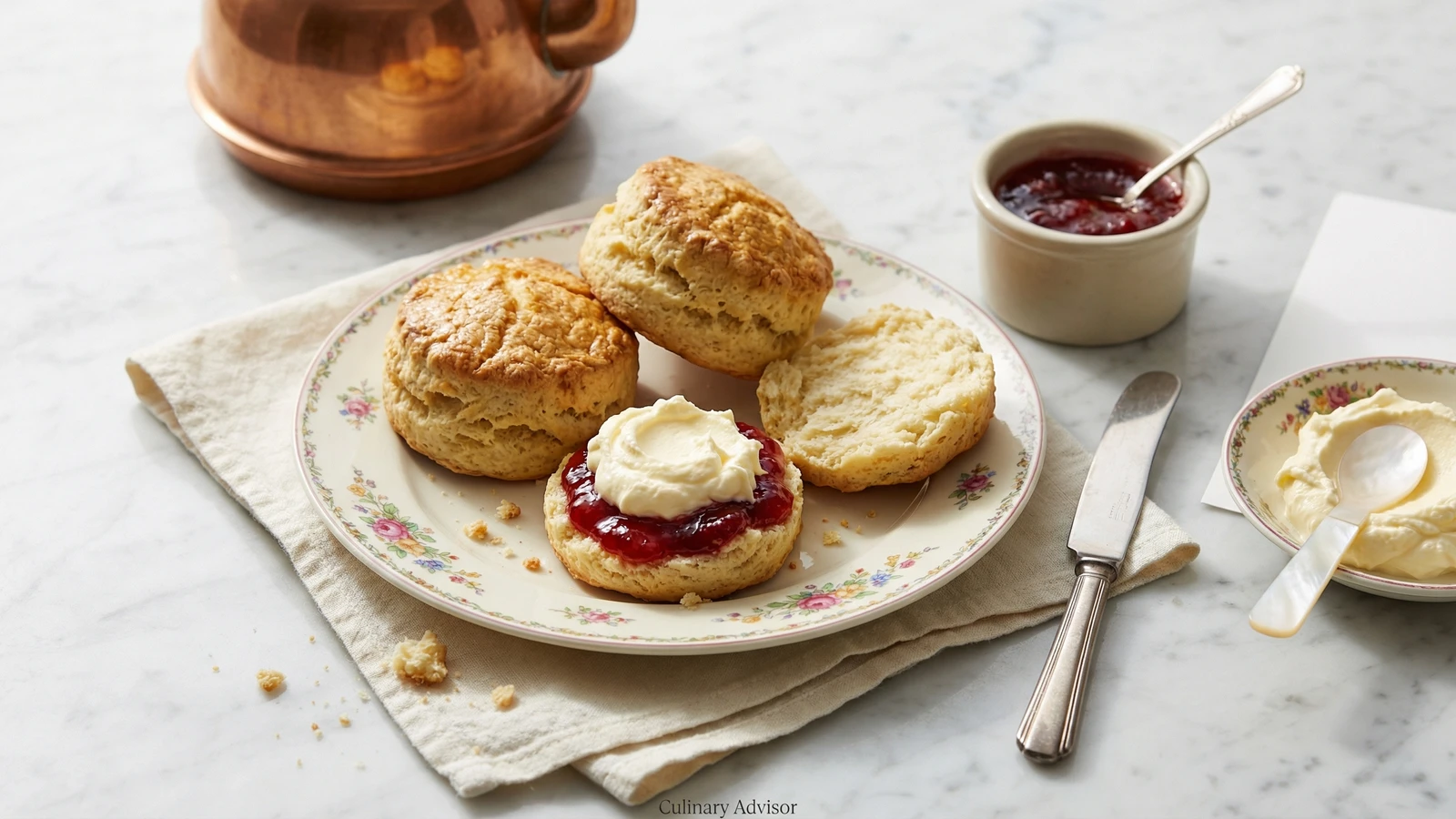
Cream Scones with Strawberry Jam
Created by
Flaky, golden-crusted scones with tender, cloud-like interiors, split and piled with ruby strawberry jam and clouds of clotted cream. This is the unhurried breakfast your grandmother would have made if she'd spent a summer in Devon.
The scone crossed the Atlantic with English settlers and found a permanent home on American breakfast tables. What began as a simple Scottish quick bread evolved into something richer on these shores, where we never met a pastry we couldn't improve with more cream and butter. This version honors both traditions.
The technique is deceptively simple but unforgiving. Cold butter. Cold cream. Cold egg. Work quickly. Handle the dough as little as possible. Those visible butter pieces you see in the raw dough will create steam pockets during baking, giving you layers that shatter when you break the scone apart. The moment you overwork the dough, you've made a doorstop.
I've served these scones at countless bridal showers, holiday brunches, and lazy Sunday mornings when nothing was expected of the day except pleasure. They take twenty minutes to prepare, eighteen minutes to bake, and approximately ninety seconds to disappear. Make a double batch. You'll thank me.
The technique, the tradition, and the story behind every dish.
Discover Culinary AdvisorIngredients
all-purpose flour
Quantity
2 cups (250g)
plus more for dusting
granulated sugar
Quantity
1/3 cup (65g)
baking powder
Quantity
1 tablespoon
fine sea salt
Quantity
1/2 teaspoon
unsalted butter
Quantity
6 tablespoons (85g)
cold, cut into 1/2-inch cubes
heavy cream
Quantity
1/2 cup (120ml) plus 2 tablespoons for brushing
cold
large egg
Quantity
1
cold
pure vanilla extract
Quantity
1 teaspoon
strawberry jam
Quantity
1/2 cup (150g)
for serving
clotted cream or crème fraîche
Quantity
1/2 cup (115g)
for serving
| Ingredient | Quantity |
|---|---|
| all-purpose flourplus more for dusting | 2 cups (250g) |
| granulated sugar | 1/3 cup (65g) |
| baking powder | 1 tablespoon |
| fine sea salt | 1/2 teaspoon |
| unsalted buttercold, cut into 1/2-inch cubes | 6 tablespoons (85g) |
| heavy creamcold | 1/2 cup (120ml) plus 2 tablespoons for brushing |
| large eggcold | 1 |
| pure vanilla extract | 1 teaspoon |
| strawberry jamfor serving | 1/2 cup (150g) |
| clotted cream or crème fraîchefor serving | 1/2 cup (115g) |
Equipment Needed
- •Pastry blender or two butter knives
- •Rimmed baking sheet
- •Wire cooling rack
- •Pastry brush
Instructions
- 1
Prepare your oven and pan
Position a rack in the center of your oven and heat to 400°F. Line a baking sheet with parchment paper. The high heat is essential here. It creates steam inside the scone before the exterior sets, giving you that characteristic rise and tender interior.
- 2
Combine dry ingredients
Whisk together the flour, sugar, baking powder, and salt in a large bowl. These must be evenly distributed before you add the butter. Any pocket of concentrated baking powder will leave a bitter, metallic taste in the finished scone.
- 3
Cut in the cold butter
Add the cold butter cubes to the flour mixture. Using a pastry blender, two knives, or your fingertips, work the butter into the flour until the largest pieces resemble small peas and the smallest are the size of coarse cornmeal. This should take two to three minutes. The mixture will look shaggy and uneven. That's correct.
If using your hands, work quickly. The warmth of your palms will soften the butter. If the mixture starts to feel greasy, refrigerate everything for ten minutes before continuing. - 4
Mix the wet ingredients
In a small bowl, whisk together the half cup of cold cream, the egg, and vanilla until smooth. The egg enriches the dough and helps bind the scone, while the heavy cream provides fat and tenderness that milk cannot match.
- 5
Bring the dough together
Pour the cream mixture over the flour and butter. Using a fork, stir gently until the dough just begins to clump together. It will look rough and slightly dry. Turn it out onto a lightly floured surface and knead four or five times, no more. Overworking develops gluten and produces tough scones. The dough should hold together when pressed but still show visible butter pieces.
- 6
Shape the scones
Pat the dough into a circle about three-quarters of an inch thick. The edges will be ragged. That's fine. Using a sharp knife, cut the round into eight equal wedges as you would slice a pie. Transfer the wedges to your prepared baking sheet, spacing them about two inches apart. They need room to expand.
A sharp knife cuts cleanly through the butter layers. Dull blades compress the edges and prevent proper rise. If you prefer round scones, use a 2-inch biscuit cutter dipped in flour, pressing straight down without twisting. - 7
Brush and bake
Brush the tops of each scone with the remaining two tablespoons of cream. This creates that beautiful golden crust, glossy and slightly sweet. Bake for 16 to 18 minutes, rotating the pan halfway through, until the tops are deeply golden and the bottoms are lightly browned. The scones will feel firm when pressed gently.
- 8
Cool and serve properly
Let the scones cool on the baking sheet for five minutes, then transfer to a wire rack. Serve warm or at room temperature, split in half horizontally. There is a proper order here: jam first, then a generous spoonful of clotted cream on top. The British call this the Cornish method, and they are correct.
Scones are best within two hours of baking. After that, they begin to dry out. If serving later, rewarm in a 300°F oven for five minutes to restore their tender texture.
Chef Tips
- •The quality of your jam matters enormously. Look for preserves with fruit listed as the first ingredient, not sugar. Better yet, make your own when strawberries flood the farmers market in June.
- •True clotted cream comes from Devon and Cornwall, where they take these matters seriously. American substitutes include crème fraîche or mascarpone thinned with a touch of cream. Do not use whipped cream. It lacks the richness and body.
- •Freeze butter if your kitchen runs warm. Grate it on the large holes of a box grater directly into the flour mixture for even distribution without overworking.
- •Unbaked scones freeze beautifully. Arrange on a baking sheet, freeze until solid, then transfer to a freezer bag. Bake directly from frozen, adding three to four minutes to the baking time.
Advance Preparation
- •The dry ingredients can be mixed with the butter up to two days ahead and refrigerated, covered. Add the wet ingredients and proceed when ready to bake.
- •Shaped, unbaked scones freeze for up to two months. Do not thaw before baking. Add three to four minutes to the baking time.
- •Baked scones can be stored in an airtight container at room temperature for one day. Refresh in a 300°F oven for five minutes before serving.
- •Strawberry jam improves for a week after making, as the flavors deepen and meld. Make it the weekend before your bridal shower.
Frequently Asked Questions
Nutrition Information
1 scone (about 60g)
Where cooking meets culture.
Culinary mentorship, cultural storytelling, and the editorial depth that makes cooking meaningful.
Explore Culinary Advisor