Culinary Advisor
A cooking platform built around craft, culture, and the stories behind what we eat.
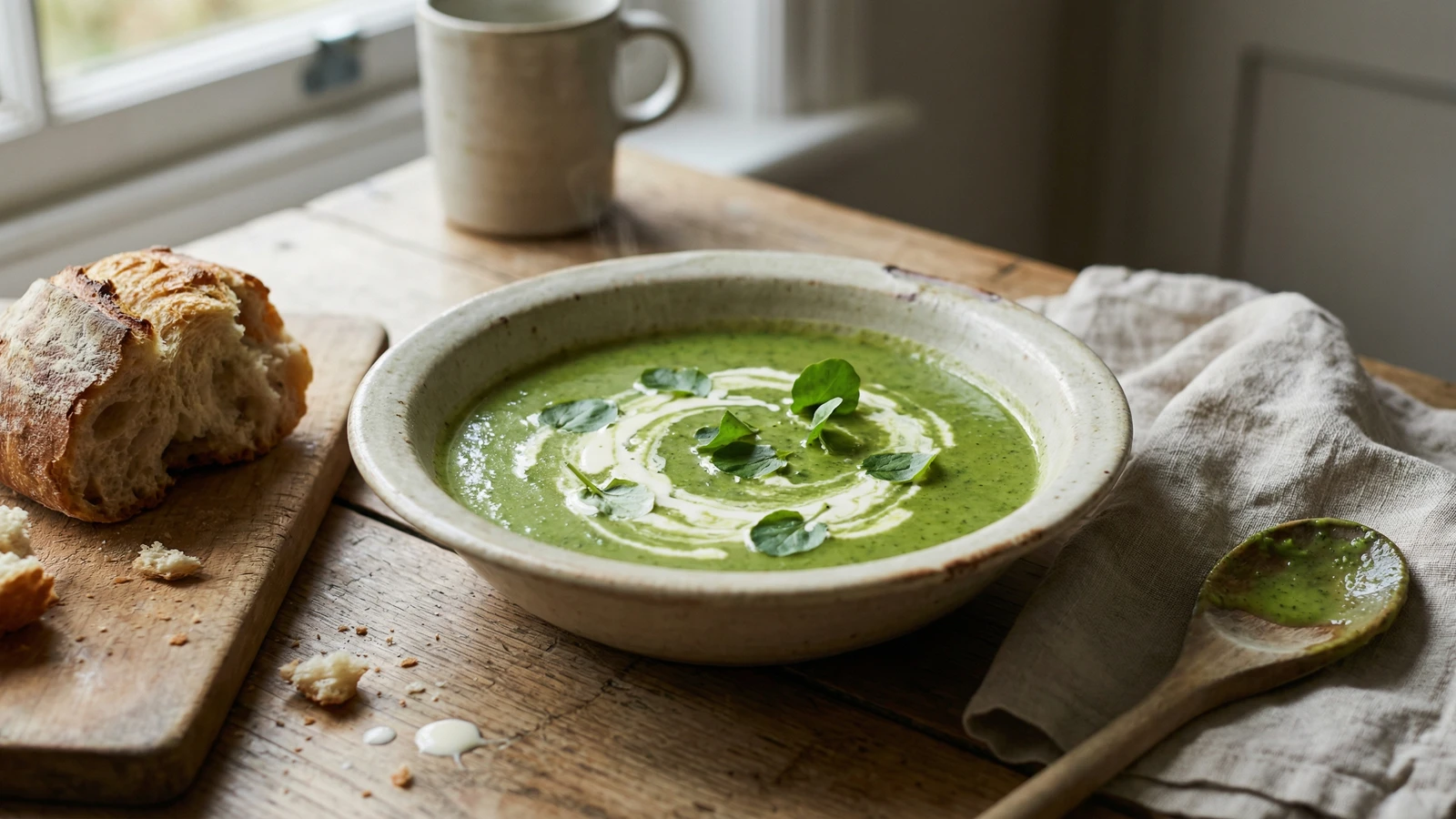
Cream of Watercress Soup
Created by Chef Thomas
A vivid green soup with the peppery bite of fresh watercress, softened with potato and finished with cream. The kind of bowl that tastes like a cold spring evening and the first real green of the year.
The watercress appears at the market in thick, wet bunches around April, when the chalk streams are still cold and the leaves are dark and small and taste of iron and pepper. That's when this soup makes sense. Not the supermarket watercress in plastic bags, which is polite and mild and good enough for a sandwich. The proper bunches, dripping, with stems like wire and a bite that catches the back of your throat.
This is one of the oldest soups in the British kitchen. Hampshire claims it, and rightly. The chalk streams around Alresford have been growing watercress for centuries, and the soup that comes from it is as plain and good as anything I know. Potato for body. Onion for sweetness. Stock and cream. The watercress does everything else.
The trick, if there is one, is not to cook the watercress. It goes into the hot soup off the heat, wilts in seconds, and gets blended straight away. That's how you keep the colour vivid and the flavour sharp. Boiled watercress turns grey and sulky. Treated gently, it stays the green of something alive.
I wrote it down in the notebook years ago: watercress soup, April, the kitchen smelled like spring water. I've made it every year since, and the note still holds. There are few better feelings than putting a warm bowl of something this green in front of someone on a cold evening.
The technique, the tradition, and the story behind every dish.
Discover Culinary AdvisorIngredients
fresh watercress
Quantity
300g
thick stalks trimmed
onion
Quantity
1 medium
finely sliced
potato
Quantity
1 large
peeled and roughly chopped
unsalted butter
Quantity
30g
chicken or vegetable stock
Quantity
750ml
double cream
Quantity
100ml
fine sea salt
Quantity
to taste
white pepper
Quantity
to taste
lemon juice
Quantity
a squeeze
watercress leaves (optional)
Quantity
small handful
to serve
| Ingredient | Quantity |
|---|---|
| fresh watercressthick stalks trimmed | 300g |
| onionfinely sliced | 1 medium |
| potatopeeled and roughly chopped | 1 large |
| unsalted butter | 30g |
| chicken or vegetable stock | 750ml |
| double cream | 100ml |
| fine sea salt | to taste |
| white pepper | to taste |
| lemon juice | a squeeze |
| watercress leaves (optional)to serve | small handful |
Equipment Needed
- •Heavy-bottomed saucepan
- •Stick blender or countertop blender
- •Ladle
- •Fine sieve (optional, for a smoother finish)
Instructions
- 1
Soften the onion and potato
Melt the butter in a heavy-bottomed pan over a gentle heat. Add the onion and a pinch of salt, stir it through the butter, and let it soften for five or six minutes with the lid on. No colour. You want it translucent and sweet. Add the potato, stir everything together, and cook for another two minutes so the potato gets acquainted with the butter.
The potato is here for body, not flavour. A floury variety like a Maris Piper dissolves into the soup and gives it that silky weight without thickening it into something heavy. - 2
Simmer with stock
Pour in the stock. It should cover the potato comfortably. Bring to a gentle simmer and cook, lid slightly ajar, for fifteen to twenty minutes until the potato falls apart when pressed with the back of a spoon. No resistance. It should give up entirely.
- 3
Add the watercress
Take the pan off the heat. Push the watercress into the hot soup in two or three handfuls, pressing it down so it wilts into the liquid. It collapses in seconds. This is the important part: the watercress should not cook on direct heat. The residual warmth of the soup is enough to wilt it without killing the colour or the peppery bite. If you boil it, you'll have a grey, bitter soup. Trust the heat that's already there.
Keep back a small handful of the smallest, brightest watercress leaves for serving. They go on top of the cream, raw, and give you that peppery snap against the warm, smooth soup. - 4
Blend until vivid
Blend immediately, while the green is at its most vivid. A stick blender in the pan works, but a countertop blender gives you a finer, more velvety result if you have one. The soup should be a bright, almost startling green. If it looks dull, you cooked the watercress too long. Pass it through a sieve if you want it silky smooth, though I rarely bother at home.
- 5
Finish and serve
Return the soup to the pan over a low heat. Stir in the cream and warm it through gently. Do not let it boil or the colour will fade. Season with salt, white pepper, and a small squeeze of lemon, just enough to sharpen the edges. Taste it. The watercress should be the loudest voice, peppery and green and clean, with the cream smoothing out its temper. Ladle into warm bowls. A swirl of cream. A few raw watercress leaves on top. Good bread alongside.
Chef Tips
- •Buy your watercress from a market or greengrocer if you can. The bunched sort with roots still attached has a stronger, more peppery flavour than the pre-washed bags. Smell it before you buy it. Good watercress smells clean and sharp, like a stream.
- •The colour is everything. The watercress must not cook on direct heat, only wilt in the residual warmth of the soup. Blend it immediately. The window between vivid green and disappointing khaki is narrow, and once it's gone, it's gone.
- •A squeeze of lemon at the end does more work than you'd expect. Not enough to taste the lemon, just enough to brighten the watercress and lift the cream. Half a lemon's worth, then taste. You'll know when it's right.
- •This soup is good cold, too. Chill it thoroughly and serve in small cups on a warm day. The peppery bite is even more pronounced when the soup is cold. A different dish, almost, but the same good ingredients.
Advance Preparation
- •The base of onion, potato, and stock can be made a day ahead and refrigerated. Add the watercress, blend, and finish with cream just before serving to preserve the colour.
- •The finished soup keeps refrigerated for one day, though the green will fade slightly. It does not freeze well. The colour and the fresh, peppery flavour are lost.
Frequently Asked Questions
Nutrition Information
1 serving (about 350g)
Where cooking meets culture.
Culinary mentorship, cultural storytelling, and the editorial depth that makes cooking meaningful.
Explore Culinary Advisor