Culinary Advisor
A cooking platform built around craft, culture, and the stories behind what we eat.
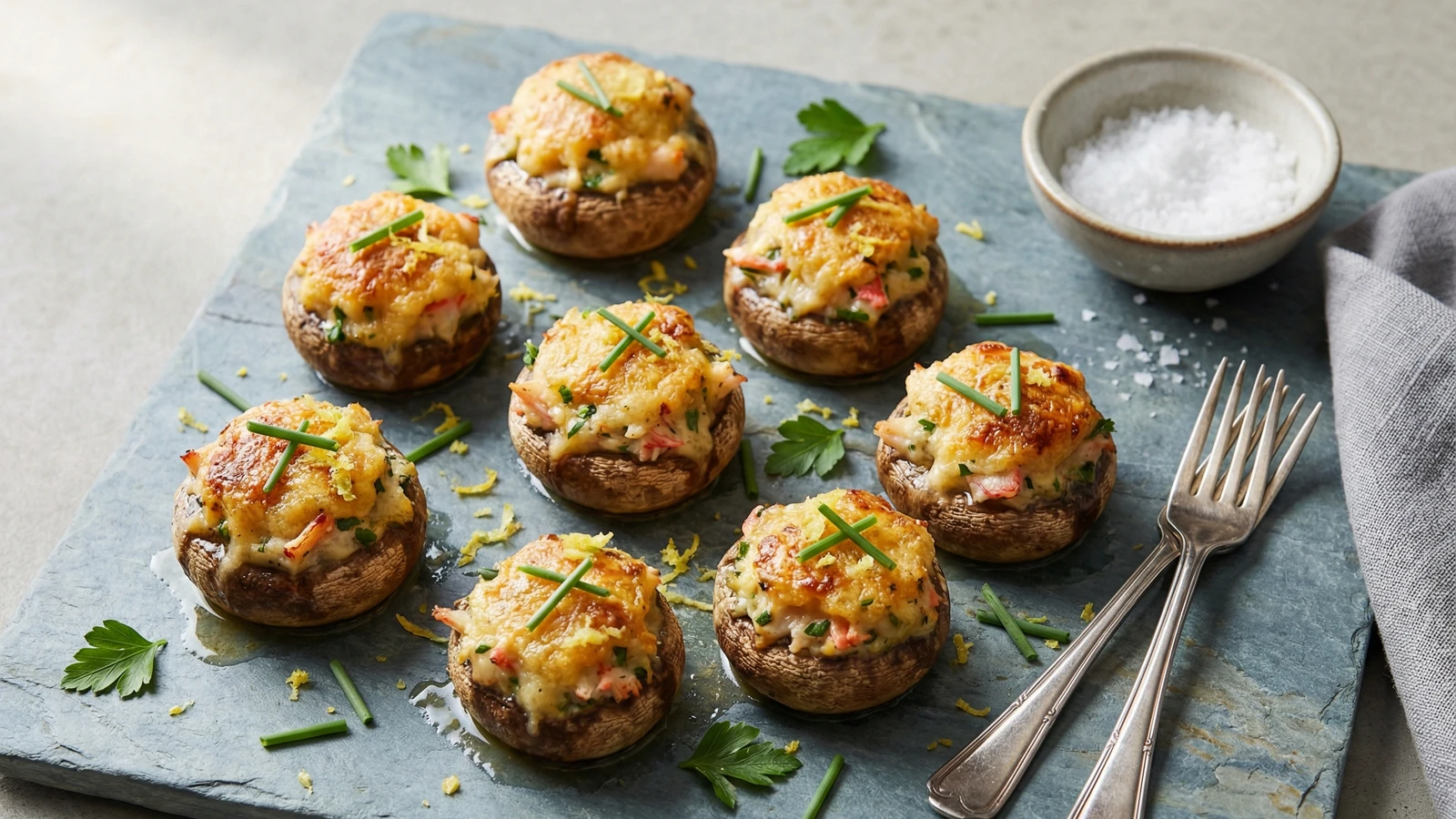
Crab and Shrimp Stuffed Mushrooms
Created by
Plump cremini caps brimming with sweet Dungeness crab and tiny Oregon bay shrimp, bound in herbed cream cheese and baked until the tops turn golden and the edges bubble with promise.
The Pacific Northwest gave America some of its finest seafood traditions, and this humble appetizer ranks among the most honest expressions of that bounty. Dungeness crab, named for the small fishing village on Washington's Olympic Peninsula, has fed Coast Salish peoples for thousands of years. The bay shrimp that nestle alongside it in these mushroom caps come from the cold estuaries where rivers meet the sea. This is food with roots.
Scandinavian and Asian immigrants who settled along these shores brought their own traditions of stretching precious seafood with dairy and vegetables. You taste that history in every bite of these stuffed mushrooms. The cream cheese binding came later, a mid-century American addition that works beautifully to hold everything together while adding richness without overwhelming the delicate sweetness of the crab.
I've served these at gatherings for decades. They disappear within minutes of leaving the oven. The key is restraint in seasoning. Good Dungeness needs no masking. A whisper of lemon, some fresh herbs, the sharp bite of Parmesan on top. Let the crab speak for itself. Your guests will thank you.
Seek out sustainable seafood whenever possible. The fisheries of the Pacific Northwest have worked hard to maintain healthy populations, and buying from responsible sources ensures your grandchildren will enjoy the same abundance. Ask your fishmonger where the crab was caught. They should know. If they don't, find a better fishmonger.
The technique, the tradition, and the story behind every dish.
Discover Culinary AdvisorIngredients
large cremini mushrooms
Quantity
24 (about 1.5 lbs)
fresh Dungeness crabmeat
Quantity
8 oz
picked over for shells
Oregon bay shrimp
Quantity
4 oz
cream cheese
Quantity
6 oz
softened
Parmesan cheese
Quantity
1/3 cup plus more for topping
freshly grated
unsalted butter
Quantity
2 tablespoons
garlic
Quantity
3 cloves
minced
green onions
Quantity
2
white and light green parts, finely sliced
fresh flat-leaf parsley
Quantity
2 tablespoons
minced
fresh chives
Quantity
1 tablespoon
minced
lemon zest
Quantity
1 teaspoon
fresh
lemon juice
Quantity
1 tablespoon
fresh
Old Bay seasoning
Quantity
1/4 teaspoon
kosher salt
Quantity
1/4 teaspoon
freshly ground black pepper
Quantity
1/8 teaspoon
cayenne pepper
Quantity
pinch
extra-virgin olive oil
Quantity
2 tablespoons
| Ingredient | Quantity |
|---|---|
| large cremini mushrooms | 24 (about 1.5 lbs) |
| fresh Dungeness crabmeatpicked over for shells | 8 oz |
| Oregon bay shrimp | 4 oz |
| cream cheesesoftened | 6 oz |
| Parmesan cheesefreshly grated | 1/3 cup plus more for topping |
| unsalted butter | 2 tablespoons |
| garlicminced | 3 cloves |
| green onionswhite and light green parts, finely sliced | 2 |
| fresh flat-leaf parsleyminced | 2 tablespoons |
| fresh chivesminced | 1 tablespoon |
| lemon zestfresh | 1 teaspoon |
| lemon juicefresh | 1 tablespoon |
| Old Bay seasoning | 1/4 teaspoon |
| kosher salt | 1/4 teaspoon |
| freshly ground black pepper | 1/8 teaspoon |
| cayenne pepper | pinch |
| extra-virgin olive oil | 2 tablespoons |
Equipment Needed
- •Rimmed baking sheet
- •10-inch skillet
- •Mixing bowl
- •Paper towels for drying seafood
Instructions
- 1
Prepare the mushrooms
Wipe the cremini mushrooms clean with a damp paper towel. Never soak mushrooms in water; they absorb liquid like sponges and will steam rather than roast. Gently twist or cut out the stems, leaving a generous cavity for the filling. Set the caps aside, hollow side up. Finely mince the stems and reserve them for the filling.
Choose mushrooms of similar size so they cook evenly. Caps about two inches across work best for a generous filling-to-mushroom ratio. - 2
Inspect and dry the seafood
Spread the crabmeat on a plate and run your fingers through it carefully, feeling for any shell fragments the picker missed. Even the best crabmeat sometimes hides small pieces. Taste a strand. Good Dungeness should be sweet, briny, and smell like the ocean on a clean day. Pat both the crab and bay shrimp dry with paper towels. Excess moisture will make your filling weep during baking.
If fresh Dungeness is unavailable, frozen crabmeat that has been properly thawed and drained will work. Avoid canned crab, which lacks the sweet delicacy of fresh. - 3
Sauté aromatics and stems
Melt the butter in a skillet over medium heat. When it foams, add the minced mushroom stems and cook until they release their liquid and it evaporates, about 4 minutes. They should smell earthy and look dry. Add the garlic and green onions, cooking for another minute until fragrant. The garlic should turn golden at the edges but never brown. Remove from heat and let cool for 5 minutes.
- 4
Build the filling
In a mixing bowl, combine the softened cream cheese, Parmesan, parsley, chives, lemon zest, lemon juice, Old Bay, salt, black pepper, and cayenne. Beat with a wooden spoon until smooth and well combined. Fold in the cooled mushroom stem mixture. Add the crabmeat and bay shrimp, folding gently to distribute without shredding the crab into oblivion. You want visible pieces of seafood throughout. Taste and adjust seasoning. The filling should taste bright from the lemon and savory from the cheese, with the crab taking center stage.
- 5
Season and arrange the caps
Preheat your oven to 375°F. Brush a rimmed baking sheet with the olive oil. Arrange the mushroom caps hollow side up on the sheet, spacing them about an inch apart. Season the cavities lightly with a pinch of salt. This draws out a small amount of moisture and seasons the mushroom itself, not just the filling.
- 6
Fill the mushrooms
Using a small spoon or your fingers, mound the filling generously into each cap. Don't be stingy. The filling should dome slightly above the rim of the mushroom. Press gently to compact it so it holds together during baking. Sprinkle the tops with additional grated Parmesan, about a quarter teaspoon per mushroom.
- 7
Bake until golden
Bake in the center of the oven for 18 to 20 minutes. The filling should turn golden brown on top and the edges of the mushroom caps will release a small pool of liquid onto the pan. This is perfect. That concentrated mushroom liquor is pure flavor. The mushrooms are done when the tops look burnished and a toothpick inserted into the filling meets no resistance.
If the tops aren't as golden as you'd like after 20 minutes, run them under the broiler for 60 to 90 seconds. Watch carefully. The difference between golden and burnt happens fast. - 8
Rest and serve
Let the mushrooms cool on the baking sheet for 3 to 4 minutes. This brief rest allows the filling to set slightly, making them easier to transfer and less likely to burn eager mouths. Arrange on a serving platter and finish with a light scattering of fresh chives and a few drops of good olive oil if you're feeling generous. Serve warm. These are best eaten within 20 minutes of leaving the oven, when the contrast between the tender mushroom and the creamy, rich filling is at its peak.
Chef Tips
- •Seek out crabmeat from fishmongers who can tell you exactly where and when it was caught. The Dungeness season runs from December through summer along the Pacific coast, with peak quality in winter months. Frozen crab from responsible sources works well outside the season.
- •Bay shrimp, sometimes called cocktail shrimp or salad shrimp, are tiny cold-water specimens prized for their sweet flavor. Oregon and Washington bays produce excellent ones. They're sold pre-cooked and peeled. If unavailable, finely chopped larger shrimp work as a substitute.
- •Cremini mushrooms (baby bellas) offer more flavor than white buttons. If you can find them, chanterelles or hedgehog mushrooms from local foragers make a spectacular regional variation, though you'll need to adjust cooking time for their different moisture content.
- •A crisp Pacific Northwest white wine, perhaps an Albariño from the Columbia Valley or an Oregon Pinot Gris, makes the ideal pairing. The bright acidity cuts through the richness of the cream cheese while complementing the sweet crab.
- •For entertaining, pipe the filling using a pastry bag fitted with a large round tip. It's faster than spooning and creates an attractive, professional presentation.
Advance Preparation
- •The filling can be made up to 24 hours ahead and refrigerated in an airtight container. Bring to room temperature for 20 minutes before stuffing the mushrooms.
- •Mushroom caps can be cleaned and stemmed up to 6 hours ahead. Store them hollow side down on paper towels in a covered container in the refrigerator.
- •Stuffed mushrooms can be assembled up to 4 hours before baking. Refrigerate uncovered on the baking sheet, then add 3 to 4 minutes to the baking time since they'll be starting cold.
- •Leftovers reheat surprisingly well. Place them on a baking sheet in a 350°F oven for 8 to 10 minutes until warmed through. They won't be quite as perfect as fresh, but they remain worthy of eating.
Frequently Asked Questions
Nutrition Information
1 serving (about 115g, 3 stuffed mushrooms)
Where cooking meets culture.
Culinary mentorship, cultural storytelling, and the editorial depth that makes cooking meaningful.
Explore Culinary Advisor