Culinary Advisor
A cooking platform built around craft, culture, and the stories behind what we eat.
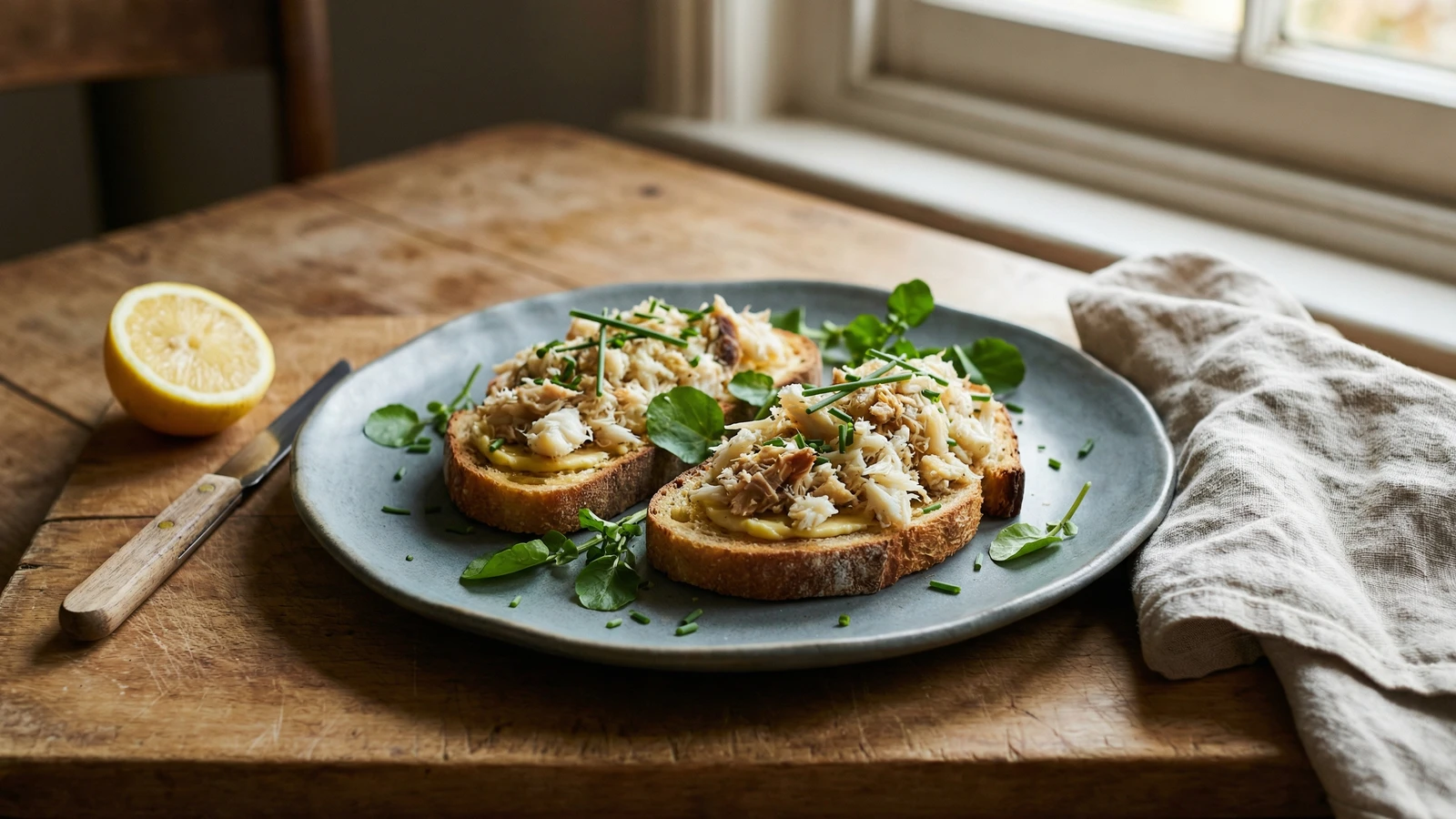
Crab on Toast
Created by Chef Thomas
Brown and white crabmeat on buttered toast, dressed with almost nothing, because good crab needs little more than lemon and your attention. The kind of meal that makes a Tuesday feel like the coast.
The fishmonger had crab on Saturday. A good one, heavy for its size, which is what you're looking for. I carried it home in a paper bag, set it on the kitchen counter, and had lunch sorted before the kettle boiled.
Crab on toast is not really a recipe. It's an assembly. A negotiation between the sweetness of white meat, the deep, savoury richness of brown, and a piece of toast good enough to carry both. The lemon does what lemon always does: it wakes everything up. The butter on the toast melts into the bread and meets the crab halfway. A recipe is a conversation, not a contract. This one is barely a paragraph.
I don't know a better way to eat crab. In a restaurant, they'll put it in a tian or fold it into a bisque or do something architectural with an avocado. All unnecessary. The best crab I've ever eaten was on a piece of toast at a kitchen table, with the window open and the afternoon going nowhere in particular. I wrote it down in the notebook: crab, toast, lemon, May. It didn't need more than that.
There are few better feelings than putting a plate of this in front of someone. The look on their face when they realise how simple it is, and how good. We're only making dinner.
The technique, the tradition, and the story behind every dish.
Discover Culinary AdvisorIngredients
dressed crab
Quantity
1 whole (approximately 300g mixed meat)
brown and white meat separated
good mayonnaise
Quantity
1 tablespoon
lemon
Quantity
half, plus wedges for serving
juiced
Dijon mustard
Quantity
1 teaspoon
chives
Quantity
small bunch
finely snipped
cayenne pepper
Quantity
pinch
fine sea salt
Quantity
to taste
sourdough or good white bread
Quantity
4 thick slices
unsalted butter
Quantity
softened, for the toast
watercress or peppery salad leaves (optional)
Quantity
handful
| Ingredient | Quantity |
|---|---|
| dressed crabbrown and white meat separated | 1 whole (approximately 300g mixed meat) |
| good mayonnaise | 1 tablespoon |
| lemonjuiced | half, plus wedges for serving |
| Dijon mustard | 1 teaspoon |
| chivesfinely snipped | small bunch |
| cayenne pepper | pinch |
| fine sea salt | to taste |
| sourdough or good white bread | 4 thick slices |
| unsalted butter | softened, for the toast |
| watercress or peppery salad leaves (optional) | handful |
Equipment Needed
- •Small mixing bowl
- •Fork for dressing the brown meat
- •Good bread knife
Instructions
- 1
Dress the brown meat
Put the brown crabmeat in a bowl. It should smell of the sea, nothing else. If it doesn't, stop here. Add the mayonnaise, a squeeze of lemon, the mustard, and a bare pinch of cayenne. Stir it together gently. You're not making a paste, just bringing the flavours into conversation. Taste it. The brown meat is rich and savoury, almost like a concentrated bisque. The lemon should sharpen it, the mustard give it a quiet nudge. Season with salt if it needs it. It may not.
Brown meat does the heavy lifting here. It carries all the deep, mineral flavour of the crab. Don't be timid with it. Some people discard the brown meat. Those people are making a mistake. - 2
Check the white meat
Pick through the white crabmeat with your fingers. Run it through gently, feeling for any small shards of shell. You'll find one or two. That's fine. Better to find them now. Leave the white meat in its natural flakes. Don't chop it, don't mash it, don't mix it into anything. It wants to be itself. A squeeze of lemon juice, a scattering of the snipped chives, and nothing more.
- 3
Make the toast
Toast the bread properly. Not pale and apologetic, but golden and firm enough to hold what's coming. A good sourdough is ideal. Something with a close crumb that won't collapse under the weight of the crab. Butter it while it's still hot, generously, right to the edges. The butter should melt into the surface and vanish.
The bread matters as much as the crab. If the toast is too thin, it goes soggy. Too thick, and it fights the filling. A centimetre, roughly. Enough to have presence. - 4
Assemble and serve
Spread the dressed brown meat across the buttered toast. Not thick, but enough to cover the surface. Pile the white meat on top in loose, generous flakes. It should look like it just arrived, not like it was arranged by someone with tweezers. A few more chives. A lemon wedge on the side. A scattering of watercress if you have it, the peppery bite earns its place. Carry the plate to the table. That's it. That's dinner.
Chef Tips
- •Buy the best crab you can find. A whole dressed crab from a fishmonger is worth the trip. If you can get one that's been picked that morning, so much the better. Smell it before you buy it. It should smell clean and briny, like a rock pool, not like a harbour.
- •Don't throw away the brown meat, and don't treat it as secondary. The brown meat is where the real flavour lives. Rich, mineral, almost umami. Mixed with a touch of mustard and lemon, it becomes the foundation that the sweet white meat sits on. Without it, you're eating something pretty but incomplete.
- •Keep the white meat cold and handle it as little as possible. It should arrive on the toast in loose, natural flakes. The moment you start pressing it or mixing it into things, you lose the texture that makes it worth the money.
- •A glass of something cold and dry alongside. A Muscadet, or a fino sherry if you're feeling that way inclined. The salinity of the wine and the salinity of the crab understand each other.
Advance Preparation
- •The brown meat can be dressed with mayonnaise, lemon, and mustard up to a few hours ahead and kept covered in the fridge. Bring it to cool room temperature before assembling.
- •The white meat is best picked through and checked for shell in advance, then kept cold until you're ready to pile it onto the toast. Do not dress it early. The lemon and chives go on at the last moment.
- •Toast the bread only when you're ready to eat. This is not a dish that waits.
Frequently Asked Questions
Nutrition Information
1 serving (about 165g)
Where cooking meets culture.
Culinary mentorship, cultural storytelling, and the editorial depth that makes cooking meaningful.
Explore Culinary Advisor