Culinary Advisor
A cooking platform built around craft, culture, and the stories behind what we eat.
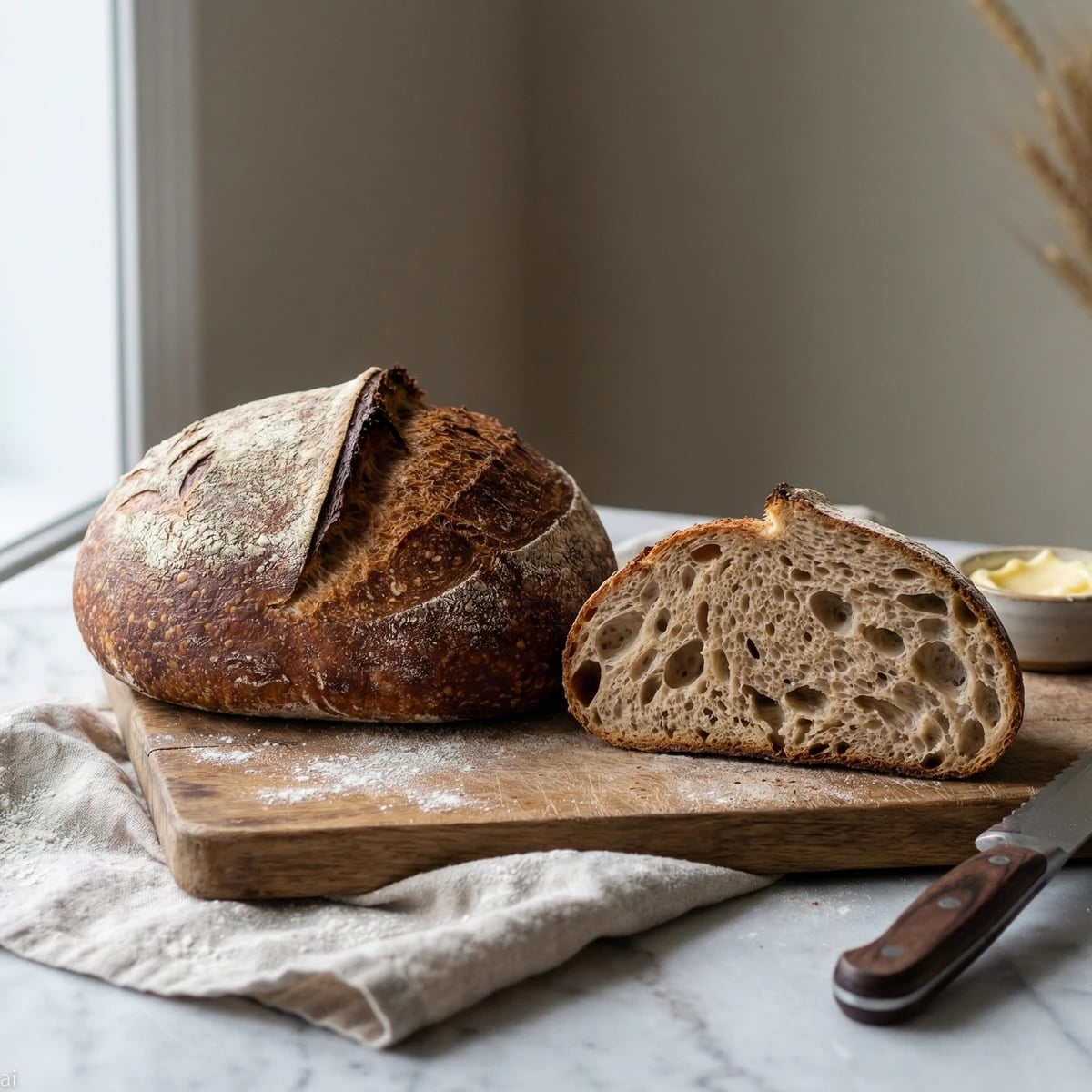
Country Sourdough Boule
Created by Chef Dean
A crackling, burnished crust gives way to an open, tangy crumb with wild, irregular holes. This is the loaf that launched a thousand bread obsessions, and the one every serious home baker must master.
Sourdough predates commercial yeast by thousands of years. Egyptian bakers discovered that flour and water, left to their own devices, would capture wild yeasts from the air and begin to ferment. Every civilization since has refined this knowledge. The country boule you'll make follows techniques perfected in French boulangeries, adapted for the American home kitchen.
This bread requires no special talent. It demands only attention and time. You'll learn to read your dough, to recognize when it has fermented enough by its dome and its jiggle, to feel when the gluten has developed sufficient strength. These skills transfer to every bread you'll ever make.
I've watched students transform from nervous beginners to confident bakers over the course of a single loaf. The moment they pull that crackling boule from the oven, hearing the crust sing as it cools, something shifts. They understand that bread is not a mystery. It is flour, water, salt, and time, guided by hands that have learned to pay attention.
Your first loaf may not be perfect. Mine wasn't. But it will be honest bread, made by your own hands, and it will taste better than anything wrapped in plastic at the supermarket. That I can promise you.
Ingredients
active sourdough starter
Quantity
100g (1/2 cup)
fed and bubbly
warm water
Quantity
375g (1 1/2 cups plus 2 tablespoons)
78-82°F
bread flour
Quantity
500g (4 cups)
plus more for dusting
| Ingredient | Quantity |
|---|---|
| active sourdough starterfed and bubbly | 100g (1/2 cup) |
| warm water78-82°F | 375g (1 1/2 cups plus 2 tablespoons) |
| bread flourplus more for dusting | 500g (4 cups) |