Culinary Advisor
A cooking platform built around craft, culture, and the stories behind what we eat.
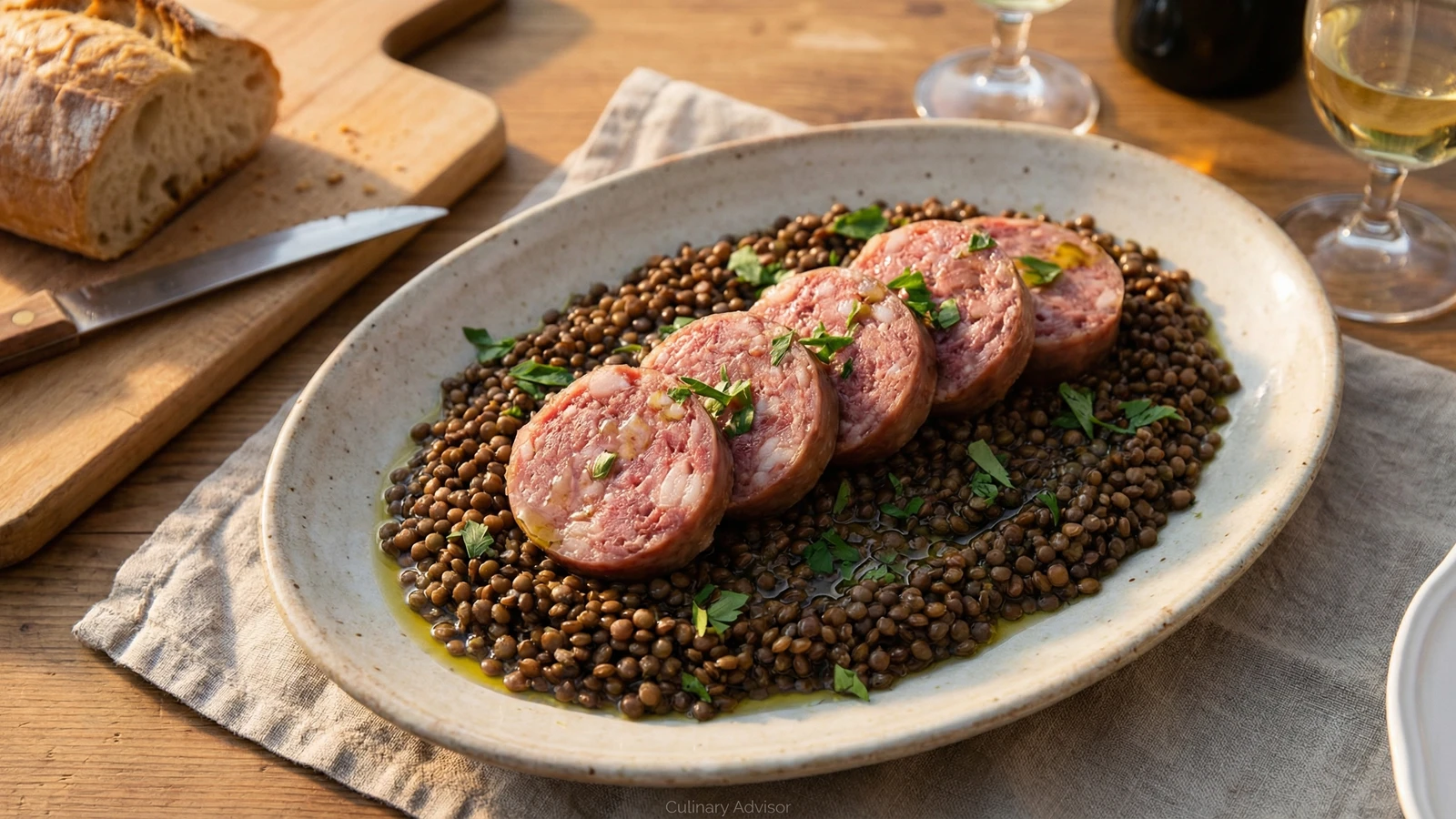
Cotechino con Lenticchie
Created by Chef Graziella
The ritual dish of Italian New Year, where a fat pork sausage from Modena meets humble lentils in a marriage of richness and restraint. The lentils bring luck. The cotechino brings joy.
On the last night of the year, in every home across Emilia-Romagna, a cotechino simmers. The kitchen fills with the smell of pork and spices, the windows fog with steam, and the family gathers knowing what awaits. This is not a dish you choose. It chooses you. It is what Italians eat on New Year's Eve because Italians have always eaten it on New Year's Eve, and to break with tradition would be to tempt fate.
The cotechino is a thing of beauty and excess: ground pork, pork fat, and pork skin bound together with nutmeg, cloves, cinnamon, and pepper, stuffed into a casing and aged just long enough to develop character. It must be simmered slowly, very slowly, until the skin becomes tender and the fat renders into the meat. Rush this, and you will have something tough and indigestible. Give it time, and you will understand why Modena guards this sausage as jealously as its balsamic vinegar.
The lentils are there because they look like small coins, and Italians are practical about their superstitions. Eat lentils at midnight, and prosperity follows. Every grandmother knows this. The lentils should be the small brown variety, cooked simply with aromatics until tender but not mushy. They must hold their shape. Coins do not collapse.
Cotechino originated in Modena around 1511, during a siege when citizens needed to preserve their pigs quickly. They ground the meat with the skin and fat, creating a sausage that could be eaten fresh rather than cured. The pairing with lentils for New Year's became tradition by the 18th century, when the coin-shaped legumes promised wealth and the rich sausage ensured a prosperous start.
The technique, the tradition, and the story behind every dish.
Discover Culinary AdvisorIngredients
cotechino sausage
Quantity
1 (about 2 pounds)
small brown lentils
Quantity
1 pound
yellow onion (for cotechino)
Quantity
1 medium
halved
carrot (for cotechino)
Quantity
1 medium
peeled and halved
celery stalks (for cotechino)
Quantity
2
halved
bay leaves
Quantity
2
extra virgin olive oil
Quantity
3 tablespoons
yellow onion (for lentils)
Quantity
1 small
diced fine
carrot (for lentils)
Quantity
1 small
peeled and diced fine
celery stalk (for lentils)
Quantity
1
diced fine
garlic cloves
Quantity
2
lightly crushed
whole peeled tomatoes
Quantity
1 can (14 ounces)
crushed by hand
water or light broth
Quantity
4 cups
kosher salt
Quantity
to taste
black pepper
Quantity
to taste
freshly ground
flat-leaf parsley
Quantity
for serving
chopped
| Ingredient | Quantity |
|---|---|
| cotechino sausage | 1 (about 2 pounds) |
| small brown lentils | 1 pound |
| yellow onion (for cotechino)halved | 1 medium |
| carrot (for cotechino)peeled and halved | 1 medium |
| celery stalks (for cotechino)halved | 2 |
| bay leaves | 2 |
| extra virgin olive oil | 3 tablespoons |
| yellow onion (for lentils)diced fine | 1 small |
| carrot (for lentils)peeled and diced fine | 1 small |
| celery stalk (for lentils)diced fine | 1 |
| garlic cloveslightly crushed | 2 |
| whole peeled tomatoescrushed by hand | 1 can (14 ounces) |
| water or light broth | 4 cups |
| kosher salt | to taste |
| black pepperfreshly ground | to taste |
| flat-leaf parsleychopped | for serving |
Equipment Needed
- •Large pot for simmering cotechino (at least 8 quarts)
- •Heavy 4-quart pot for lentils
- •Needle or skewer for pricking casing
- •Sharp knife for slicing
Instructions
- 1
Prepare the cotechino
If using a fresh cotechino, prick the casing in several places with a needle or sharp skewer. This allows fat to escape during cooking rather than bursting the skin. If using a precooked cotechino (common in America), follow the package instructions but reduce cooking time accordingly. Place the cotechino in a large pot and cover with cold water by at least three inches.
Fresh cotechino must be started in cold water. Hot water will seize the outside before the inside can cook through. Patience begins here. - 2
Simmer the cotechino
Add the halved onion, carrot, celery, and bay leaves to the pot. Bring the water slowly to a gentle simmer over medium heat. This should take at least 20 minutes. Once small bubbles appear, reduce heat to the lowest setting. The water should barely tremble, not boil. A rolling boil will cause the skin to split and the fat to escape. Simmer a fresh cotechino for 2 and a half to 3 hours. A precooked one needs only 20 to 30 minutes.
- 3
Test for doneness
The cotechino is ready when a skewer or thin knife slides through the center with no resistance. The skin should be tender, almost yielding. If there is any toughness, continue cooking. Remove from the water and let rest for 10 minutes before slicing. Keep it warm by covering loosely with foil.
- 4
Begin the lentils
While the cotechino simmers, prepare the lentils. Sort through them and discard any stones or shriveled lentils. Rinse under cold water. Do not soak them. Unlike dried beans, lentils do not require soaking and will become mushy if you try.
- 5
Build the soffritto
In a heavy pot, warm the olive oil over medium heat. Add the diced onion, carrot, and celery. Cook slowly, stirring occasionally, until the vegetables are soft and the onion is translucent, about 12 minutes. Add the crushed garlic and cook one minute more, then remove and discard the garlic cloves. They have given what they have to give.
The garlic here should perfume, not dominate. Crushing rather than mincing, then removing entirely, ensures the lentils taste of themselves with only a whisper of garlic behind them. - 6
Add tomatoes and lentils
Add the crushed tomatoes to the soffritto and cook for 5 minutes, stirring occasionally, until slightly thickened. Add the rinsed lentils and the water or broth. Bring to a simmer, then reduce heat to low. Cook uncovered, stirring occasionally, until the lentils are tender but still hold their shape, 25 to 35 minutes depending on their age and size.
- 7
Season and finish
Season the lentils with salt and pepper only when they are fully tender. Salting earlier can toughen them. The lentils should be moist but not swimming in liquid. If too wet, raise heat briefly to evaporate excess. If too dry, add a splash of the cotechino cooking liquid. Taste and adjust seasoning.
- 8
Slice and serve
Transfer the rested cotechino to a cutting board. Slice into rounds about half an inch thick. The slices should hold together, revealing the mosaic of meat, fat, and skin within. Spoon the lentils onto a warm serving platter or individual plates. Arrange the cotechino slices over or alongside the lentils. Scatter chopped parsley on top. Serve immediately, while everything is still warm, and do not forget to wish everyone a prosperous new year.
Chef Tips
- •Seek out an authentic cotechino from an Italian specialty shop or order one from a reputable producer. The supermarket versions are acceptable but lack the complexity of a properly made one from Modena.
- •Lenticchie di Castelluccio from Umbria are the finest in Italy, tiny and earthy, holding their shape beautifully. French green lentils (lentilles du Puy) are a worthy substitute. Avoid red lentils, which dissolve into mush.
- •Save the cotechino cooking liquid. It is rich with pork flavor and excellent for cooking the lentils or for adding to soups. Refrigerate it and remove the solidified fat before using.
- •In Emilia-Romagna, this dish is served precisely at midnight on New Year's Eve, with the first bite of lentils bringing luck for the coming year. The tradition is non-negotiable.
Advance Preparation
- •The lentils can be prepared up to two days ahead and refrigerated. Reheat gently, adding a splash of water or broth to restore moisture.
- •The cotechino is best cooked the day of serving, but a precooked one can be reheated in simmering water for 20 minutes.
- •If using fresh cotechino, it benefits from an overnight soak in cold water in the refrigerator, which helps the casing hydrate evenly.
Frequently Asked Questions
Nutrition Information
1 serving (about 385g)
Where cooking meets culture.
Culinary mentorship, cultural storytelling, and the editorial depth that makes cooking meaningful.
Explore Culinary Advisor