Culinary Advisor
A cooking platform built around craft, culture, and the stories behind what we eat.
Cornish Fairings
Created by
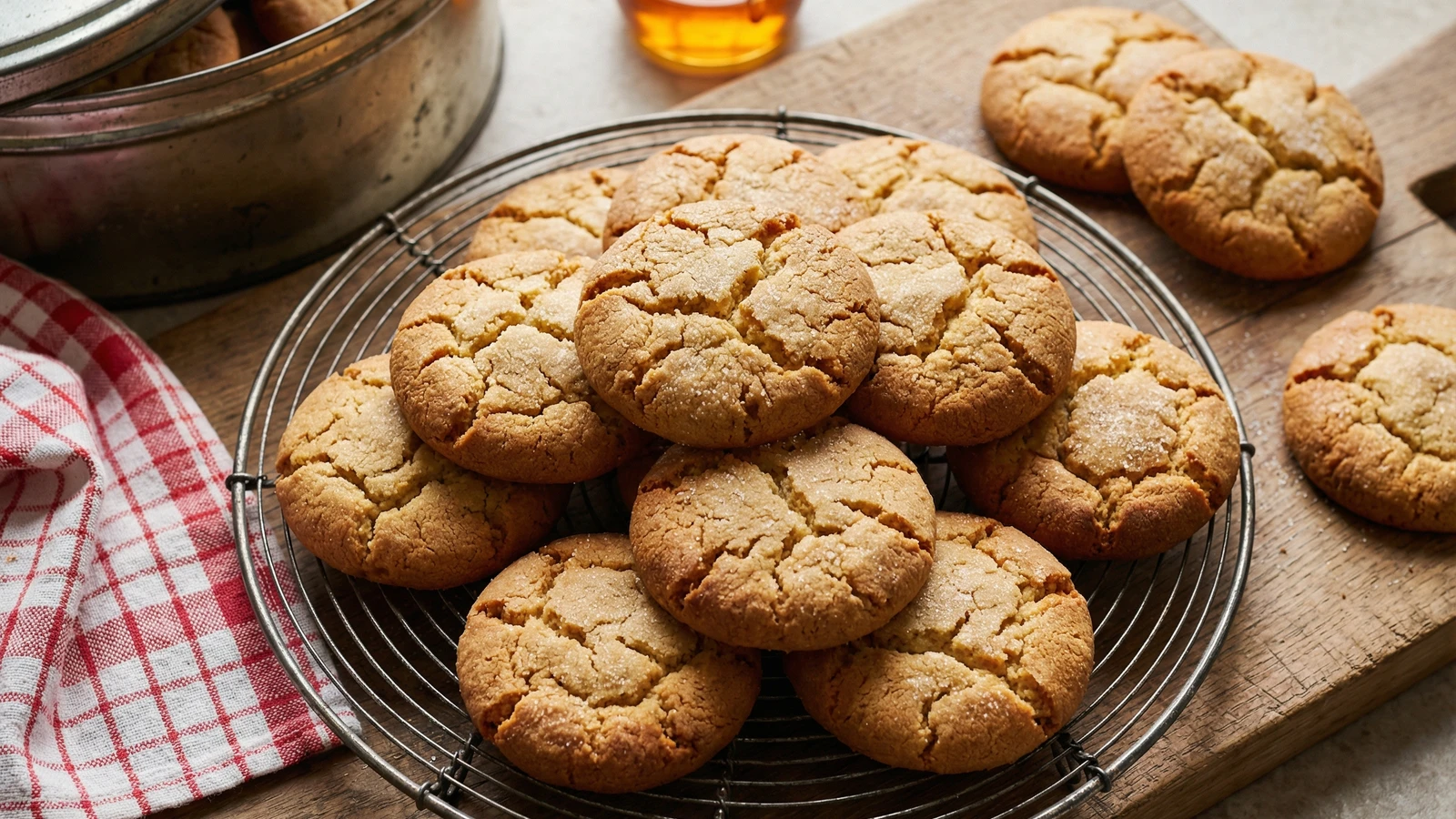
Crackle-topped ginger biscuits from the Cornish tradition, spiced with warmth and kissed with golden syrup. These snap when you break them and melt the moment they hit your tongue.
These biscuits come from Cornwall, that windswept peninsula jutting into the Celtic Sea at England's southwestern tip. For centuries, they were sold at country fairs alongside livestock auctions and traveling entertainments. The word 'fairing' meant a gift bought at the fair, something to bring home to sweethearts and children. These ginger biscuits became so beloved that the name stuck to the cookie itself.
What makes a proper Cornish Fairing unmistakable is that crackled top. The surface shatters into a web of golden fissures as the biscuits bake, creating texture that catches the light like stained glass. This isn't decorative accident. It's chemistry. The combination of baking powder and bicarbonate of soda causes the dough to rise and fall dramatically in the oven's heat, leaving those signature cracks behind.
Golden syrup is non-negotiable here. That treacly British pantry staple gives Fairings their particular chewiness and caramel depth. American corn syrup won't replicate it. Look for Lyle's Golden Syrup in the international aisle or order it online. Once you have a tin in your cupboard, you'll find excuses to use it everywhere.
I first encountered these at a Christmas market in Penzance, bought from a woman whose family had been making them for four generations. She wrapped them in wax paper twisted at the ends like old-fashioned sweets. They were still warm. I ate three before I'd walked ten steps.
The technique, the tradition, and the story behind every dish.
Discover Culinary AdvisorIngredients
all-purpose flour
Quantity
225g (1¾ cups)
baking powder
Quantity
1½ teaspoons
baking soda
Quantity
1 teaspoon
ground ginger
Quantity
2 teaspoons
mixed spice
Quantity
1 teaspoon
or ½ tsp cinnamon, ¼ tsp nutmeg, ¼ tsp allspice
fine sea salt
Quantity
¼ teaspoon
unsalted butter
Quantity
115g (8 tablespoons / 1 stick)
cut into cubes
caster sugar or superfine sugar
Quantity
115g (½ cup plus 1 tablespoon)
golden syrup
Quantity
4 tablespoons (85g)
| Ingredient | Quantity |
|---|---|
| all-purpose flour | 225g (1¾ cups) |
| baking powder | 1½ teaspoons |
| baking soda | 1 teaspoon |
| ground ginger | 2 teaspoons |
| mixed spiceor ½ tsp cinnamon, ¼ tsp nutmeg, ¼ tsp allspice | 1 teaspoon |
| fine sea salt | ¼ teaspoon |
| unsalted buttercut into cubes | 115g (8 tablespoons / 1 stick) |
| caster sugar or superfine sugar | 115g (½ cup plus 1 tablespoon) |
| golden syrup | 4 tablespoons (85g) |
Equipment Needed
- •Large mixing bowl
- •Pastry cutter or clean fingertips
- •Baking sheets (two)
- •Parchment paper
- •Wire cooling rack
- •Kitchen scale for consistent portioning
Instructions
- 1
Combine dry ingredients
Whisk together the flour, baking powder, baking soda, ground ginger, mixed spice, and salt in a large bowl. Make sure the leavening agents are evenly distributed throughout. Any clumps will create uneven rise and spoil that characteristic crackle.
- 2
Cut in butter
Add the cubed butter to the flour mixture. Using your fingertips or a pastry cutter, work the butter into the flour until the mixture resembles coarse breadcrumbs. Some pieces of butter the size of small peas are fine. This takes three to four minutes by hand. The mixture should feel sandy and hold together loosely when squeezed.
Cold butter produces a better texture. If your kitchen is warm, refrigerate the cubed butter for fifteen minutes before starting. - 3
Add sugar and syrup
Stir in the caster sugar until evenly combined. Make a well in the center and pour in the golden syrup. Use a wooden spoon or your hands to bring everything together into a soft, slightly sticky dough. It should hold together without crumbling but shouldn't be wet. If it feels too dry, add golden syrup a teaspoon at a time.
- 4
Shape and chill
Roll the dough into balls about the size of large cherries, roughly 15 grams or a scant tablespoon each. Place them on a parchment-lined baking sheet and refrigerate for at least 30 minutes. This firms the butter and prevents excessive spreading. The dough balls can be chilled for up to 24 hours.
Use a kitchen scale for consistent sizing. Uniform cookies bake evenly and look professional on a gift plate. - 5
Preheat and arrange
Heat your oven to 200°C (400°F). Line two baking sheets with parchment paper. Arrange the chilled dough balls at least 5cm (2 inches) apart. These spread considerably as they bake, and crowding creates one large ginger slab rather than individual biscuits.
- 6
Bake until crackled
Bake for 8 to 10 minutes, rotating the pans halfway through. Watch carefully. The biscuits will puff up dramatically, then collapse and crack across their surfaces. They're done when golden brown around the edges with pale, fissured centers. They'll look slightly underdone. This is correct. They firm as they cool.
Bake one sheet at a time if your oven has hot spots. Consistent heat matters more than speed. - 7
Cool completely
Let the biscuits rest on the baking sheet for five minutes. They'll be too soft to move immediately. Transfer to a wire rack and cool completely before storing. The signature snap develops as they reach room temperature. Resist the urge to test one too early, or you'll think you've made a chewy cookie instead of a crisp biscuit.
Chef Tips
- •Golden syrup is not optional. It provides both flavor and the chemical reaction that creates the crackled surface. Lyle's Golden Syrup is the standard, available in most supermarkets' international sections. In a true emergency, you can substitute equal parts light corn syrup and molasses, but the result will be noticeably different.
- •Mixed spice is a British blend typically containing cinnamon, coriander, nutmeg, ginger, allspice, and cloves. Make your own by combining half teaspoon cinnamon with quarter teaspoon each nutmeg and allspice. Or simply use one teaspoon of allspice alone.
- •These biscuits are forgiving of measurement variations but not of oven temperature mistakes. Use an oven thermometer. Most home ovens run 10 to 25 degrees off their dial setting, and that difference determines whether you get crackled perfection or flat disks.
- •Store in an airtight tin at room temperature. They'll keep their snap for two weeks if protected from humidity. A single saltine cracker in the tin absorbs ambient moisture and extends their crispness.
Advance Preparation
- •Dough balls can be shaped, arranged on a parchment-lined sheet, and frozen solid. Transfer to a freezer bag and store for up to three months. Bake from frozen, adding two to three minutes to the baking time.
- •The dry ingredients can be whisked together and stored in an airtight container for up to one month. When ready to bake, simply proceed with cutting in the butter.
- •Baked Fairings store beautifully. Layer between sheets of wax paper in a tin and keep at room temperature for up to two weeks. They actually improve after a day or two as the spices mellow and deepen.
Frequently Asked Questions
Nutrition Information
1 cookie (about 35g)
Where cooking meets culture.
Culinary mentorship, cultural storytelling, and the editorial depth that makes cooking meaningful.
Explore Culinary Advisor