Culinary Advisor
A cooking platform built around craft, culture, and the stories behind what we eat.
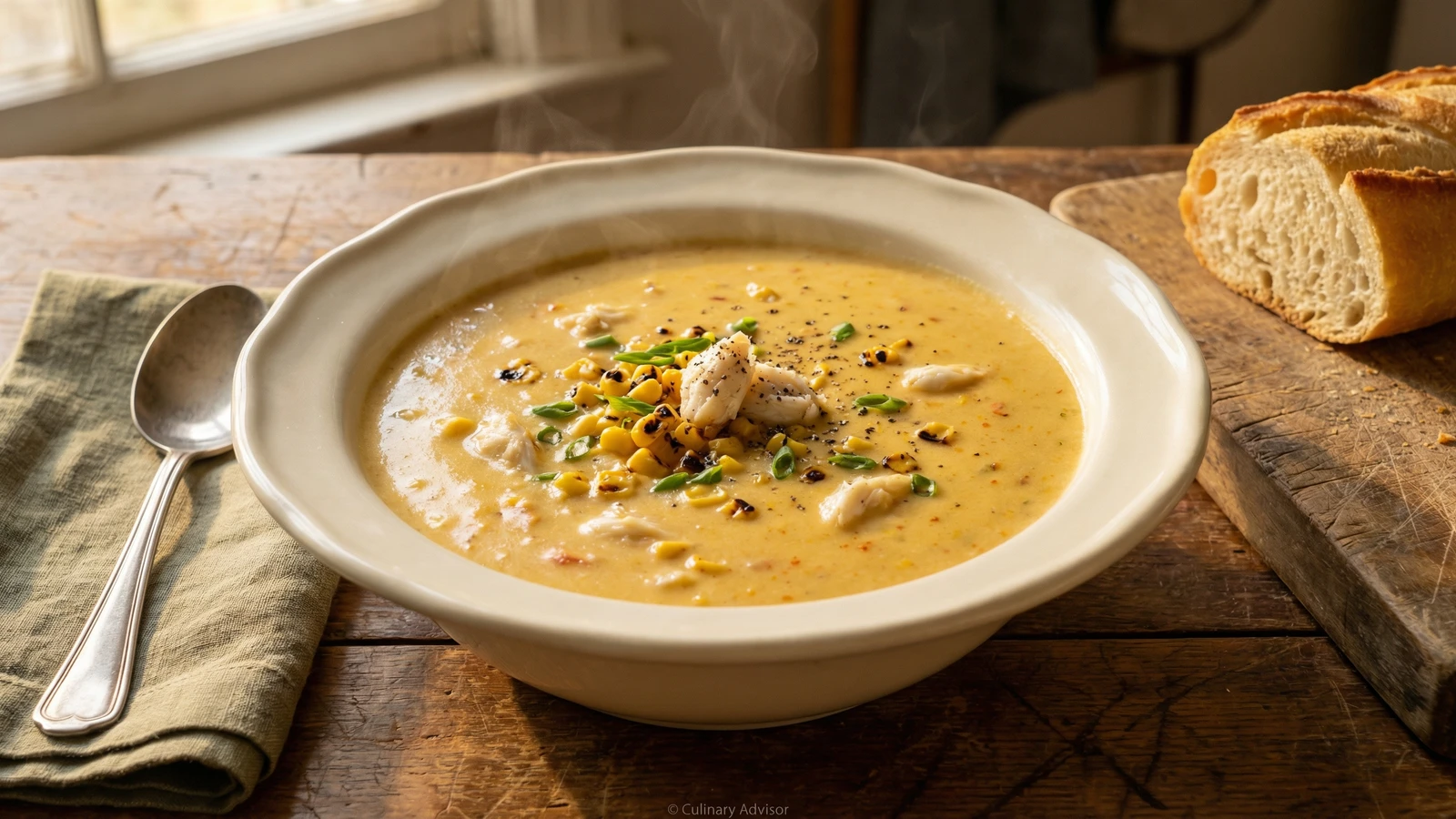
Corn and Crab Bisque
Created by Chef Remy
Sweet corn kernels and delicate lump crab swimming in a velvety, golden bisque kissed with Cajun heat, the kind of soup that makes you close your eyes and savor every spoonful.
This bisque built Lagniappe's reputation. For twenty-five years, I've watched people take their first spoonful and go quiet. That silence tells me everything. The sweetness of fresh corn, the delicate richness of Gulf crab, the warmth of Cajun spice dancing on the finish. This is Louisiana in a bowl.
My grandmother Evangeline made a simpler version with whatever corn came out of the garden and whatever crab my grandfather pulled from his traps that morning. She taught me the fundamental truth of cream soups: you build all your flavor BEFORE the dairy touches the pot. Once that cream goes in, you're just warming things through. The depth, the soul, the character of the bisque lives in what happens first.
The holy trinity forms your foundation. Onion, celery, bell pepper cooked low and slow until they surrender their sweetness. Then garlic, thyme, bay leaf. Then your corn and stock, simmering until everything gets acquainted. Only then does the cream join the party. The crab goes in last, just long enough to warm through. You paid good money for that lump meat. Treat it with respect.
At Lagniappe, we serve this bisque year-round, but it sings loudest in late summer when the corn is so sweet you could eat it raw. That's the bayou way: cook with what the land gives you, when it gives it to you.
The technique, the tradition, and the story behind every dish.
Discover Culinary AdvisorIngredients
fresh sweet corn
Quantity
6 ears
shucked
unsalted butter
Quantity
6 tablespoons
divided
yellow onion
Quantity
1 large
diced
celery stalks
Quantity
3
diced
green bell pepper
Quantity
1 medium
diced
garlic
Quantity
4 cloves
minced
all-purpose flour
Quantity
1/4 cup
seafood stock or chicken stock
Quantity
6 cups
bay leaves
Quantity
2
fresh thyme
Quantity
4 sprigs
Cajun seasoning
Quantity
1 1/2 teaspoons, plus more to taste
smoked paprika
Quantity
1/2 teaspoon
cayenne pepper
Quantity
1/4 teaspoon
heavy cream
Quantity
1 1/2 cups
lump blue crab meat
Quantity
1 pound
picked over for shells
fresh chives
Quantity
2 tablespoons
finely sliced
Louisiana hot sauce
Quantity
1 teaspoon, plus more to taste
kosher salt
Quantity
to taste
black pepper
Quantity
to taste
freshly cracked
| Ingredient | Quantity |
|---|---|
| fresh sweet cornshucked | 6 ears |
| unsalted butterdivided | 6 tablespoons |
| yellow oniondiced | 1 large |
| celery stalksdiced | 3 |
| green bell pepperdiced | 1 medium |
| garlicminced | 4 cloves |
| all-purpose flour | 1/4 cup |
| seafood stock or chicken stock | 6 cups |
| bay leaves | 2 |
| fresh thyme | 4 sprigs |
| Cajun seasoning | 1 1/2 teaspoons, plus more to taste |
| smoked paprika | 1/2 teaspoon |
| cayenne pepper | 1/4 teaspoon |
| heavy cream | 1 1/2 cups |
| lump blue crab meatpicked over for shells | 1 pound |
| fresh chivesfinely sliced | 2 tablespoons |
| Louisiana hot sauce | 1 teaspoon, plus more to taste |
| kosher salt | to taste |
| black pepperfreshly cracked | to taste |
Equipment Needed
- •Large Dutch oven or heavy-bottomed pot (6-quart minimum)
- •Immersion blender or standing blender
- •Small skillet for corn
- •Fine-mesh strainer for stock
Instructions
- 1
Cut the corn and save the cobs
Stand each ear of corn upright in a large bowl. Run your knife down the sides, cutting the kernels free. Then take the back of your knife and scrape down each naked cob to release the milky liquid hiding inside. That corn milk is pure flavor. Set kernels and milk aside. Keep those cobs too, we'll use them.
The bowl catches flying kernels and collects every drop of that precious corn milk. Work over a kitchen towel if your counter is slippery. - 2
Build corn-infused stock
Break the scraped corn cobs in half and add them to your stock in a separate pot. Bring to a gentle simmer and let them steep for twenty minutes while you work on the soup base. The cobs release sweetness and body into the liquid. Strain and discard cobs before using.
If you're pressed for time, skip this step and use straight stock. But this extra effort? That's what separates good from unforgettable. - 3
Sweat the holy trinity
Melt four tablespoons of butter in a large Dutch oven or heavy-bottomed pot over medium heat. Add the onion, celery, and bell pepper with a generous pinch of salt. Cook slowly, stirring occasionally, for eight to ten minutes. You want them soft and sweet, not browned. The edges should be translucent, the vegetables collapsed and fragrant. This is where flavor begins.
- 4
Add garlic and bloom the spices
Add the garlic, Cajun seasoning, smoked paprika, and cayenne. Stir constantly for sixty seconds until the garlic softens and the spices become deeply fragrant. You'll know it's ready when your kitchen smells like a Louisiana restaurant. The heat wakes up the spices and releases their essential oils into the butter.
- 5
Create a blond roux
Sprinkle the flour over the vegetables and stir continuously for two to three minutes. The flour should coat everything evenly and take on a slightly nutty aroma. This isn't a dark gumbo roux, just a blond one to give the bisque body. It should smell like pie crust beginning to bake, not raw flour.
- 6
Add stock and corn
Pour in your corn-infused stock gradually, stirring as you go to prevent lumps. Add three-quarters of the corn kernels (reserve the rest for garnish), the bay leaves, and thyme sprigs. Bring to a simmer, then reduce heat to low. Let everything bubble gently for twenty minutes until the corn is tender and the flavors have married.
- 7
Blend to velvety smoothness
Remove bay leaves and thyme stems. Using an immersion blender, puree about two-thirds of the soup until smooth, leaving some corn pieces intact for texture. If using a regular blender, work in batches and hold the lid down with a towel. Hot soup and blender lids have a complicated relationship. The texture should be velvety but interesting, not baby food.
- 8
Finish with cream
Return the pot to low heat if you used a standing blender. Pour in the heavy cream and stir gently to combine. Let the bisque warm through for five minutes, but do not let it boil. Boiling cream breaks and turns grainy. The soup should be rich and coating, sliding off a spoon in lazy ribbons.
This is when you taste and adjust. More salt? More cayenne? Trust your palate. The cream mutes heat, so you may want to push the spice a little. - 9
Sauté reserved corn
While the bisque warms, melt the remaining two tablespoons of butter in a small skillet over medium-high heat. Add the reserved corn kernels and cook for three to four minutes until some kernels pick up golden spots. Season with a pinch of salt. These charred bits add texture and visual appeal to your finished bowls.
- 10
Fold in crab and serve
Gently fold the crab meat into the warm bisque, being careful not to break up those beautiful lumps. Add the hot sauce and taste one final time. Adjust salt and pepper. Ladle into warm bowls, top with sautéed corn and fresh chives. Serve immediately while steam still rises from the surface.
Pick through your crab meat twice before adding it. Nothing ruins a perfect spoonful like biting down on shell.
Chef Tips
- •Fresh corn in season cannot be beaten, but good quality frozen corn works beautifully in winter. Thaw and drain it well, and skip the cob-infused stock step.
- •Gulf blue crab is traditional, but any quality lump crab works. Just make sure it smells sweet and briny, never fishy. At Lagniappe, we source from Louisiana waters whenever possible.
- •A splash of dry sherry stirred in with the cream adds depth and sophistication. Use about two tablespoons if you have it on hand.
- •Leftover bisque keeps refrigerated for two days, but add the crab fresh when reheating. Old crab turns rubbery and sad.
- •Spice tolerance is personal. Start with the amount listed and build from there. You can always add heat, but you can't take it away. That's the bayou way.
Advance Preparation
- •The bisque base (through the blending step, before cream) can be made one day ahead and refrigerated. Reheat gently before adding cream and crab.
- •Corn can be cut from cobs and refrigerated up to two days ahead. Store kernels and corn milk together.
- •Do not add crab until serving. It should be folded in at the last moment for best texture.
Frequently Asked Questions
Nutrition Information
1 serving (about 375g)
Where cooking meets culture.
Culinary mentorship, cultural storytelling, and the editorial depth that makes cooking meaningful.
Explore Culinary Advisor