Culinary Advisor
A cooking platform built around craft, culture, and the stories behind what we eat.
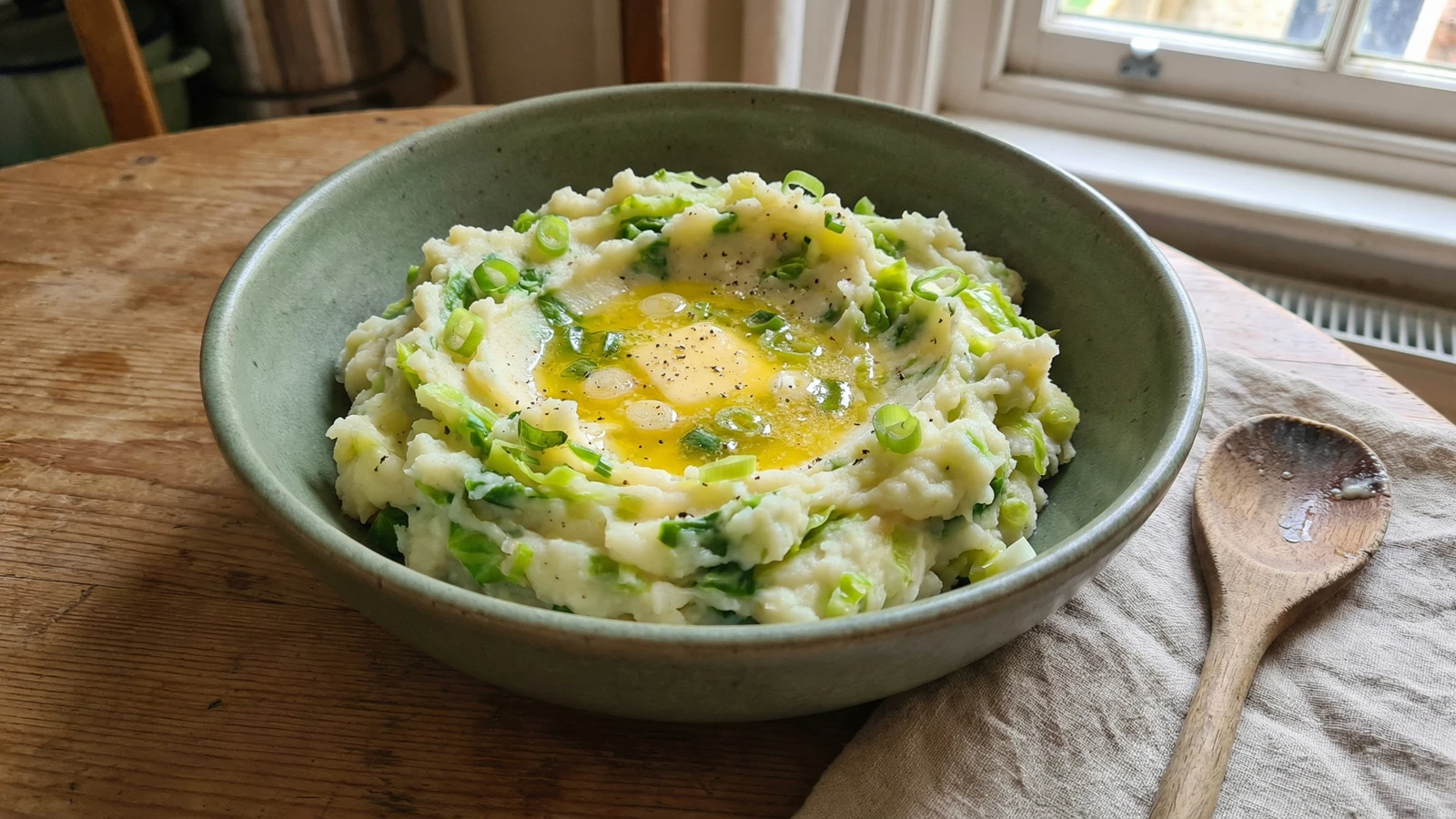
Colcannon
Created by Chef Thomas
Buttery mashed potato folded with Savoy cabbage and spring onions, a well of melting butter in the centre, the kind of bowl that makes an October evening feel like someone is paying attention.
October. The clocks have gone back and the kitchen window is dark by five. This is when colcannon makes sense. Not as a side dish for something grander, but as the thing itself: a bowl of buttery mash, streaked through with green cabbage and the mild sweetness of spring onions, a well pressed into the top and a generous piece of butter melting slowly into it.
It's Irish by origin, but it's been on British tables long enough to have earned its place by the fire. I don't know a simpler way to make someone feel looked after. Potatoes, cabbage, butter, milk. Nothing clever. Nothing that needs explaining. The kind of cooking where the shopping takes longer than the preparation, and the eating takes longer than both.
I make it on the sort of evening when the rain hasn't stopped since morning and nobody in the house has much to say. A bowl of colcannon in front of someone is a quiet way of saying: I noticed. Sit down. This is warm. The notebook entry from the last time I made it reads: "Colcannon. Tuesday. Raining. Enough." It was.
Get the best potatoes you can. Floury ones, Maris Piper or King Edward, the sort that fall apart when you look at them sternly. The cabbage wants to be a Savoy, because it softens beautifully without going limp, and it brings a sweetness that the tighter, paler cabbages don't have. Real butter. Whole milk. A recipe is a conversation, not a contract, so treat the quantities as a starting point and adjust by feel and by taste. Your kitchen, your rules.
The technique, the tradition, and the story behind every dish.
Discover Culinary AdvisorIngredients
floury potatoes
Quantity
1kg
peeled and cut into even chunks (Maris Piper or King Edward)
Savoy cabbage
Quantity
half a head
roughly shredded
spring onions
Quantity
1 bunch
finely sliced
unsalted butter
Quantity
50g, plus extra for serving
whole milk
Quantity
150ml
warmed
fine sea salt
Quantity
to taste
white pepper
Quantity
to taste
| Ingredient | Quantity |
|---|---|
| floury potatoespeeled and cut into even chunks (Maris Piper or King Edward) | 1kg |
| Savoy cabbageroughly shredded | half a head |
| spring onionsfinely sliced | 1 bunch |
| unsalted butter | 50g, plus extra for serving |
| whole milkwarmed | 150ml |
| fine sea salt | to taste |
| white pepper | to taste |
Equipment Needed
- •Large saucepan for the potatoes
- •Wide frying pan or sauté pan for the cabbage
- •Potato masher or ricer
- •Wooden spoon
Instructions
- 1
Boil the potatoes
Put the potatoes in a large pan of cold, well-salted water. Bring to the boil, then reduce to a steady simmer. Cook until a knife slides through them without resistance, roughly twenty minutes depending on size. The water should be properly salted, enough that you can taste it. Potatoes absorb salt during cooking in a way they never do after, so this is where the seasoning starts.
Start in cold water, not boiling. Cold water means the potatoes heat evenly from the outside in. Dropping them into boiling water cooks the edges before the centre has woken up. - 2
Cook the cabbage and onions
While the potatoes simmer, melt a good knob of the butter in a wide pan. Add the shredded cabbage and cook it over a medium heat, turning it through the butter for three or four minutes. You want it softened but still bright, with a bit of life left in it. Overcooked cabbage is a sad thing. Add the spring onions for the last minute or so, just until they've lost their raw edge and the kitchen smells green and sweet.
- 3
Mash the potatoes
Drain the potatoes well and return them to the hot pan. Set it back over the lowest heat for a minute to drive off any excess water, shaking the pan now and then. Mash them thoroughly. A ricer gives the smoothest result, but a good old masher will do fine if you're committed. Add the remaining butter and the warm milk, beating until the mash is smooth and giving. It should be generous and loose, not stiff. You're not building a wall. You're making something that someone wants to sink a spoon into.
Warm the milk before adding it. Cold milk tightens the starch and you end up beating the life out of the potatoes trying to loosen them again. A minute in a small pan or thirty seconds in the microwave. It matters. - 4
Fold and serve
Fold the buttered cabbage and spring onions through the mash. Don't overwork it. You want streaks of green running through the white, not a uniform colour. Season with salt and white pepper. Taste it. Then taste it again. Spoon into warm bowls, make a well in the centre of each with the back of the spoon, and drop a generous piece of butter into it. Bring it to the table while the butter is still melting, pooling into a golden lake that the first spoonful runs through. That's the moment. That's the whole point.
Chef Tips
- •The potato variety is everything. You need a floury potato that collapses into fluff when mashed. Maris Piper or King Edward are reliable. Waxy potatoes will fight you all the way and you'll end up with something gluey and resistant. Choose the right potato and the dish is half made.
- •Don't skimp on the butter in the well. This isn't decoration. The melted butter in the centre is the first thing your spoon meets, and each mouthful gets dragged through it. It's the reason colcannon works as a meal in its own right rather than just a side dish. Use the good butter. You'll taste it.
- •If you can get your hands on curly kale instead of cabbage, try it. Strip the leaves from the tough stalks, shred them finely, and cook them in the butter for a minute or two longer than you would the cabbage. It gives a more robust, almost nutty flavour that holds up well in colder weather. Both are right. Neither is wrong.
- •Colcannon reheats better than you'd expect. Fry spoonfuls in a little butter until the outside goes golden and crisp while the inside stays soft. A fried egg on top of that is a breakfast worth getting up for.
Advance Preparation
- •The cabbage and spring onions can be shredded and sliced a few hours ahead and kept covered in the fridge. Bring them to room temperature before cooking.
- •Colcannon is best made and served immediately, but leftovers keep refrigerated for two days. Reheat by frying spoonfuls in butter until golden and crisp on the outside.
Frequently Asked Questions
Nutrition Information
1 serving (about 390g)
Where cooking meets culture.
Culinary mentorship, cultural storytelling, and the editorial depth that makes cooking meaningful.
Explore Culinary Advisor