Culinary Advisor
A cooking platform built around craft, culture, and the stories behind what we eat.
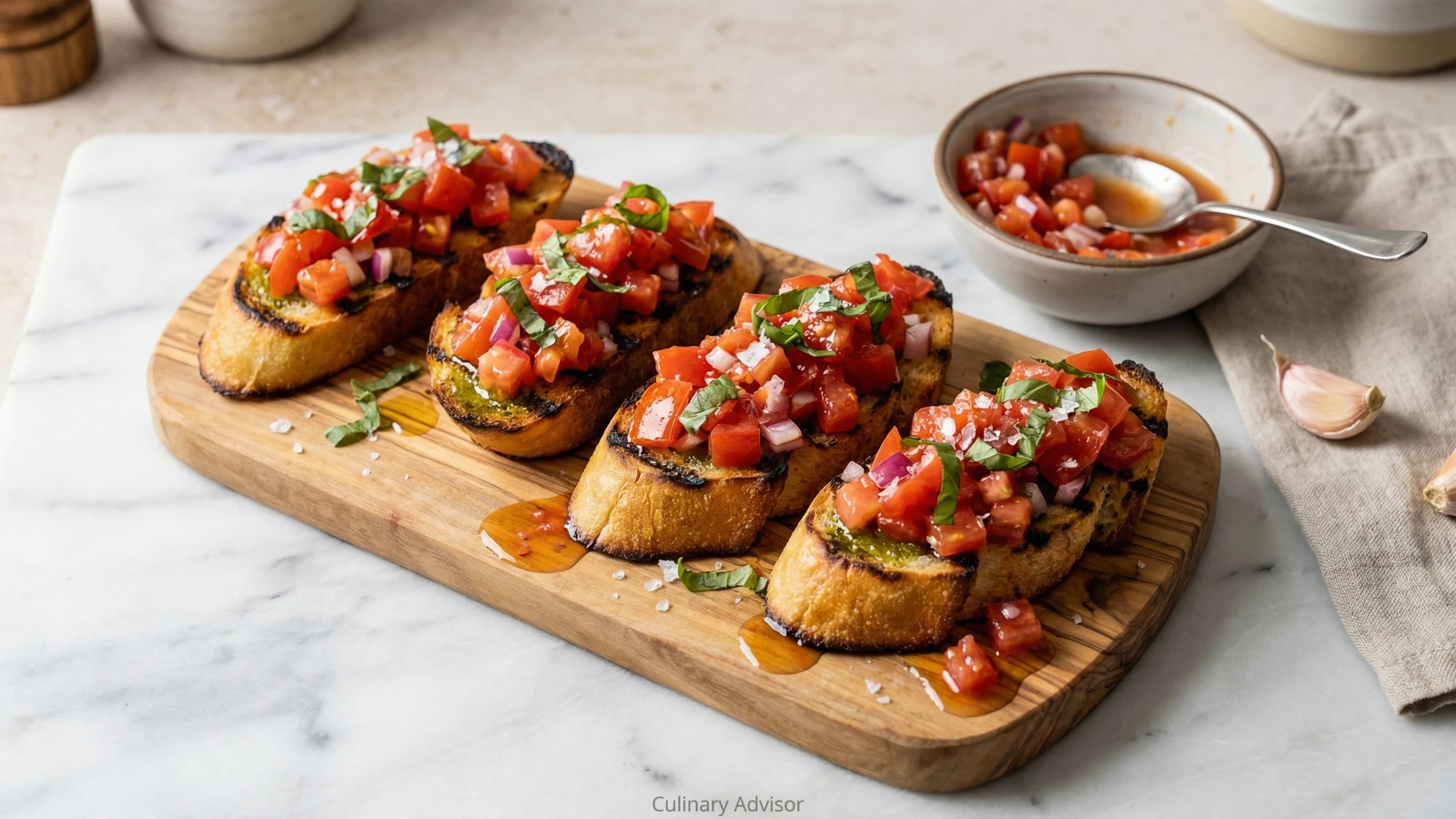
Classic Tomato Bruschetta with Fresh Basil
Created by
Perfectly ripe tomatoes tossed with garlic, basil, and good olive oil, piled onto bread grilled until it shatters at first bite. This is summer's simplest pleasure, and it requires no apology for its lack of complexity.
Bruschetta is not a recipe so much as a test of ingredients. There is nowhere to hide. Your tomatoes are either worthy or they aren't. Your olive oil either tastes like something or it doesn't. Your bread either achieves the proper char or it fails. This is the beauty of Italian cooking: simplicity that demands excellence.
The word comes from bruscare, to roast over coals. Romans have been rubbing grilled bread with garlic and dousing it in oil since before anyone thought to write it down. Tomatoes arrived later, a New World addition that proved so natural it now feels ancient. What you're making is peasant food, born from the need to use stale bread and whatever was ripe in the garden.
I've watched countless home cooks overthink this dish. They add balsamic reductions, mozzarella, capers, sun-dried tomatoes, seventeen herbs. Stop. The original is perfect because it is restrained. Tomato, garlic, basil, oil, bread. Five ingredients. No competition for attention.
The technique matters more than most recipes admit. Your bread must be grilled until it develops genuine crunch, not merely warmed. The garlic must be rubbed while the bread is hot enough to release those oils. The tomatoes must sit long enough for salt to work its magic but not so long they turn to mush. Get these details right and you'll understand why this dish has survived unchanged for centuries.
The technique, the tradition, and the story behind every dish.
Discover Culinary AdvisorIngredients
ripe tomatoes
Quantity
2 pounds (about 6 medium)
preferably a mix of varieties
extra-virgin olive oil (for topping)
Quantity
3 tablespoons, plus more for drizzling
garlic (for topping)
Quantity
2 cloves
minced
flaky sea salt
Quantity
1/2 teaspoon, plus more for finishing
black pepper
Quantity
1/4 teaspoon
freshly cracked
fresh basil leaves
Quantity
1/2 cup
torn
aged balsamic vinegar (optional)
Quantity
1 teaspoon
crusty Italian bread or ciabatta
Quantity
1 loaf (about 12 ounces)
whole garlic cloves (for rubbing)
Quantity
2
halved
extra-virgin olive oil (for brushing)
Quantity
3 tablespoons
| Ingredient | Quantity |
|---|---|
| ripe tomatoespreferably a mix of varieties | 2 pounds (about 6 medium) |
| extra-virgin olive oil (for topping) | 3 tablespoons, plus more for drizzling |
| garlic (for topping)minced | 2 cloves |
| flaky sea salt | 1/2 teaspoon, plus more for finishing |
| black pepperfreshly cracked | 1/4 teaspoon |
| fresh basil leavestorn | 1/2 cup |
| aged balsamic vinegar (optional) | 1 teaspoon |
| crusty Italian bread or ciabatta | 1 loaf (about 12 ounces) |
| whole garlic cloves (for rubbing)halved | 2 |
| extra-virgin olive oil (for brushing) | 3 tablespoons |
Equipment Needed
- •Grill, grill pan, or 12-inch cast iron skillet
- •Serrated bread knife
- •Large mixing bowl
Instructions
- 1
Select and prepare tomatoes
Choose tomatoes that yield slightly to pressure and smell like summer at the stem end. If they don't smell like anything, they won't taste like anything. Core the tomatoes and cut them into half-inch dice over a bowl to catch every drop of juice. You want irregular pieces, not perfect cubes. The rough edges create more surface area for the dressing to cling.
A mix of varieties creates complexity. Try combining beefsteak for meaty texture, cherry tomatoes for sweetness, and heirlooms for color. Even one variety of excellent tomato beats a medley of mediocre ones. - 2
Season the tomato mixture
Add the diced tomatoes and their captured juices to a bowl. Toss with three tablespoons olive oil, minced garlic, salt, and pepper. Let this sit at room temperature for at least fifteen minutes, stirring once halfway through. The salt draws moisture from the tomatoes, creating that essential pool of seasoned liquid that soaks into the bread. Taste and adjust seasoning. The mixture should be assertively seasoned because the bread will mute the flavors.
- 3
Prepare the bread
Slice the bread on a sharp diagonal into pieces about three-quarters of an inch thick. You want substantial slices that can bear the weight of the topping without collapsing into a soggy mess. Each slice should be roughly the size of your palm. Brush both sides generously with olive oil.
Day-old bread actually works better here. Fresh bread is too soft and tends to compress under the topping. If your bread is very fresh, let the slices sit uncovered for thirty minutes before grilling. - 4
Grill or toast the bread
Heat a grill, grill pan, or cast iron skillet over medium-high heat until a drop of water sizzles on contact. Grill the bread slices until you see deep golden grill marks and the edges turn crisp, about ninety seconds per side. The bread should be rigid enough to hold horizontally without flopping. Work in batches rather than crowding the pan. Limp bread makes limp bruschetta.
- 5
Rub with garlic
While the bread is still hot, rub one side vigorously with the cut face of a halved garlic clove. The rough, toasted surface acts like a grater, releasing garlic oils and pulp directly into the bread. You should see the garlic diminish as you work. One clove half handles about six slices. This step is not optional. It is the soul of the dish.
- 6
Add basil and finish topping
Tear the basil leaves by hand and fold them gently into the tomato mixture. Tearing releases more aromatic oils than cutting and prevents the bruised black edges that knife-cut basil develops. Add the balsamic vinegar now if using. A little goes far. Give the mixture one final taste. It should make you want to eat it straight from the bowl.
- 7
Assemble and serve
Arrange the grilled bread on a platter, garlic-rubbed side up. Spoon the tomato mixture generously onto each slice, including some of that precious liquid. Top with a drizzle of your best olive oil and a pinch of flaky salt. Serve within ten minutes. The bread should still have crunch when your guests bite through to the juicy topping. That contrast is everything.
For parties, set out the components separately and let guests assemble their own. The bread stays crisp, and people feel involved. Provide a slotted spoon for the topping and a regular spoon for the juices.
Chef Tips
- •Buy tomatoes at room temperature from a farmers market or roadside stand if possible. Supermarket tomatoes are refrigerated during transport, which destroys the enzymes responsible for flavor. Once a tomato has been chilled below 55°F, it never recovers.
- •The olive oil you use for finishing should be different from the oil you use for cooking. Save your expensive, peppery extra-virgin for that final drizzle where you can actually taste it. Use a more neutral olive oil for brushing the bread.
- •Flaky sea salt like Maldon provides texture and visual appeal that table salt cannot. The crystals catch light and provide bursts of salinity. Keep a small bowl by the stove for finishing.
- •If good tomatoes are simply unavailable, cherry tomatoes are your best supermarket option year-round. Their smaller size means higher sugar concentration. Halve them and proceed with the recipe.
- •A splash of aged balsamic vinegar adds depth, but use restraint. One teaspoon for two pounds of tomatoes. More than that and you've made a different dish entirely.
Advance Preparation
- •The tomato mixture can be prepared up to two hours ahead and held at room temperature. Add the basil just before serving to preserve its color and fragrance.
- •Bread can be sliced and brushed with oil up to four hours ahead. Cover loosely and grill just before guests arrive.
- •For large parties, grill bread in batches, holding finished slices in a 200°F oven for up to twenty minutes. They'll stay warm and crisp without drying out.
- •Do not refrigerate the tomato mixture. Cold tomatoes taste flat and will cool the warm bread too quickly.
Frequently Asked Questions
Nutrition Information
1 serving (about 150g)
Where cooking meets culture.
Culinary mentorship, cultural storytelling, and the editorial depth that makes cooking meaningful.
Explore Culinary Advisor