Culinary Advisor
A cooking platform built around craft, culture, and the stories behind what we eat.
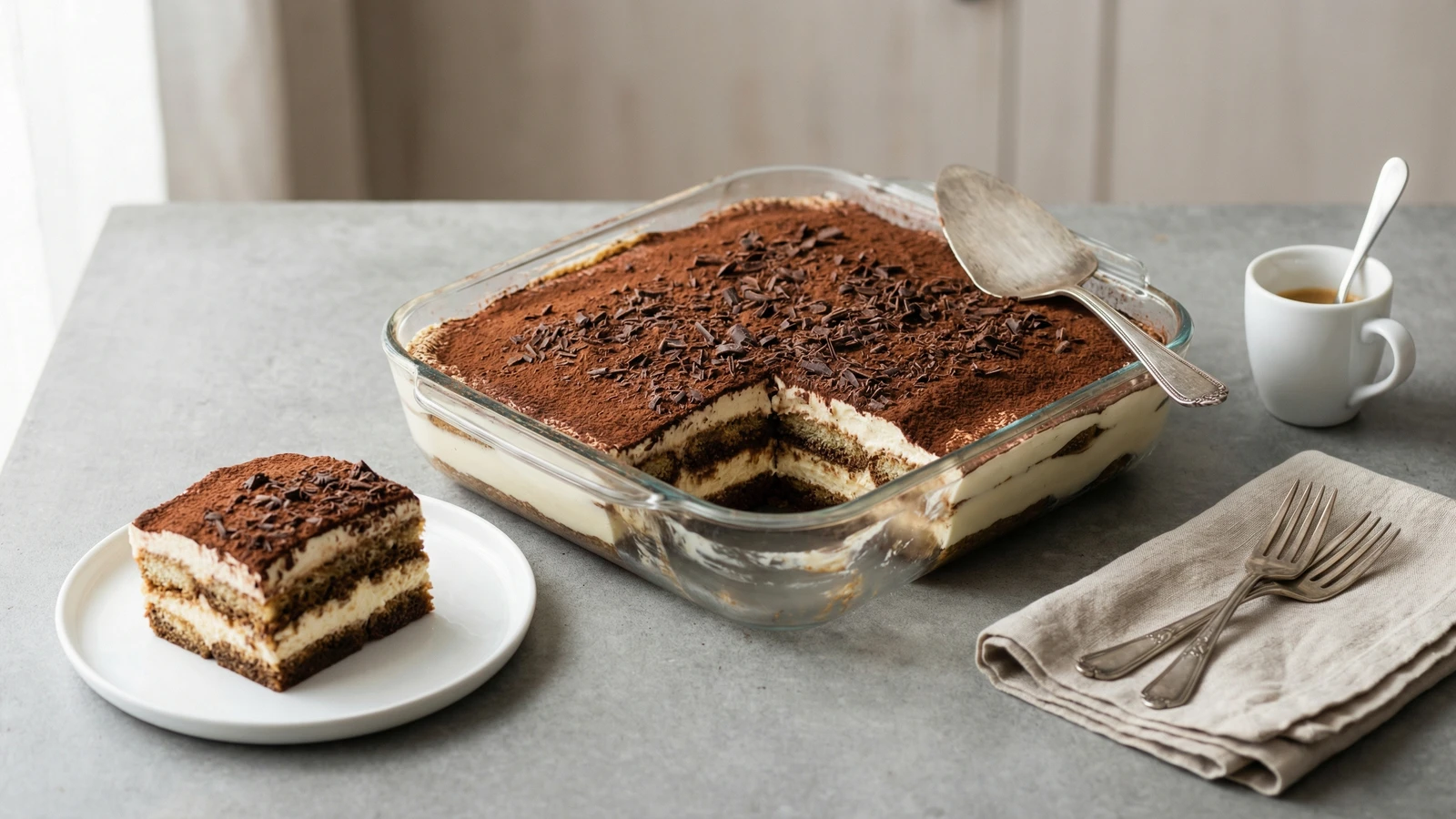
Classic Tiramisu
Created by
Layers of espresso-soaked ladyfingers and cloud-like mascarpone cream, dusted with bittersweet cocoa. This is the dessert that makes hosts look brilliant and requires nothing more than a whisk and good ingredients.
Tiramisu means 'pick me up' in Italian, and the name tells you everything you need to know about its purpose. This is a dessert designed to revive the spirit, to end a meal on a note of controlled indulgence. The espresso provides the lift. The mascarpone provides the comfort. Together they create something greater than either could achieve alone.
The dish emerged from the Veneto region sometime in the 1960s or 1970s, depending on which restaurant claims credit. Such arguments miss the point. What matters is the technique: properly soaked ladyfingers that yield to a fork without dissolving into mush, mascarpone cream light enough to seem almost weightless, and a dusting of cocoa so fine it disappears on your tongue.
I've taught this recipe to students convinced they couldn't make a proper Italian dessert. Within an hour, they're holding a dish that would earn respect in any trattoria. The secret is confidence: dip your ladyfingers quickly and trust that the overnight rest will do its work. By tomorrow, the flavors will have married into something transcendent.
The technique, the tradition, and the story behind every dish.
Discover Culinary AdvisorIngredients
large egg yolks
Quantity
6
at room temperature
granulated sugar
Quantity
3/4 cup (150g)
divided
mascarpone cheese
Quantity
1 1/4 cups (10 ounces/283g)
at room temperature
cold heavy cream
Quantity
1 1/2 cups
pure vanilla extract
Quantity
1 teaspoon
freshly brewed espresso or very strong coffee
Quantity
2 cups
cooled to room temperature
Marsala wine, rum, or coffee liqueur (optional)
Quantity
3 tablespoons
Italian ladyfingers (savoiardi)
Quantity
2 packages (7 ounces each)
unsweetened Dutch-process cocoa powder
Quantity
3 tablespoons
for dusting
bittersweet chocolate (optional)
Quantity
for shavings
| Ingredient | Quantity |
|---|---|
| large egg yolksat room temperature | 6 |
| granulated sugardivided | 3/4 cup (150g) |
| mascarpone cheeseat room temperature | 1 1/4 cups (10 ounces/283g) |
| cold heavy cream | 1 1/2 cups |
| pure vanilla extract | 1 teaspoon |
| freshly brewed espresso or very strong coffeecooled to room temperature | 2 cups |
| Marsala wine, rum, or coffee liqueur (optional) | 3 tablespoons |
| Italian ladyfingers (savoiardi) | 2 packages (7 ounces each) |
| unsweetened Dutch-process cocoa powderfor dusting | 3 tablespoons |
| bittersweet chocolate (optional) | for shavings |
Equipment Needed
- •9x13-inch baking dish (glass or ceramic)
- •Large heatproof mixing bowl
- •Medium saucepan for water bath
- •Whisk or electric hand mixer
- •Instant-read thermometer
- •Offset spatula
- •Fine-mesh sieve for dusting cocoa
- •Shallow dish for coffee dipping
Instructions
- 1
Prepare the espresso
Brew the espresso or strong coffee and let it cool to room temperature. If using Marsala, rum, or liqueur, stir it into the cooled coffee now. Pour the mixture into a shallow dish wide enough to accommodate the ladyfingers lengthwise. The liquid should be about half an inch deep.
Hot coffee will make your ladyfingers disintegrate. Room temperature or slightly cool is essential. Make the coffee first and let it sit while you prepare everything else. - 2
Beat yolks and sugar
Set a medium saucepan with two inches of water over medium heat and bring to a gentle simmer. In a large heatproof bowl that will fit over the pan without touching the water, whisk together the egg yolks and half the sugar. Set the bowl over the simmering water and whisk constantly for 8 to 10 minutes until the mixture triples in volume, becomes pale yellow, and reaches 160°F on an instant-read thermometer. The ribbons that fall from your whisk should hold their shape for several seconds.
This step pasteurizes the yolks for safety while creating the silky texture that defines great tiramisu. Keep whisking, or you'll end up with sweet scrambled eggs. - 3
Incorporate mascarpone
Remove the bowl from heat and continue whisking for two minutes as it cools slightly. Add the mascarpone and vanilla, switching to a rubber spatula. Fold gently until completely smooth and no white streaks remain. The mascarpone should be at room temperature; cold cheese will create lumps that no amount of stirring will fix.
- 4
Whip the cream
In a separate chilled bowl, beat the cold heavy cream with the remaining sugar using a whisk or electric mixer until it holds medium peaks. The cream should mound softly but not stand at rigid attention. Overwhipped cream becomes grainy and will make your filling heavy.
- 5
Fold cream into mascarpone
Add one third of the whipped cream to the mascarpone mixture and stir vigorously to lighten it. This sacrifice loosens the thick mascarpone. Now fold in the remaining cream gently, using broad strokes from the bottom of the bowl up and over. Stop the moment no white streaks remain. The finished cream should be billowy and hold its shape when scooped.
- 6
Soak ladyfingers for first layer
Working quickly with one ladyfinger at a time, dip it into the espresso mixture, submerging completely for exactly two seconds per side. Four seconds total. The cookie should be moistened throughout but not sodden. Arrange the soaked ladyfingers in a single layer in a 9x13-inch dish, breaking pieces as needed to fill gaps. You want complete coverage.
Timing is everything here. Too short and you'll have crunchy dry spots; too long and the ladyfingers will dissolve into mush. Count 'one Mississippi, two Mississippi' as you dip each side. - 7
Add first cream layer
Spread exactly half the mascarpone cream over the ladyfingers in an even layer, using an offset spatula to reach the corners. Be gentle; the soaked cookies are fragile. The cream layer should be generous, about three-quarters of an inch thick.
- 8
Build second layer
Repeat the dipping process with the remaining ladyfingers, creating a second complete layer over the cream. Press them down gently but firmly so they make contact with the cream beneath. Spread the remaining mascarpone cream over the top, smoothing it into an even surface.
- 9
Finish and chill
Dust the top lightly with about one tablespoon of cocoa powder through a fine-mesh sieve, saving the rest for serving. Cover the dish with plastic wrap, ensuring it doesn't touch the surface, and refrigerate for at least six hours or, better, overnight. The tiramisu needs this time for the flavors to meld and the ladyfingers to achieve their characteristic yielding texture.
- 10
Serve properly
Just before serving, dust generously with the remaining cocoa powder and scatter chocolate shavings over the top if desired. Cut into squares with a sharp knife dipped in hot water and wiped clean between cuts. Serve cold, letting each portion rest a moment at the table while your guests appreciate what you've made.
Chef Tips
- •Seek out Italian savoiardi, the dry, airy ladyfingers sold in bags at Italian markets or the international aisle. American sponge-style ladyfingers from the bakery section are too soft and will turn to paste.
- •If you're uncomfortable with the idea of raw eggs, the water bath method in step two heats the yolks to 160°F, which is the temperature at which salmonella is destroyed. Use a thermometer and don't shortcut the whisking time.
- •Mascarpone varies wildly in quality. The good stuff tastes like cultured butter with a hint of tang. The cheap stuff tastes like cream cheese that gave up. Read labels and avoid brands with stabilizers or gums.
- •Tiramisu actually improves after 24 hours in the refrigerator. The flavors deepen and the texture becomes more unified. Make it the day before your dinner party and enjoy the rare pleasure of a dessert that's finished before your guests arrive.
Advance Preparation
- •Tiramisu must be made at least 6 hours ahead and is even better after 24 hours. Plan accordingly.
- •The assembled tiramisu keeps beautifully for up to 4 days refrigerated, tightly covered. The flavors continue to develop.
- •Brew the espresso up to a day ahead and refrigerate. Cold coffee works just as well as room temperature.
- •Do not freeze tiramisu. The mascarpone cream breaks and the ladyfingers become unpleasantly spongy upon thawing.
Frequently Asked Questions
Nutrition Information
1 serving (about 145g)
Where cooking meets culture.
Culinary mentorship, cultural storytelling, and the editorial depth that makes cooking meaningful.
Explore Culinary Advisor