Culinary Advisor
A cooking platform built around craft, culture, and the stories behind what we eat.
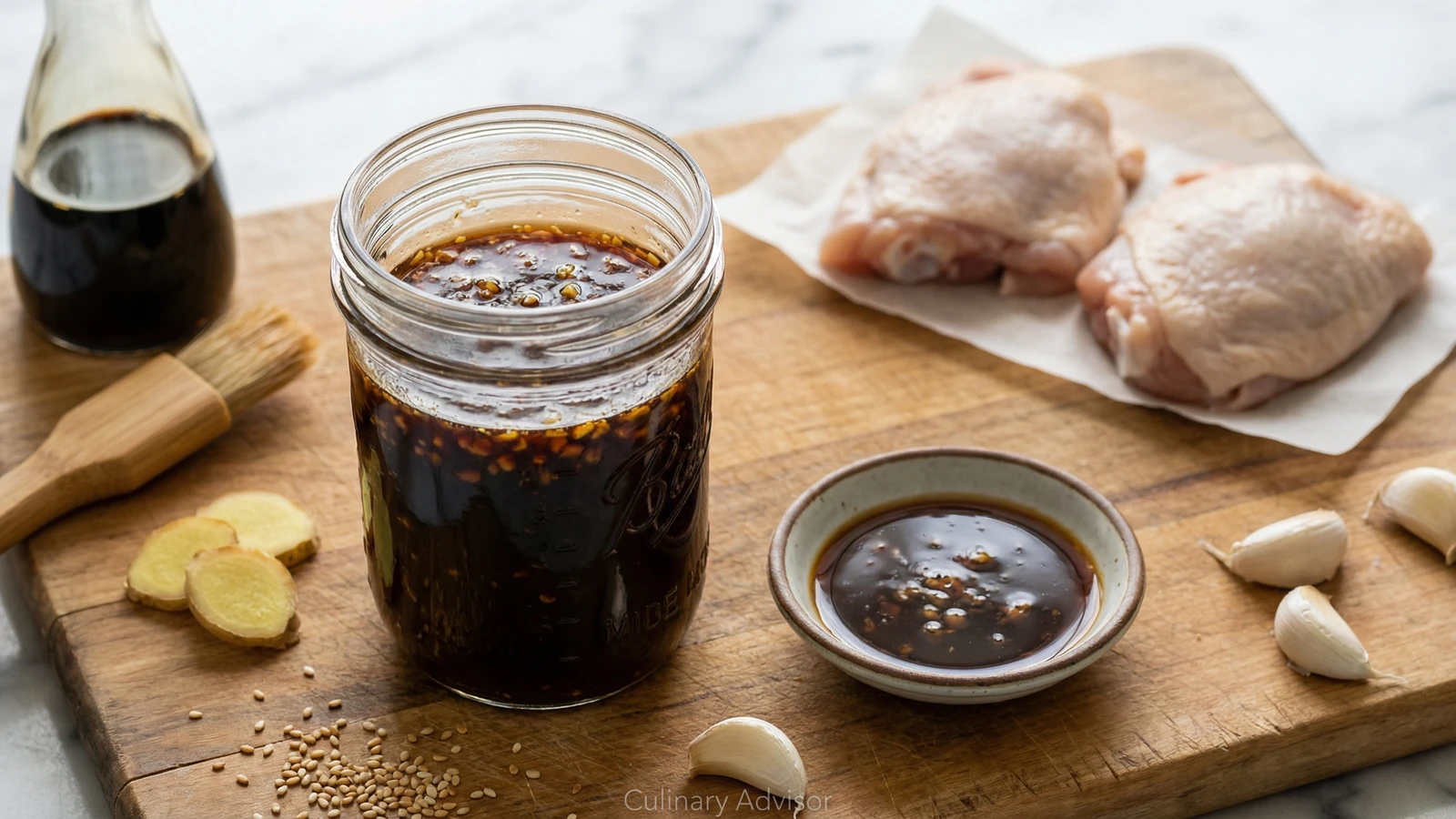
Classic Teriyaki Marinade
Created by
A deeply savory, glistening marinade that bridges Japanese tradition and American backyard grilling, built from four essential ingredients that transform ordinary proteins into something worth gathering around.
Teriyaki belongs to America now. Yes, it originated in Japan, where cooks glazed fish with a mixture of soy sauce and mirin, brushing it on during grilling until the surface developed that characteristic lacquered sheen. The word itself tells the story: teri means luster, yaki means grilled. But somewhere between Tokyo and Tacoma, teriyaki became as American as apple pie.
I've watched this sauce conquer the Pacific Northwest, where teriyaki joints outnumber burger stands in some neighborhoods. The adaptation makes sense. We're a nation of grillers, and teriyaki rewards fire. The sugars caramelize. The soy deepens. The garlic and ginger perfume the smoke. Your neighbors will wander over, pulled by instinct.
This is a pantry sauce. Once you understand the ratio, you'll stop buying bottles forever. Equal parts soy and mirin, sweetened with a bit of sugar, brightened with fresh ginger and garlic. That's it. Ten minutes of work yields a marinade that transforms chicken thighs, salmon fillets, pork chops, and vegetables into something your family will request weekly.
The technique, the tradition, and the story behind every dish.
Discover Culinary AdvisorIngredients
soy sauce
Quantity
1/2 cup
preferably naturally brewed
mirin
Quantity
1/2 cup
sake or dry sherry
Quantity
1/4 cup
light brown sugar
Quantity
3 tablespoons
packed
garlic
Quantity
4 cloves
minced
fresh ginger
Quantity
2-inch piece
grated (about 2 tablespoons)
toasted sesame oil
Quantity
1 tablespoon
black pepper
Quantity
1/2 teaspoon
freshly ground
cornstarch (optional)
Quantity
2 teaspoons
mixed with 2 tablespoons cold water
| Ingredient | Quantity |
|---|---|
| soy saucepreferably naturally brewed | 1/2 cup |
| mirin | 1/2 cup |
| sake or dry sherry | 1/4 cup |
| light brown sugarpacked | 3 tablespoons |
| garlicminced | 4 cloves |
| fresh gingergrated (about 2 tablespoons) | 2-inch piece |
| toasted sesame oil | 1 tablespoon |
| black pepperfreshly ground | 1/2 teaspoon |
| cornstarch (optional)mixed with 2 tablespoons cold water | 2 teaspoons |
Equipment Needed
- •Medium saucepan (2-quart)
- •Microplane or fine grater
- •Glass jar or airtight container for storage
- •Whisk
Instructions
- 1
Combine the liquid base
Pour the soy sauce, mirin, and sake into a medium saucepan. Whisk to combine. The mixture will smell sharply of alcohol and salt at this stage. That rawness will cook out.
If you can't find mirin, substitute 1/2 cup dry sherry plus 2 tablespoons sugar. It won't be identical, but it will work. - 2
Add aromatics and sugar
Add the brown sugar, minced garlic, and grated ginger to the saucepan. Stir until the sugar dissolves. The ginger should be fibrous and fresh, releasing its juice when you press it. Dried ginger has no place here.
- 3
Simmer briefly
Set the pan over medium heat. Bring to a gentle simmer and cook for 3 to 4 minutes, stirring occasionally. The alcohol will burn off and the flavors will marry. You'll notice the harsh edges soften. The kitchen will smell like a reason to cook.
Don't boil aggressively. High heat can make soy sauce taste harsh and one-dimensional. - 4
Finish with sesame oil
Remove from heat and stir in the toasted sesame oil and black pepper. The sesame adds a nutty depth that rounds everything out. Taste the marinade. It should be salty, sweet, and aromatic in equal measure.
- 5
Cool completely
Transfer to a heatproof jar or container and let cool to room temperature before using as a marinade. Hot marinade will start cooking your protein before you intend. Patience serves you here.
- 6
Create glaze variation (optional)
For a thicker glaze to brush during grilling or serve as a finishing sauce, return the marinade to a simmer. Whisk in the cornstarch slurry and cook for 1 to 2 minutes until glossy and thickened enough to coat a spoon. This version clings to proteins beautifully.
Never use marinade that has touched raw meat as a finishing glaze unless you boil it for at least one minute first.
Chef Tips
- •Seek out naturally brewed soy sauce. Read the label. It should contain soybeans, wheat, salt, and water. Nothing else. The chemically hydrolyzed versions taste flat and harsh by comparison.
- •Fresh ginger is non-negotiable. A Microplane produces the finest grate, releasing maximum juice. If you must prep ahead, freeze whole ginger root and grate it frozen directly into the sauce.
- •This marinade works in as little as 30 minutes for thin cuts, but chicken thighs and pork benefit from 4 to 8 hours. Don't exceed 24 hours or the texture turns mushy from the salt.
- •Double the batch. You'll use it faster than you think. Teriyaki chicken on Tuesday. Glazed salmon on Thursday. Grilled vegetables on Saturday. One sauce, infinite dinners.
- •For vegetarian applications, this marinade transforms firm tofu, portobello mushrooms, and eggplant. Press tofu for 30 minutes first, then marinate up to 12 hours.
Advance Preparation
- •Marinade keeps refrigerated for up to 2 weeks in an airtight container. The flavors continue to develop and meld over the first few days.
- •For longer storage, freeze in ice cube trays. Transfer frozen cubes to a zip-lock bag. Thaw as needed for quick weeknight cooking.
- •The thickened glaze version should be used within 5 days as the cornstarch can break down over time.
- •Prep garlic and ginger together up to 3 days ahead, stored in a small covered container in the refrigerator. This makes batch cooking even faster.
Frequently Asked Questions
Nutrition Information
1 serving (about 40g)
Where cooking meets culture.
Culinary mentorship, cultural storytelling, and the editorial depth that makes cooking meaningful.
Explore Culinary Advisor